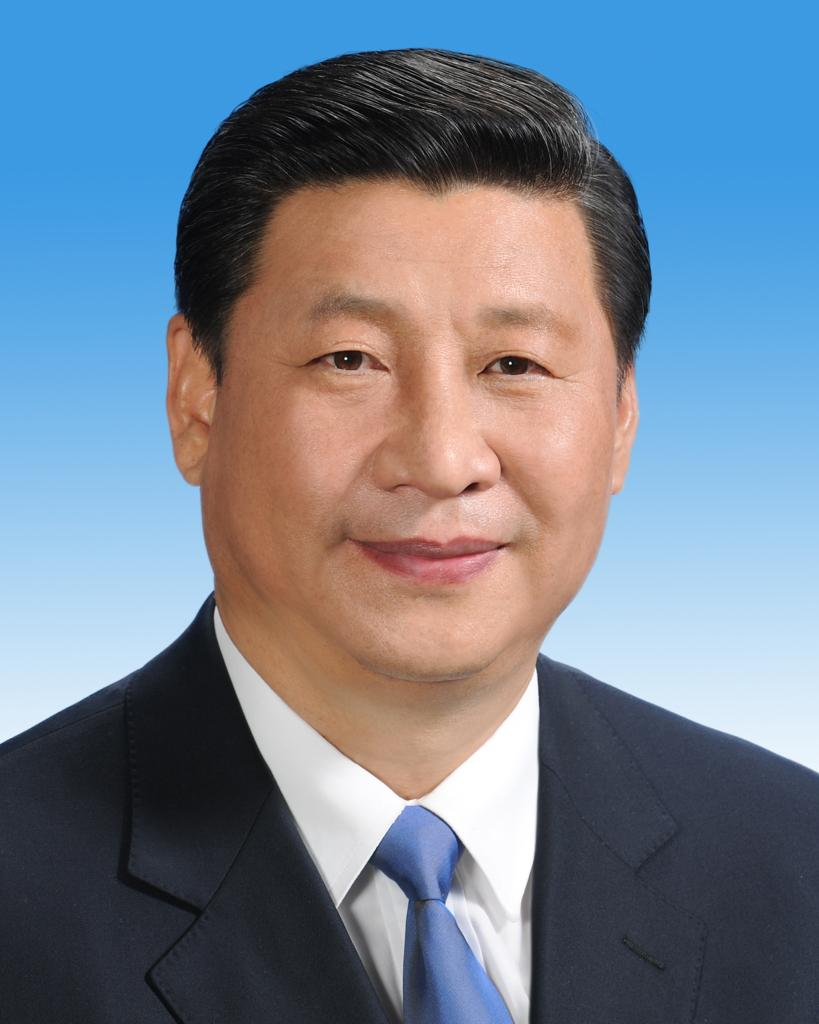
Xi Jinping
Xi Jinping is a Chinese politician who has served as General Secretary of the Chinese Communist Party and Chairman of the Central Military Commission since 2012, and President of the People's Republic of China since 2013.
Why Xi Jinping Appears in the Documents
Xi Jinping is mentioned in 119 documents within the Epstein file corpus, consisting of 65 articles, 28 emails, 5 chats, 5 reports, 4 datas, 4 opinions, 2 references, 1 analysis, 1 communication, 1 letter, 1 memo, 1 news, 1 speech, originating from the House Oversight Committee.
These documents include titles such as "GOP fundraiser Elliott Broidy under investigation for alleged effort to sell government influence", "Epst_9780451494566_2p_all_r1.z.indd", "The Snowden Affair: A Spy Story in Six Parts" among others. Xi Jinping's name appears across these documents in various contexts. The document corpus contains a wide range of materials including media coverage, government records, and legal proceedings where many public figures are mentioned.
Disclaimer: Appearing in the Epstein document corpus does not imply wrongdoing, guilt, or any form of association with criminal activity. Many public figures are mentioned incidentally in these documents due to the broad scope of the released materials.
Documents (50)
GOP fundraiser Elliott Broidy under investigation for alleged effort to sell government influence
- The document forwards a Washington Post report about a Justice Department public-integrity investigation into Elliott Broidy, a longtime GOP fundraiser, over alleged efforts to sell influence with the Trump administration. - Investigators are examining whether Broidy sought to trade his political access for tens of millions of dollars, including pushing for the U.S. to extradite a Chinese dissident (Guo Wengui) at the request of Chinese officials. - The probe also looks at a possible $75 million payoff to a Malaysian official ifDOJ actions in a 1MDB-related case were dropped, tied to Malaysian state funds embezzlement. - Probes are expanding to Broidy’s dealings with Chinese and Malaysian officials; prosecutors have subpoenaed Steve Wynn, who is cooperating, concerning records related to Broidy. - The investigation intersects with other high-profile matters: Mueller’s team has questioned witnesses about Broidy, and Broidy’s past activities (including a hush-money settlement with a Playboy model) are noted; Broidy resigned from an RNC post amid related scandal. - Broidy and his attorney deny wrongdoing; other parties mentioned (Giuliani, Cohen) are connected to broader investigations and political fallout. - The document itself is an internal email chain circulating a news piece about these allegations and ongoing investigations.
Source: House Oversight Committee
Epst_9780451494566_2p_all_r1.z.indd
Source: House Oversight Committee
Epst_9780451494566_2p_all_r1.z.indd
Source: House Oversight Committee
Epst_9780451494566_2p_all_r1.z.indd
Source: House Oversight Committee
Epst_9780451494566_2p_all_r1.z.indd
Source: House Oversight Committee
The Snowden Affair: A Spy Story in Six Parts
Source: House Oversight Committee
The Snowden Affair: A Spy Story in Six Parts
Source: House Oversight Committee
Operation Chaos Lives
Operation Chaos Lives is a sharp, kaleidoscopic blend of memoir, satire, and counterculture reportage by Paul Krassner. It threads together a collage of episodes from the late 1960s through the early 1980s—and beyond—tracking how real events, rumored conspiracies, and political theater fed one another. From Vietnam War deserters who fled to Sweden and formed the American Deserters Committee to lurid fantasies of CIA mind-control experiments, Krassner couches history in a voice that is at once slyly comic and unnervingly skeptical of power, media, and official narratives. The piece moves through encounters with figures like Lyndon LaRouche and the SDS/Yippies, touches on the Reagan assassination attempt, and weaves in Krassner’s own stand-up and satire. It keeps returning to themes of manipulation, memory, and the fragility of truth in an age of psy-ops, while updating the thread to later politics—LaRouche’s enduring influence, Helga LaRouche’s international activism, and a provocative call to reframe US-Russia-China relations against a perceived British media influence. The essay closes with Krassner’s self-aware humor about being targeted for his storytelling, and notes forthcoming collections that preserve his absurdist, insurgent voice.
Source: House Oversight Committee
Operation Chaos Lives
Operation Chaos Lives is a sharp, kaleidoscopic blend of memoir, satire, and counterculture reportage by Paul Krassner. It threads together a collage of episodes from the late 1960s through the early 1980s—and beyond—tracking how real events, rumored conspiracies, and political theater fed one another. From Vietnam War deserters who fled to Sweden and formed the American Deserters Committee to lurid fantasies of CIA mind-control experiments, Krassner couches history in a voice that is at once slyly comic and unnervingly skeptical of power, media, and official narratives. The piece moves through encounters with figures like Lyndon LaRouche and the SDS/Yippies, touches on the Reagan assassination attempt, and weaves in Krassner’s own stand-up and satire. It keeps returning to themes of manipulation, memory, and the fragility of truth in an age of psy-ops, while updating the thread to later politics—LaRouche’s enduring influence, Helga LaRouche’s international activism, and a provocative call to reframe US-Russia-China relations against a perceived British media influence. The essay closes with Krassner’s self-aware humor about being targeted for his storytelling, and notes forthcoming collections that preserve his absurdist, insurgent voice.
Source: House Oversight Committee
FH_Authoritarians_Report_2017.indd
Breaking Down Democracy surveys how 21st-century authoritarians, led by Russia and China, survive and spread by masking autocratic rule as pluralism: conducting formal elections while skewing the playing field, saturating domestic and international media with propaganda, hollowing out civil society, rewriting history, and embedding illiberal practices within liberal institutions. It shows how these regimes co-opt open economies, exploit global networks, and foster illiberal democracies in places like Hungary and Poland, while exporting tactics through NGOs, lobbyists, and overseas media to influence democracies abroad. The report argues this modern authoritarianism is durable and increasingly adept at seizing power from within and eroding the liberal international order, threatening freedom unless democracies repair their resilience across government, media, academia, business, and civil society, with Ukraine as a frontline case study and a set of concrete recommendations for a coordinated response.
Source: House Oversight Committee
FH_Authoritarians_Report_2017.indd
Breaking Down Democracy surveys how 21st-century authoritarians, led by Russia and China, survive and spread by masking autocratic rule as pluralism: conducting formal elections while skewing the playing field, saturating domestic and international media with propaganda, hollowing out civil society, rewriting history, and embedding illiberal practices within liberal institutions. It shows how these regimes co-opt open economies, exploit global networks, and foster illiberal democracies in places like Hungary and Poland, while exporting tactics through NGOs, lobbyists, and overseas media to influence democracies abroad. The report argues this modern authoritarianism is durable and increasingly adept at seizing power from within and eroding the liberal international order, threatening freedom unless democracies repair their resilience across government, media, academia, business, and civil society, with Ukraine as a frontline case study and a set of concrete recommendations for a coordinated response.
Source: House Oversight Committee
FH_Authoritarians_Report_2017.indd
Breaking Down Democracy surveys how 21st-century authoritarians, led by Russia and China, survive and spread by masking autocratic rule as pluralism: conducting formal elections while skewing the playing field, saturating domestic and international media with propaganda, hollowing out civil society, rewriting history, and embedding illiberal practices within liberal institutions. It shows how these regimes co-opt open economies, exploit global networks, and foster illiberal democracies in places like Hungary and Poland, while exporting tactics through NGOs, lobbyists, and overseas media to influence democracies abroad. The report argues this modern authoritarianism is durable and increasingly adept at seizing power from within and eroding the liberal international order, threatening freedom unless democracies repair their resilience across government, media, academia, business, and civil society, with Ukraine as a frontline case study and a set of concrete recommendations for a coordinated response.
Source: House Oversight Committee
FH_Authoritarians_Report_2017.indd
Breaking Down Democracy surveys how 21st-century authoritarians, led by Russia and China, survive and spread by masking autocratic rule as pluralism: conducting formal elections while skewing the playing field, saturating domestic and international media with propaganda, hollowing out civil society, rewriting history, and embedding illiberal practices within liberal institutions. It shows how these regimes co-opt open economies, exploit global networks, and foster illiberal democracies in places like Hungary and Poland, while exporting tactics through NGOs, lobbyists, and overseas media to influence democracies abroad. The report argues this modern authoritarianism is durable and increasingly adept at seizing power from within and eroding the liberal international order, threatening freedom unless democracies repair their resilience across government, media, academia, business, and civil society, with Ukraine as a frontline case study and a set of concrete recommendations for a coordinated response.
Source: House Oversight Committee
FH_Authoritarians_Report_2017.indd
Breaking Down Democracy surveys how 21st-century authoritarians, led by Russia and China, survive and spread by masking autocratic rule as pluralism: conducting formal elections while skewing the playing field, saturating domestic and international media with propaganda, hollowing out civil society, rewriting history, and embedding illiberal practices within liberal institutions. It shows how these regimes co-opt open economies, exploit global networks, and foster illiberal democracies in places like Hungary and Poland, while exporting tactics through NGOs, lobbyists, and overseas media to influence democracies abroad. The report argues this modern authoritarianism is durable and increasingly adept at seizing power from within and eroding the liberal international order, threatening freedom unless democracies repair their resilience across government, media, academia, business, and civil society, with Ukraine as a frontline case study and a set of concrete recommendations for a coordinated response.
Source: House Oversight Committee
FH_Authoritarians_Report_2017.indd
Breaking Down Democracy surveys how 21st-century authoritarians, led by Russia and China, survive and spread by masking autocratic rule as pluralism: conducting formal elections while skewing the playing field, saturating domestic and international media with propaganda, hollowing out civil society, rewriting history, and embedding illiberal practices within liberal institutions. It shows how these regimes co-opt open economies, exploit global networks, and foster illiberal democracies in places like Hungary and Poland, while exporting tactics through NGOs, lobbyists, and overseas media to influence democracies abroad. The report argues this modern authoritarianism is durable and increasingly adept at seizing power from within and eroding the liberal international order, threatening freedom unless democracies repair their resilience across government, media, academia, business, and civil society, with Ukraine as a frontline case study and a set of concrete recommendations for a coordinated response.
Source: House Oversight Committee
FH_Authoritarians_Report_2017.indd
Breaking Down Democracy surveys how 21st-century authoritarians, led by Russia and China, survive and spread by masking autocratic rule as pluralism: conducting formal elections while skewing the playing field, saturating domestic and international media with propaganda, hollowing out civil society, rewriting history, and embedding illiberal practices within liberal institutions. It shows how these regimes co-opt open economies, exploit global networks, and foster illiberal democracies in places like Hungary and Poland, while exporting tactics through NGOs, lobbyists, and overseas media to influence democracies abroad. The report argues this modern authoritarianism is durable and increasingly adept at seizing power from within and eroding the liberal international order, threatening freedom unless democracies repair their resilience across government, media, academia, business, and civil society, with Ukraine as a frontline case study and a set of concrete recommendations for a coordinated response.
Source: House Oversight Committee
FH_Authoritarians_Report_2017.indd
Breaking Down Democracy surveys how 21st-century authoritarians, led by Russia and China, survive and spread by masking autocratic rule as pluralism: conducting formal elections while skewing the playing field, saturating domestic and international media with propaganda, hollowing out civil society, rewriting history, and embedding illiberal practices within liberal institutions. It shows how these regimes co-opt open economies, exploit global networks, and foster illiberal democracies in places like Hungary and Poland, while exporting tactics through NGOs, lobbyists, and overseas media to influence democracies abroad. The report argues this modern authoritarianism is durable and increasingly adept at seizing power from within and eroding the liberal international order, threatening freedom unless democracies repair their resilience across government, media, academia, business, and civil society, with Ukraine as a frontline case study and a set of concrete recommendations for a coordinated response.
Source: House Oversight Committee
FH_Authoritarians_Report_2017.indd
Breaking Down Democracy surveys how 21st-century authoritarians, led by Russia and China, survive and spread by masking autocratic rule as pluralism: conducting formal elections while skewing the playing field, saturating domestic and international media with propaganda, hollowing out civil society, rewriting history, and embedding illiberal practices within liberal institutions. It shows how these regimes co-opt open economies, exploit global networks, and foster illiberal democracies in places like Hungary and Poland, while exporting tactics through NGOs, lobbyists, and overseas media to influence democracies abroad. The report argues this modern authoritarianism is durable and increasingly adept at seizing power from within and eroding the liberal international order, threatening freedom unless democracies repair their resilience across government, media, academia, business, and civil society, with Ukraine as a frontline case study and a set of concrete recommendations for a coordinated response.
Source: House Oversight Committee
FH_Authoritarians_Report_2017.indd
Breaking Down Democracy surveys how 21st-century authoritarians, led by Russia and China, survive and spread by masking autocratic rule as pluralism: conducting formal elections while skewing the playing field, saturating domestic and international media with propaganda, hollowing out civil society, rewriting history, and embedding illiberal practices within liberal institutions. It shows how these regimes co-opt open economies, exploit global networks, and foster illiberal democracies in places like Hungary and Poland, while exporting tactics through NGOs, lobbyists, and overseas media to influence democracies abroad. The report argues this modern authoritarianism is durable and increasingly adept at seizing power from within and eroding the liberal international order, threatening freedom unless democracies repair their resilience across government, media, academia, business, and civil society, with Ukraine as a frontline case study and a set of concrete recommendations for a coordinated response.
Source: House Oversight Committee
iMessage Archive: House Oversight Discussion (2018-07-31)
An archival iMessage thread from July 31, 2018, labeled “HOUSE OVERSIGHT,” delivering a rapid, insider-style discussion among colleagues about international politics, economic cues, and media strategy, with exchanges on Trump, Erdogan, Putin, China, Iran, and other global powers, interwoven with private office matters, health notes, and media links—offering a candid, high-stakes glimpse into a behind-the-scenes geopolitical dialogue.
Source: House Oversight Committee
iMessage Archive: House Oversight Discussion (2018-07-31)
An archival iMessage thread from July 31, 2018, labeled “HOUSE OVERSIGHT,” delivering a rapid, insider-style discussion among colleagues about international politics, economic cues, and media strategy, with exchanges on Trump, Erdogan, Putin, China, Iran, and other global powers, interwoven with private office matters, health notes, and media links—offering a candid, high-stakes glimpse into a behind-the-scenes geopolitical dialogue.
Source: House Oversight Committee
Policy Principles for Constructive Vigilance: Report on Chinese Influence Activities in the United States
Source: House Oversight Committee
Policy Principles for Constructive Vigilance: Report on Chinese Influence Activities in the United States
Source: House Oversight Committee
Policy Principles for Constructive Vigilance: Report on Chinese Influence Activities in the United States
Source: House Oversight Committee
Policy Principles for Constructive Vigilance: Report on Chinese Influence Activities in the United States
Source: House Oversight Committee
Policy Principles for Constructive Vigilance: Report on Chinese Influence Activities in the United States
Source: House Oversight Committee
Policy Principles for Constructive Vigilance: Report on Chinese Influence Activities in the United States
Source: House Oversight Committee
Policy Principles for Constructive Vigilance: Report on Chinese Influence Activities in the United States
Source: House Oversight Committee
Policy Principles for Constructive Vigilance: Report on Chinese Influence Activities in the United States
Source: House Oversight Committee
Policy Principles for Constructive Vigilance: Report on Chinese Influence Activities in the United States
Source: House Oversight Committee
Policy Principles for Constructive Vigilance: Report on Chinese Influence Activities in the United States
Source: House Oversight Committee
Policy Principles for Constructive Vigilance: Report on Chinese Influence Activities in the United States
Source: House Oversight Committee
Policy Principles for Constructive Vigilance: Report on Chinese Influence Activities in the United States
Source: House Oversight Committee
Policy Principles for Constructive Vigilance: Report on Chinese Influence Activities in the United States
Source: House Oversight Committee
Policy Principles for Constructive Vigilance: Report on Chinese Influence Activities in the United States
Source: House Oversight Committee
Policy Principles for Constructive Vigilance: Report on Chinese Influence Activities in the United States
Source: House Oversight Committee
Policy Principles for Constructive Vigilance: Report on Chinese Influence Activities in the United States
Source: House Oversight Committee
Policy Principles for Constructive Vigilance: Report on Chinese Influence Activities in the United States
Source: House Oversight Committee
Policy Principles for Constructive Vigilance: Report on Chinese Influence Activities in the United States
Source: House Oversight Committee
Policy Principles for Constructive Vigilance: Report on Chinese Influence Activities in the United States
Source: House Oversight Committee
Policy Principles for Constructive Vigilance: Report on Chinese Influence Activities in the United States
Source: House Oversight Committee
Policy Principles for Constructive Vigilance: Report on Chinese Influence Activities in the United States
Source: House Oversight Committee
Policy Principles for Constructive Vigilance: Report on Chinese Influence Activities in the United States
Source: House Oversight Committee
Policy Principles for Constructive Vigilance: Report on Chinese Influence Activities in the United States
Source: House Oversight Committee
Policy Principles for Constructive Vigilance: Report on Chinese Influence Activities in the United States
Source: House Oversight Committee
Policy Principles for Constructive Vigilance: Report on Chinese Influence Activities in the United States
Source: House Oversight Committee
Policy Principles for Constructive Vigilance: Report on Chinese Influence Activities in the United States
Source: House Oversight Committee
Policy Principles for Constructive Vigilance: Report on Chinese Influence Activities in the United States
Source: House Oversight Committee
Policy Principles for Constructive Vigilance: Report on Chinese Influence Activities in the United States
Source: House Oversight Committee
Fire and Fury
Source: House Oversight Committee