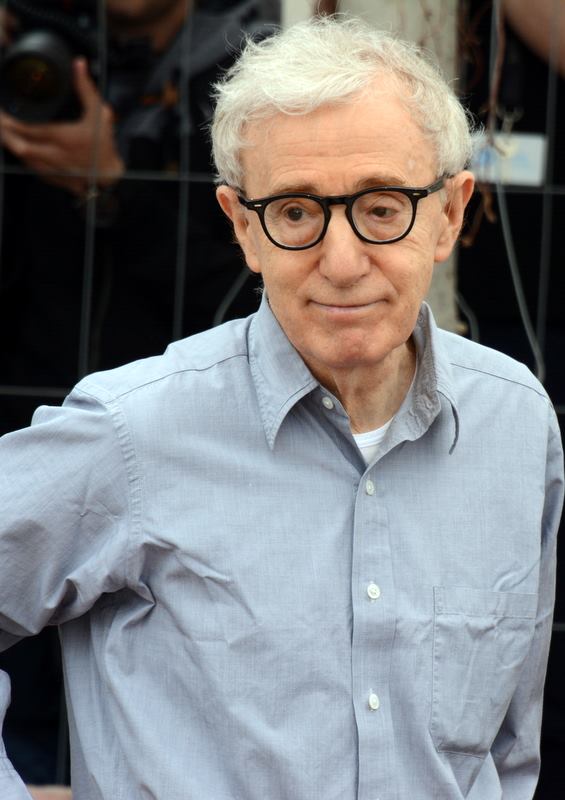
Woody Allen
Woody Allen is an American filmmaker, actor, writer, and comedian. In a career spanning eight decades, he has written for film, television, and theater, and has published several short stories, a novel, and a memoir.
Why Woody Allen Appears in the Documents
Woody Allen is mentioned in 158 documents within the Epstein file corpus, consisting of 120 emails, 25 articles, 3 books, 3 Proposals, 2 datas, 2 televisions, 1 announcement, 1 chat, 1 television program, originating from the House Oversight Committee.
These documents include titles such as "Email discussing Clinton allegations and media coverage", "Jeffrey Epstein - Search results", "Email thread about Clinton allegations and media coverage" among others. Woody Allen's name appears across these documents in various contexts. The document corpus contains a wide range of materials including media coverage, government records, and legal proceedings where many public figures are mentioned.
Disclaimer: Appearing in the Epstein document corpus does not imply wrongdoing, guilt, or any form of association with criminal activity. Many public figures are mentioned incidentally in these documents due to the broad scope of the released materials.
Documents (50)
Email discussing Clinton allegations and media coverage
An internal email thread shows Michael Wolff and Jeffrey E. strategizing to publish a sensational, potentially libelous claim that Bill Clinton was involved in orgies, based on unverified civil court documents that tabloids amplified and then re-imported as fact. They weigh which outlets to approach (USA Today, New York Magazine, possibly the Times or WSJ), emphasize on-record sourcing and libel risk, and discuss timing, while casually noting personal dinner plans with Woody Allen and Soon-Yi.
Source: House Oversight Committee
Jeffrey Epstein - Search results
This document is a snapshot of a Google search results page for “Jeffrey Epstein,” compiling a range of sources from biographical and news outlets to profiles of his philanthropy and science funding, coverage of his criminal conviction, and notes on how those results rank and shift, highlighting ongoing public interest and the varied, sometimes conflicting portrayals of Epstein and his circle.
Source: House Oversight Committee
Email thread about Clinton allegations and media coverage
An internal January 2015 email thread between Jeffrey E. and Michael Wolff discusses pursuing a media story about Clinton-era allegations tied to Dershowitz and Andrew, debating the reliability of sources and libel risk, potential outlets (USA Today, New York Magazine, or major papers), and scheduling a call, with Jeffrey asserting parts of a woman's tale about Clinton are fabrications intended to discredit the allegations, all framed by repeated confidentiality notices.
Source: House Oversight Committee
Email discussing Clinton allegations and media coverage
An internal email thread shows Michael Wolff and Jeffrey E. strategizing to publish a sensational, potentially libelous claim that Bill Clinton was involved in orgies, based on unverified civil court documents that tabloids amplified and then re-imported as fact. They weigh which outlets to approach (USA Today, New York Magazine, possibly the Times or WSJ), emphasize on-record sourcing and libel risk, and discuss timing, while casually noting personal dinner plans with Woody Allen and Soon-Yi.
Source: House Oversight Committee
Email discussion about Jeffrey Epstein statements (Krauss and Watson)
An April 2011 email exchange between Lawrence Krauss and Rebecca Watson centers on Krauss’s public remarks about Jeffrey Epstein and how to frame a statement in response to a Daily Beast piece. Krauss defends Epstein as a friend who has reflected positively after his imprisonment, questions who the actual victims are, and urges a nuanced, less condemnatory tone, while Watson pushes back, stressing that the evidence against Epstein is strong and that victims deserve acknowledgement; she plans to publish her own account on Skepchick with Krauss’s input. The thread also notes Epstein’s guilty plea for paying for sex with a minor, illustrating the tensions between personal loyalty, scientific reputation, and public accountability.
Source: House Oversight Committee
Email discussion about Jeffrey Epstein statements (Krauss and Watson)
An April 2011 email exchange between Lawrence Krauss and Rebecca Watson centers on Krauss’s public remarks about Jeffrey Epstein and how to frame a statement in response to a Daily Beast piece. Krauss defends Epstein as a friend who has reflected positively after his imprisonment, questions who the actual victims are, and urges a nuanced, less condemnatory tone, while Watson pushes back, stressing that the evidence against Epstein is strong and that victims deserve acknowledgement; she plans to publish her own account on Skepchick with Krauss’s input. The thread also notes Epstein’s guilty plea for paying for sex with a minor, illustrating the tensions between personal loyalty, scientific reputation, and public accountability.
Source: House Oversight Committee
Email chain about Clinton/Dershowitz allegations and media reporting
This is a private January 2015 email exchange between Jeffrey E. and Michael Wolff discussing a sensational, but unverified, story about Bill Clinton, including allegations of lurid encounters; they debate the veracity of the claims, the origins of related allegations involving Dershowitz and Andrew from unverified civil court documents and tabloids, and which outlets—USA Today, New York Magazine, or major papers like the Times or WSJ—might publish it with on‑the‑record sourcing, as well as potential publication timing, while also noting talk of schedules and confidentiality notices embedded in the thread.
Source: House Oversight Committee
Email Thread on Clinton Allegations and Media Coverage
This January 2015 internal exchange between Michael Wolff and Jeffrey E. discusses unverified allegations about Clinton—claims drawn from civil court documents and amplified by UK tabloids—and Wolff’s plan to publish a USA Today column on how those allegations were spread or, if not, to pursue a New York Magazine piece in February, while weighing whether on-the-record sources and major outlets will touch the story, alongside a note about a dinner with Woody Allen and Soon‑Yi and a standard confidentiality disclaimer.
Source: House Oversight Committee
Email chain discussing Clinton allegations and media coverage
An urgent email exchange between Michael Wolff and Jeffrey E. discusses sensational but contested allegations about Bill Clinton, arguing the материала originated from unverified civil-court documents and UK tabloid coverage, and weighing publication options (USA Today, New York Magazine, or other outlets) depending on on-the-record sources, while coordinating a upcoming call and reiterating confidentiality and privilege notices embedded in the messages.
Source: House Oversight Committee
Email chain about Clinton/Dershowitz allegations and media reporting
This is a private January 2015 email exchange between Jeffrey E. and Michael Wolff discussing a sensational, but unverified, story about Bill Clinton, including allegations of lurid encounters; they debate the veracity of the claims, the origins of related allegations involving Dershowitz and Andrew from unverified civil court documents and tabloids, and which outlets—USA Today, New York Magazine, or major papers like the Times or WSJ—might publish it with on‑the‑record sourcing, as well as potential publication timing, while also noting talk of schedules and confidentiality notices embedded in the thread.
Source: House Oversight Committee
Email chain discussing Clinton allegations and media coverage
An urgent email exchange between Michael Wolff and Jeffrey E. discusses sensational but contested allegations about Bill Clinton, arguing the материала originated from unverified civil-court documents and UK tabloid coverage, and weighing publication options (USA Today, New York Magazine, or other outlets) depending on on-the-record sources, while coordinating a upcoming call and reiterating confidentiality and privilege notices embedded in the messages.
Source: House Oversight Committee
Email Thread on Clinton Allegations and Media Coverage
This January 2015 internal exchange between Michael Wolff and Jeffrey E. discusses unverified allegations about Clinton—claims drawn from civil court documents and amplified by UK tabloids—and Wolff’s plan to publish a USA Today column on how those allegations were spread or, if not, to pursue a New York Magazine piece in February, while weighing whether on-the-record sources and major outlets will touch the story, alongside a note about a dinner with Woody Allen and Soon‑Yi and a standard confidentiality disclaimer.
Source: House Oversight Committee
Email chain discussing Jeffrey Epstein controversy and Krauss statements
These emails reveal Lawrence Krauss defending Jeffrey Epstein amid allegations of paying for sex with a minor, portraying Epstein in personal terms as thoughtful and generous and suggesting he doesn’t know who the real “victim” is, while noting Epstein’s prison time led him to reflect and resisting blanket condemnation; Rebecca Watson presses Krauss for confirmation and a public statement, and the thread shows editorial edits and confidentiality notices, illustrating the ethical and media dynamics involved in handling public remarks about a controversial, criminal figure.
Source: House Oversight Committee
Email chain regarding Jeffrey Epstein comments and Krauss defense
These emails show Lawrence Krauss defending Jeffrey Epstein amid sensational allegations, arguing that the media claims are unproven and that Epstein deserves the benefit of the doubt after serving time, while stating he does not condone sex with minors; the exchange reveals Krauss’s loyalty and willingness to back a friend, the skeptical community’s disagreement (notably Rebecca Watson), and efforts to craft a public statement, illustrating the clash between personal relationships, scientific skepticism, and high-profile sexual misconduct controversies.
Source: House Oversight Committee
Email chain discussing Jeffrey Epstein controversy and Krauss statements
These emails reveal Lawrence Krauss defending Jeffrey Epstein amid allegations of paying for sex with a minor, portraying Epstein in personal terms as thoughtful and generous and suggesting he doesn’t know who the real “victim” is, while noting Epstein’s prison time led him to reflect and resisting blanket condemnation; Rebecca Watson presses Krauss for confirmation and a public statement, and the thread shows editorial edits and confidentiality notices, illustrating the ethical and media dynamics involved in handling public remarks about a controversial, criminal figure.
Source: House Oversight Committee
Email about online reputation management and Google search results for Jeffrey Epstein
Tyler Shears emails Jeffrey Epstein in a high-priority update about Epstein’s online reputation, explaining that two negative items currently sit on the first page of Google and that results can vary based on user history, then offering to set up a reliable incognito/cleared-cache reporting method to reflect what an average searcher would see. He reports notable progress on an SEO campaign—premium placements being secured, hundreds of links built to Epstein’s sites, with NYMag moving up to fourth—projecting about 45 days to achieve a clean first page, and noting that a foundation site was hacked and is being secured to prevent further hijacks. Epstein’s earlier message provides a snapshot of search results dominated by Wikipedia, Forbes, philanthropy and other sites, illustrating the challenge of shaping his online image; the exchange is wrapped in a confidentiality disclaimer.
Source: House Oversight Committee
Email about online reputation management and Google search results for Jeffrey Epstein
Tyler Shears emails Jeffrey Epstein in a high-priority update about Epstein’s online reputation, explaining that two negative items currently sit on the first page of Google and that results can vary based on user history, then offering to set up a reliable incognito/cleared-cache reporting method to reflect what an average searcher would see. He reports notable progress on an SEO campaign—premium placements being secured, hundreds of links built to Epstein’s sites, with NYMag moving up to fourth—projecting about 45 days to achieve a clean first page, and noting that a foundation site was hacked and is being secured to prevent further hijacks. Epstein’s earlier message provides a snapshot of search results dominated by Wikipedia, Forbes, philanthropy and other sites, illustrating the challenge of shaping his online image; the exchange is wrapped in a confidentiality disclaimer.
Source: House Oversight Committee
Email chain on Incognito mode and search result manipulation
This 2014 email thread documents a reputation-management effort for Jeffrey Epstein, outlining how to reproduce unbiased Google search results using Chrome in Incognito mode with cleared cache, reporting progress on pushing negative results off the first page through premium placements and extensive link-building with a rough 45-day timeline, noting a hacking incident on the foundation site being fixed, and including a referenced screenshot, operational details, and confidentiality notices.
Source: House Oversight Committee
Email thread about Clinton allegations and media coverage
An internal email thread in which Jeffrey E. and Michael Wolff discuss how to handle sensational, unverified allegations about Bill Clinton, debating the credibility of the claims, how Dershowitz and Andrew’s allegations were sourced from civil court documents and amplified by UK tabloids, whether Clinton would deny being present at certain events, and strategic options for breaking or pursuing the story through various outlets with on-the-record sources, all while including standard confidentiality notices.
Source: House Oversight Committee
Email chain on Incognito mode and search result manipulation
This 2014 email thread documents a reputation-management effort for Jeffrey Epstein, outlining how to reproduce unbiased Google search results using Chrome in Incognito mode with cleared cache, reporting progress on pushing negative results off the first page through premium placements and extensive link-building with a rough 45-day timeline, noting a hacking incident on the foundation site being fixed, and including a referenced screenshot, operational details, and confidentiality notices.
Source: House Oversight Committee
Email thread about Clinton allegations and media coverage
An internal email thread in which Jeffrey E. and Michael Wolff discuss how to handle sensational, unverified allegations about Bill Clinton, debating the credibility of the claims, how Dershowitz and Andrew’s allegations were sourced from civil court documents and amplified by UK tabloids, whether Clinton would deny being present at certain events, and strategic options for breaking or pursuing the story through various outlets with on-the-record sources, all while including standard confidentiality notices.
Source: House Oversight Committee
Filthy Rich
Filthy Rich is an investigative chronicle of Jeffrey Epstein’s multimillionaire network, exposing how a convicted sex offender leveraged immense wealth, access, and fear to prey on underage girls for years. Through a tapestry of interviews, court papers, and the accounts of associates, it reveals Epstein’s entanglements with powerful figures—Prince Andrew, Alan Dershowitz, Ghislaine Maxwell, Scott Rothstein, Leslie Wexner, and others—while victims recount manipulation, coercion, and captivity. It also traces the ensuing legal battles, counterclaims, and high-stakes media coverage that blurred the line between justice and power, culminating in continuing investigations and litigation that cast a long shadow over Epstein’s circle.
Source: House Oversight Committee
Filthy Rich
Filthy Rich is an investigative chronicle of Jeffrey Epstein’s multimillionaire network, exposing how a convicted sex offender leveraged immense wealth, access, and fear to prey on underage girls for years. Through a tapestry of interviews, court papers, and the accounts of associates, it reveals Epstein’s entanglements with powerful figures—Prince Andrew, Alan Dershowitz, Ghislaine Maxwell, Scott Rothstein, Leslie Wexner, and others—while victims recount manipulation, coercion, and captivity. It also traces the ensuing legal battles, counterclaims, and high-stakes media coverage that blurred the line between justice and power, culminating in continuing investigations and litigation that cast a long shadow over Epstein’s circle.
Source: House Oversight Committee
Email chain about Jeffrey Epstein case and Krauss statements
This is an April 2011 email thread among Jeffrey Epstein, Lawrence Krauss, and Rebecca Watson discussing Epstein’s criminal case and a Daily Beast article: Krauss defends Epstein as a friend and questions who the victims were, suggesting Epstein’s time in prison led to positive reflections and that he does not fully know who was harmed, while Watson argues that the evidence against Epstein is overwhelming and urges a more cautious public statement; the exchange also shows drafting language for a blog post and includes internal document tracking notes and confidentiality notices.
Source: House Oversight Committee
Email thread about Jeffrey Epstein statements
The document is a chain of confidential 2011 emails among Jeffrey Epstein, Lawrence Krauss, and Rebecca Watson about a Daily Beast piece on Epstein, in which Krauss defends Epstein and questions who the victims were, while Watson presses back, citing Epstein’s guilty plea for paying for sex with a minor and offering to publish a clarifying statement, revealing efforts to shape Epstein-related public discourse and the ethical tensions surrounding his associations with prominent scientists.
Source: House Oversight Committee
Re: Statement in the Daily Beast?
This 2011 internal email thread among Lawrence Krauss, Jeffrey Epstein, and Rebecca Watson centers on Krauss’s defense of Epstein in a Daily Beast piece, with Krauss questioning who the real victims are and arguing from a friend’s perspective, while Watson pushes back and urges a more victim-centered, evidence-based stance; the exchanges, including multiple edits and a confidentiality disclaimer, reveal the ethical tensions and potential conflicts surrounding defending a friend connected to sex with a minor.
Source: House Oversight Committee
Filthy Rich
Filthy Rich chronicles Jeffrey Epstein’s rise from a Brooklyn-born financier to a billionaire whose velvet circle—Ghislaine Maxwell and a constellation of powerful men including Les Wexner, Donald Trump, Prince Andrew, and Alan Dershowitz—helped him recruit, traffic, and conceal underage victims. The narrative threads through Epstein’s charm, leverage, and expansive network that opened doors to elite wealth and influence, including his patronage of scientists and high-society mind-shifts, while detailing how Maxwell and others facilitated the abuse, transported girls, and kept a precarious duplicitous system afloat. It also exposes the legal arc surrounding his crimes: a controversial 2007–2008 non-prosecution agreement, a 2008 state guilty plea that resulted in a relatively light sentence and life-time sex-offender registration, and later civil suits and federal probes that continued to haunt his associates and the public conscience. Against the glittering glamour of elite access lies a culture of entitlements where money and status often shielded horrific acts, a truth slowly laid bare by victims’ testimonies and investigative scrutiny.
Source: House Oversight Committee
Filthy Rich
Filthy Rich chronicles Jeffrey Epstein’s rise from a Brooklyn-born financier to a billionaire whose velvet circle—Ghislaine Maxwell and a constellation of powerful men including Les Wexner, Donald Trump, Prince Andrew, and Alan Dershowitz—helped him recruit, traffic, and conceal underage victims. The narrative threads through Epstein’s charm, leverage, and expansive network that opened doors to elite wealth and influence, including his patronage of scientists and high-society mind-shifts, while detailing how Maxwell and others facilitated the abuse, transported girls, and kept a precarious duplicitous system afloat. It also exposes the legal arc surrounding his crimes: a controversial 2007–2008 non-prosecution agreement, a 2008 state guilty plea that resulted in a relatively light sentence and life-time sex-offender registration, and later civil suits and federal probes that continued to haunt his associates and the public conscience. Against the glittering glamour of elite access lies a culture of entitlements where money and status often shielded horrific acts, a truth slowly laid bare by victims’ testimonies and investigative scrutiny.
Source: House Oversight Committee
Filthy Rich
Filthy Rich chronicles Jeffrey Epstein’s rise from a Brooklyn-born financier to a billionaire whose velvet circle—Ghislaine Maxwell and a constellation of powerful men including Les Wexner, Donald Trump, Prince Andrew, and Alan Dershowitz—helped him recruit, traffic, and conceal underage victims. The narrative threads through Epstein’s charm, leverage, and expansive network that opened doors to elite wealth and influence, including his patronage of scientists and high-society mind-shifts, while detailing how Maxwell and others facilitated the abuse, transported girls, and kept a precarious duplicitous system afloat. It also exposes the legal arc surrounding his crimes: a controversial 2007–2008 non-prosecution agreement, a 2008 state guilty plea that resulted in a relatively light sentence and life-time sex-offender registration, and later civil suits and federal probes that continued to haunt his associates and the public conscience. Against the glittering glamour of elite access lies a culture of entitlements where money and status often shielded horrific acts, a truth slowly laid bare by victims’ testimonies and investigative scrutiny.
Source: House Oversight Committee
Email chain about Jeffrey Epstein case and Krauss statements
This is an April 2011 email thread among Jeffrey Epstein, Lawrence Krauss, and Rebecca Watson discussing Epstein’s criminal case and a Daily Beast article: Krauss defends Epstein as a friend and questions who the victims were, suggesting Epstein’s time in prison led to positive reflections and that he does not fully know who was harmed, while Watson argues that the evidence against Epstein is overwhelming and urges a more cautious public statement; the exchange also shows drafting language for a blog post and includes internal document tracking notes and confidentiality notices.
Source: House Oversight Committee
Email thread about Jeffrey Epstein statements
The document is a chain of confidential 2011 emails among Jeffrey Epstein, Lawrence Krauss, and Rebecca Watson about a Daily Beast piece on Epstein, in which Krauss defends Epstein and questions who the victims were, while Watson presses back, citing Epstein’s guilty plea for paying for sex with a minor and offering to publish a clarifying statement, revealing efforts to shape Epstein-related public discourse and the ethical tensions surrounding his associations with prominent scientists.
Source: House Oversight Committee
Re: Statement in the Daily Beast?
This 2011 internal email thread among Lawrence Krauss, Jeffrey Epstein, and Rebecca Watson centers on Krauss’s defense of Epstein in a Daily Beast piece, with Krauss questioning who the real victims are and arguing from a friend’s perspective, while Watson pushes back and urges a more victim-centered, evidence-based stance; the exchanges, including multiple edits and a confidentiality disclaimer, reveal the ethical tensions and potential conflicts surrounding defending a friend connected to sex with a minor.
Source: House Oversight Committee
Google search results about Jeffrey Epstein
An internal email assembling a Google search snapshot of Jeffrey Epstein, portraying him as a financier and science/philanthropy figure who founded Harvard’s Program for Evolutionary Dynamics and the Epstein VI Foundation, while also highlighting his connections to Nobel laureates, business leaders, and high-profile associates, and surfacing reports of his conviction for soliciting underage prostitution alongside ongoing scrutiny of his circle.
Source: House Oversight Committee
Google search results about Jeffrey Epstein
An internal email assembling a Google search snapshot of Jeffrey Epstein, portraying him as a financier and science/philanthropy figure who founded Harvard’s Program for Evolutionary Dynamics and the Epstein VI Foundation, while also highlighting his connections to Nobel laureates, business leaders, and high-profile associates, and surfacing reports of his conviction for soliciting underage prostitution alongside ongoing scrutiny of his circle.
Source: House Oversight Committee
Email chain about Jeffrey Epstein allegations and Krauss defense
This 2011 email thread among Lawrence Krauss, Jeffrey Epstein, Rebecca Watson, and others reveals Krauss defending Epstein against media allegations, arguing for skepticism and not condemning him without hard evidence, and noting Epstein’s time in prison prompted personal reflection; the exchange highlights tensions within the skeptical community over Epstein’s alleged sexual misconduct, the role of victims, and how prominent scientists publicly respond to controversial associations.
Source: House Oversight Committee
Email chain about Jeffrey Epstein allegations and Krauss defense
This 2011 email thread among Lawrence Krauss, Jeffrey Epstein, Rebecca Watson, and others reveals Krauss defending Epstein against media allegations, arguing for skepticism and not condemning him without hard evidence, and noting Epstein’s time in prison prompted personal reflection; the exchange highlights tensions within the skeptical community over Epstein’s alleged sexual misconduct, the role of victims, and how prominent scientists publicly respond to controversial associations.
Source: House Oversight Committee
They're Not Really Out to Get You
Edward Jay Epstein’s Wall Street Journal review of Rob Brotherton’s Suspicious Minds argues that conspiracy thinking emerges from ordinary cognitive quirks—such as confirmation bias and biased assimilation—that cause people to seek evidence that confirms preconceptions, allowing pseudo-conspiracies to spread while real conspiracies occur in fields from terrorism to finance; he traces the historical shift in how we use the term “conspiracy theory” after the Warren Commission, contrasts plausible investigations (like the Confederate role in Lincoln’s assassination) with patently unfounded claims (the moon landing was faked, Area 51 aliens, Obama as a Kenyan communist), and through Brotherton’s framework offers a thoughtful guide to evaluating conspiracies, noting there is no simple cure for our brains’ tendency to leap to conspiratorial conclusions.
Source: House Oversight Committee
Email chain about Jeffrey Epstein statements and allegations
These 2011 emails show Lawrence Krauss privately defending Jeffrey Epstein to Rebecca Watson, arguing Epstein is a thoughtful, generous friend, that he believes Epstein told him he didn’t know the girls were underage, and even questioning who the actual victim was, while Watson seeks to verify a controversial Daily Beast quote about Krauss’s views; the thread also includes discussion of the broader evidence against Epstein (including his guilty plea for paying for sex with a minor) and is peppered with confidentiality notices, revealing a personal, protective stance toward an associate despite public allegations.
Source: House Oversight Committee
Email chain about Jeffrey Epstein statement
This 2011 private email thread among Jeffrey Epstein, Lawrence Krauss, and Rebecca Watson shows Krauss defending Epstein in the wake of public allegations, while Watson challenges him and cites Epstein’s guilty plea for paying for sex with a minor; the exchange reveals a tension between personal loyalty within scientific networks and accountability to victims, including efforts to craft and circulate a public statement, and it is wrapped in confidential, privileged-notice language.
Source: House Oversight Committee
Email chain about Jeffrey Epstein statements and allegations
These 2011 emails show Lawrence Krauss privately defending Jeffrey Epstein to Rebecca Watson, arguing Epstein is a thoughtful, generous friend, that he believes Epstein told him he didn’t know the girls were underage, and even questioning who the actual victim was, while Watson seeks to verify a controversial Daily Beast quote about Krauss’s views; the thread also includes discussion of the broader evidence against Epstein (including his guilty plea for paying for sex with a minor) and is peppered with confidentiality notices, revealing a personal, protective stance toward an associate despite public allegations.
Source: House Oversight Committee
Email chain about Jeffrey Epstein statement
This 2011 private email thread among Jeffrey Epstein, Lawrence Krauss, and Rebecca Watson shows Krauss defending Epstein in the wake of public allegations, while Watson challenges him and cites Epstein’s guilty plea for paying for sex with a minor; the exchange reveals a tension between personal loyalty within scientific networks and accountability to victims, including efforts to craft and circulate a public statement, and it is wrapped in confidential, privileged-notice language.
Source: House Oversight Committee
Email chain regarding Epstein statement and Krauss quote in Daily Beast
This 2011 email threadAmong Jeffrey Epstein, Lawrence Krauss, and Rebecca Watson centers on a Daily Beast piece about Epstein: Krauss defends Epstein and questions who the victims were, while Watson strongly disagrees and contemplates printing a fuller statement with edits to frame the victim issue; the conversation notes Epstein’s past guilty plea for paying for sex with a minor and concludes with confidentiality notices and institutional signatures.
Source: House Oversight Committee
Email chain discussing Epstein statement and Krauss defense
This is a private April 2011 email chain among Lawrence Krauss, Rebecca Watson, and Jeffrey Epstein in which they discuss a public statement regarding Epstein for the Daily Beast article. Krauss defends his friendship with Epstein and questions who the actual victims were, while acknowledging Epstein’s guilty plea for paying for sex with a minor, and he urges a nuanced, non-blanket condemnation. Watson pushes back, seeking confirmation and fuller context before publication, and the dialogue reveals tensions between loyalty to a friend, scientific credibility, and the handling of public allegations, all marked by confidentiality notices and internal references.
Source: House Oversight Committee
Email chain regarding Epstein statement and Krauss quote in Daily Beast
This 2011 email threadAmong Jeffrey Epstein, Lawrence Krauss, and Rebecca Watson centers on a Daily Beast piece about Epstein: Krauss defends Epstein and questions who the victims were, while Watson strongly disagrees and contemplates printing a fuller statement with edits to frame the victim issue; the conversation notes Epstein’s past guilty plea for paying for sex with a minor and concludes with confidentiality notices and institutional signatures.
Source: House Oversight Committee
Email chain discussing Epstein statement and Krauss defense
This is a private April 2011 email chain among Lawrence Krauss, Rebecca Watson, and Jeffrey Epstein in which they discuss a public statement regarding Epstein for the Daily Beast article. Krauss defends his friendship with Epstein and questions who the actual victims were, while acknowledging Epstein’s guilty plea for paying for sex with a minor, and he urges a nuanced, non-blanket condemnation. Watson pushes back, seeking confirmation and fuller context before publication, and the dialogue reveals tensions between loyalty to a friend, scientific credibility, and the handling of public allegations, all marked by confidentiality notices and internal references.
Source: House Oversight Committee
Re: Statement in the Daily Beast?
This thread of emails among Lawrence Krauss, Jeffrey Epstein, and Rebecca Watson centers on Krauss defending Epstein amid public sexual-misconduct allegations, expressing sympathy and questioning who the victims were, while Watson seeks to verify a controversial Daily Beast quote and urges a clear stance; the exchange lays bare internal Skeptics debates about accountability, the age and treatment of the women involved, and the tension between friendship and ethical responsibility, all framed by confidentiality notices.
Source: House Oversight Committee
Re: Statement in the Daily Beast?
This thread of emails among Lawrence Krauss, Jeffrey Epstein, and Rebecca Watson centers on Krauss defending Epstein amid public sexual-misconduct allegations, expressing sympathy and questioning who the victims were, while Watson seeks to verify a controversial Daily Beast quote and urges a clear stance; the exchange lays bare internal Skeptics debates about accountability, the age and treatment of the women involved, and the tension between friendship and ethical responsibility, all framed by confidentiality notices.
Source: House Oversight Committee
Email chain about media figures and Trump-related controversy
An insider 2017 email thread discusses a widening wave of scandals engulfing prominent figures, noting Lorin Stein’s downfall at the Paris Review and predicting more “old news” to surface as the Trump era and the post-Weinstein reckoning intensify; the speakers warn that individuals like Michael Douglas, Larry Gagosian, and Arthur Sulzberger may join the list, speculate about Woody Allen being pulled into the same circle, and reference Ronan Farrow’s reporting and Fusion GPS–style smear efforts, all set against a climate of confidential, insider information and looming exposure.
Source: House Oversight Committee
Email chain about media figures and Trump coverage
This December 2017 email thread from Michael Wolff offers a tense insider’s snapshot of a media-political moment, weaving whispers about high-profile figures such as Lorin Stein, Arthur Sulzberger, Michael Douglas and Harvey Weinstein with a blunt forecast that Donald Trump’s downfall is looming, all set against reference to the contemporary Fusion GPS controversy and related scandal-mongering in the press.
Source: House Oversight Committee
Alan Dershowitz: Takes The Stand—An Autobiography
Source: House Oversight Committee