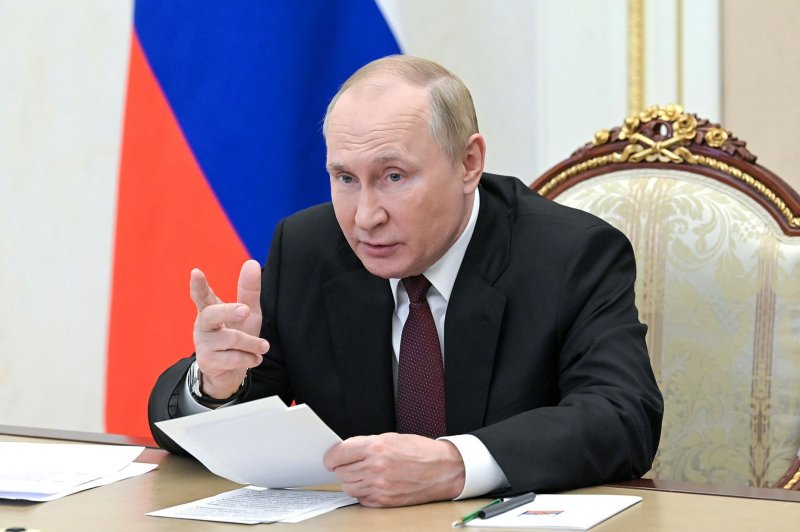
Vladimir Putin
Vladimir Vladimirovich Putin is a Russian politician and former intelligence officer who has served as President of Russia since 2012, and previously from 2000 to 2008.
Why Vladimir Putin Appears in the Documents
Vladimir Putin is mentioned in 249 documents within the Epstein file corpus, consisting of 140 articles, 71 emails, 7 datas, 7 transcripts, 6 interviews, 5 books, 4 reports, 3 chats, 1 bibliography, 1 briefing, 1 communication, 1 opinion, 1 policy brief, 1 speech, originating from the House Oversight Committee.
These documents include titles such as "Microsoft Word - Wall Street Journal.docx", "Email: Trump real estate deals and Jeffrey Epstein connections", "Email by Paul Krassner on Trump, Clinton, and electoral college" among others. Vladimir Putin's name appears across these documents in various contexts. The document corpus contains a wide range of materials including media coverage, government records, and legal proceedings where many public figures are mentioned.
Disclaimer: Appearing in the Epstein document corpus does not imply wrongdoing, guilt, or any form of association with criminal activity. Many public figures are mentioned incidentally in these documents due to the broad scope of the released materials.
Documents (50)
Microsoft Word - Wall Street Journal.docx
Edward Jay Epstein argues that Edward Snowden’s “whistleblower” narrative is largely false: Snowden stole about 1.5 million NSA documents—far more than he acknowledged—and used his Hong Kong meetings with Laura Poitras and Glenn Greenwald to leak key materials such as the Verizon order and the Prism presentation, while secretly retaining other sensitive data and aiming at targets abroad. The piece shows that Snowden fled Hawaii for Hong Kong and then Moscow with Russian help, after the U.S. revoked his passport, with Putin’s authorization and the airport facilitation by Aeroflot, and that he has remained in contact with Russian intelligence since his arrival, contrary to his assertions of isolation. WikiLeaks is depicted as providing a smokescreen, and Kremlin insiders confirm that Snowden did bring material to Moscow and did not destroy it all. The article concludes that Snowden became an espionage source for Russia, not merely a conscientious whistleblower, a thesis Epstein expands upon in his forthcoming book.
Source: House Oversight Committee
Microsoft Word - Wall Street Journal.docx
Edward Jay Epstein argues that Edward Snowden’s “whistleblower” narrative is largely false: Snowden stole about 1.5 million NSA documents—far more than he acknowledged—and used his Hong Kong meetings with Laura Poitras and Glenn Greenwald to leak key materials such as the Verizon order and the Prism presentation, while secretly retaining other sensitive data and aiming at targets abroad. The piece shows that Snowden fled Hawaii for Hong Kong and then Moscow with Russian help, after the U.S. revoked his passport, with Putin’s authorization and the airport facilitation by Aeroflot, and that he has remained in contact with Russian intelligence since his arrival, contrary to his assertions of isolation. WikiLeaks is depicted as providing a smokescreen, and Kremlin insiders confirm that Snowden did bring material to Moscow and did not destroy it all. The article concludes that Snowden became an espionage source for Russia, not merely a conscientious whistleblower, a thesis Epstein expands upon in his forthcoming book.
Source: House Oversight Committee
Microsoft Word - Wall Street Journal.docx
Edward Jay Epstein argues that Edward Snowden’s “whistleblower” narrative is largely false: Snowden stole about 1.5 million NSA documents—far more than he acknowledged—and used his Hong Kong meetings with Laura Poitras and Glenn Greenwald to leak key materials such as the Verizon order and the Prism presentation, while secretly retaining other sensitive data and aiming at targets abroad. The piece shows that Snowden fled Hawaii for Hong Kong and then Moscow with Russian help, after the U.S. revoked his passport, with Putin’s authorization and the airport facilitation by Aeroflot, and that he has remained in contact with Russian intelligence since his arrival, contrary to his assertions of isolation. WikiLeaks is depicted as providing a smokescreen, and Kremlin insiders confirm that Snowden did bring material to Moscow and did not destroy it all. The article concludes that Snowden became an espionage source for Russia, not merely a conscientious whistleblower, a thesis Epstein expands upon in his forthcoming book.
Source: House Oversight Committee
Email: Trump real estate deals and Jeffrey Epstein connections
An email from Michael Wolff to Jeffrey Epstein portrays Trump’s long real estate career as riddled with shady, money-laundering–style practices and a licensing‑his‑name business model, and it recounts a 2004 Palm Beach house deal in which Epstein and Trump were close, the transaction funneled through Trump Properties LLC with Deutsche Bank financing, and Dmitry Rybolovlev allegedly paying a high price that could have netted Trump a $55 million windfall; Epstein later faced prostitution charges, and the note ends with Bannon telling Epstein he feared coming forward during the campaign.
Source: House Oversight Committee
Email by Paul Krassner on Trump, Clinton, and electoral college
This editor’s note reveals Paul Krassner’s plan to trim a “The Best of…” collection from 700 to 400 pages and presents a revised, provocative mini-essay in which he critiques Donald Trump, acknowledges the controversy surrounding allegations against him without asserting proven guilt, and reflects on the 2000 and 2016 elections—the role of the electoral college and the irony of Hillary Clinton’s popular-vote lead—while closing with a note of resilience and a Happy Earth Day.
Source: House Oversight Committee
Email: Trump real estate deals and Jeffrey Epstein connections
An email from Michael Wolff to Jeffrey Epstein portrays Trump’s long real estate career as riddled with shady, money-laundering–style practices and a licensing‑his‑name business model, and it recounts a 2004 Palm Beach house deal in which Epstein and Trump were close, the transaction funneled through Trump Properties LLC with Deutsche Bank financing, and Dmitry Rybolovlev allegedly paying a high price that could have netted Trump a $55 million windfall; Epstein later faced prostitution charges, and the note ends with Bannon telling Epstein he feared coming forward during the campaign.
Source: House Oversight Committee
Email discussing Trump's finances, Epstein deal, and Rybolovlev
This confidential 2019 email chain alleges troubling real estate practices by Donald Trump, describing how his name was used to front properties owned by others to mask ownership and launder funds, and recounting a Palm Beach deal in which Epstein advised on construction and a later sale to Dmitry Rybolovlev for $96 million—financed by Deutsche Bank—with Trump Properties LLC allegedly realizing a $55 million gain without his cash investment; the message links Epstein to investigations and mentions Steve Bannon’s fear of Epstein, all framed as part of a broader pattern of money‑laundering risk in real estate.
Source: House Oversight Committee
Email chain referencing Putin-Trump photo inquiry
This March 2018 internal email thread between Mark L. Epstein and Jeffrey E. reveals an informal discussion of political intrigue, including a provocative question about whether Putin has compromising photos of Trump with “Bubba” (Bill Clinton), casual references to Steve Bannon, a note about a prediabetic condition, and a standard confidentiality disclaimer labeled “HOUSE OVERSIGHT 030716.”
Source: House Oversight Committee
Re: Subject to change
An internal email about trimming a controversial 700-page collection to 400 pages, in which Paul Krassner shares a revised mini-essay that admits there is no evidence that Donald Trump raped a 13-year-old (though there is an accusation) and adds a more hopeful ending, while referencing a Guardian piece and a PR-driven setup; the message also includes a fiery, op-ed–style tirade about the 2000 and 2016 elections and Trump’s alleged faults, finishing with a confidential, attorney‑client‑style notice and contact details.
Source: House Oversight Committee
Polities and law: Analysis of Russian interference in the 2016 U.S. elections
Edward Jay Epstein argues that the 2016 presidential race was shaped by three disclosure operations likely orchestrated by Russian intelligence and leaked through intermediaries: the Trump dossier produced by Fusion GPS and Orbis (Steele) to major outlets; the release of DNC emails attributed to the Kremlin via DC Leaks; and a Veselnitskaya meeting in which Russia allegedly offered dirt on Hillary Clinton. He suggests the material may have been curated with FSB involvement and highlights how monitored channels, including Kislyak’s open line, exposed Trump associates and fueled distrust in U.S. institutions. While the intelligence community framed Putin’s aim as hurting Clinton and helping Trump, Epstein argues the Kremlin’s broader objective was to undermine confidence in American democracy and U.S. standing, using disclosures as a strategic tool.
Source: House Oversight Committee
Email chain referencing Putin-Trump photo inquiry
This March 2018 internal email thread between Mark L. Epstein and Jeffrey E. reveals an informal discussion of political intrigue, including a provocative question about whether Putin has compromising photos of Trump with “Bubba” (Bill Clinton), casual references to Steve Bannon, a note about a prediabetic condition, and a standard confidentiality disclaimer labeled “HOUSE OVERSIGHT 030716.”
Source: House Oversight Committee
Re: Subject to change
An internal email about trimming a controversial 700-page collection to 400 pages, in which Paul Krassner shares a revised mini-essay that admits there is no evidence that Donald Trump raped a 13-year-old (though there is an accusation) and adds a more hopeful ending, while referencing a Guardian piece and a PR-driven setup; the message also includes a fiery, op-ed–style tirade about the 2000 and 2016 elections and Trump’s alleged faults, finishing with a confidential, attorney‑client‑style notice and contact details.
Source: House Oversight Committee
Polities and law: Analysis of Russian interference in the 2016 U.S. elections
Edward Jay Epstein argues that the 2016 presidential race was shaped by three disclosure operations likely orchestrated by Russian intelligence and leaked through intermediaries: the Trump dossier produced by Fusion GPS and Orbis (Steele) to major outlets; the release of DNC emails attributed to the Kremlin via DC Leaks; and a Veselnitskaya meeting in which Russia allegedly offered dirt on Hillary Clinton. He suggests the material may have been curated with FSB involvement and highlights how monitored channels, including Kislyak’s open line, exposed Trump associates and fueled distrust in U.S. institutions. While the intelligence community framed Putin’s aim as hurting Clinton and helping Trump, Epstein argues the Kremlin’s broader objective was to undermine confidence in American democracy and U.S. standing, using disclosures as a strategic tool.
Source: House Oversight Committee
Russia Claims IMF Chief Jailed Over Missing US Gold
This email-style briefing recounts a secret FSB report claiming former IMF chief Dominique Strauss-Kahn was jailed in the United States after uncovering that all U.S. gold held at Fort Knox was missing, a charge said to be backed by CIA and DGSE evidence amid stalled gold deliveries to fund SDRs. It notes Putin’s defense of Strauss-Kahn as a victim of a US conspiracy, references Ron Paul’s calls to audit and even sell U.S. gold, and ties sensational rumors—such as fake gold bars—to the possibility of a looming global economic shock that would force Russia to take major policy actions.
Source: House Oversight Committee
Russia Claims IMF Chief Jailed Over Missing US Gold
This email-style briefing recounts a secret FSB report claiming former IMF chief Dominique Strauss-Kahn was jailed in the United States after uncovering that all U.S. gold held at Fort Knox was missing, a charge said to be backed by CIA and DGSE evidence amid stalled gold deliveries to fund SDRs. It notes Putin’s defense of Strauss-Kahn as a victim of a US conspiracy, references Ron Paul’s calls to audit and even sell U.S. gold, and ties sensational rumors—such as fake gold bars—to the possibility of a looming global economic shock that would force Russia to take major policy actions.
Source: House Oversight Committee
Russia Claims IMF Chief Jailed Over Missing US Gold
This email-style briefing recounts a secret FSB report claiming former IMF chief Dominique Strauss-Kahn was jailed in the United States after uncovering that all U.S. gold held at Fort Knox was missing, a charge said to be backed by CIA and DGSE evidence amid stalled gold deliveries to fund SDRs. It notes Putin’s defense of Strauss-Kahn as a victim of a US conspiracy, references Ron Paul’s calls to audit and even sell U.S. gold, and ties sensational rumors—such as fake gold bars—to the possibility of a looming global economic shock that would force Russia to take major policy actions.
Source: House Oversight Committee
Wolff Book: Epstein and the Trump Real Estate Deal
An email forwards a May 2019 Raw Story piece about Michael Wolff’s forthcoming book Siege, which alleges Jeffrey Epstein played a key role in a 2004 Palm Beach real estate deal between Donald Trump and a Russian oligarch financed by Deutsche Bank. According to Wolff, Epstein urged Trump to buy a foreclosed mansion after showing him a $55 million purchase plan, but Trump acquired it for about $40 million through Trump Properties LLC, with Epstein allegedly threatening to expose the arrangement and later facing a child-sex abuse probe and a 13‑month jail term brokered by Alex Acosta. Trump then listed the property for $125 million, and it was bought for about $96 million by Dmitry Rybolovlev, supposedly leaving Trump with about $55 million despite not risking his own money. Wolff offers two theories: Trump earned a fee for hiding a shadow owner potentially funded by Rybolovlev, or Rybolovlev bought the house from himself with Trump as intermediary to launder money. Rybolovlev demolished the mansion in 2016 and sold the site as three lots for less than his $115 million investment.
Source: House Oversight Committee
RE: hey
This is a high-priority internal email thread between Mark L. Epstein and Jeffrey E. that blends provocative political banter about Donald Trump, Vladimir Putin, and Steve Bannon with light personal remarks, while repeatedly flagging confidentiality and attorney-client privilege and bearing House Oversight file identifiers, signaling that it contains potentially sensitive inside information from a political oversight context.
Source: House Oversight Committee
Re: hey
This is an internal email thread between Mark L. Epstein and Jeffrey E. that mixes casual, offbeat banter—suggesting a remake of the film Get Hard and updates on people like Steve Bannon—with politically charged insinuations, including a claim about Putin allegedly possessing compromising photos of Trump. The dialogue also touches on personal health (prediabetes) and ongoing political figures, while the messages are repeatedly framed with confidentiality, privilege notices, and House Oversight identifiers, signaling that the content is considered sensitive or insider information.
Source: House Oversight Committee
Wolff Book: Epstein and the Trump Real Estate Deal
An email forwards a May 2019 Raw Story piece about Michael Wolff’s forthcoming book Siege, which alleges Jeffrey Epstein played a key role in a 2004 Palm Beach real estate deal between Donald Trump and a Russian oligarch financed by Deutsche Bank. According to Wolff, Epstein urged Trump to buy a foreclosed mansion after showing him a $55 million purchase plan, but Trump acquired it for about $40 million through Trump Properties LLC, with Epstein allegedly threatening to expose the arrangement and later facing a child-sex abuse probe and a 13‑month jail term brokered by Alex Acosta. Trump then listed the property for $125 million, and it was bought for about $96 million by Dmitry Rybolovlev, supposedly leaving Trump with about $55 million despite not risking his own money. Wolff offers two theories: Trump earned a fee for hiding a shadow owner potentially funded by Rybolovlev, or Rybolovlev bought the house from himself with Trump as intermediary to launder money. Rybolovlev demolished the mansion in 2016 and sold the site as three lots for less than his $115 million investment.
Source: House Oversight Committee
RE: hey
This is a high-priority internal email thread between Mark L. Epstein and Jeffrey E. that blends provocative political banter about Donald Trump, Vladimir Putin, and Steve Bannon with light personal remarks, while repeatedly flagging confidentiality and attorney-client privilege and bearing House Oversight file identifiers, signaling that it contains potentially sensitive inside information from a political oversight context.
Source: House Oversight Committee
Re: hey
This is an internal email thread between Mark L. Epstein and Jeffrey E. that mixes casual, offbeat banter—suggesting a remake of the film Get Hard and updates on people like Steve Bannon—with politically charged insinuations, including a claim about Putin allegedly possessing compromising photos of Trump. The dialogue also touches on personal health (prediabetes) and ongoing political figures, while the messages are repeatedly framed with confidentiality, privilege notices, and House Oversight identifiers, signaling that the content is considered sensitive or insider information.
Source: House Oversight Committee
Epst_9780451494566_2p_all_r1.z.indd
Source: House Oversight Committee
Epst_9780451494566_2p_all_r1.z.indd
Source: House Oversight Committee
Epst_9780451494566_2p_all_r1.z.indd
Source: House Oversight Committee
Epst_9780451494566_2p_all_r1.z.indd
Source: House Oversight Committee
Epst_9780451494566_2p_all_r1.z.indd
Source: House Oversight Committee
Epst_9780451494566_2p_all_r1.z.indd
Source: House Oversight Committee
Epst_9780451494566_2p_all_r1.z.indd
Source: House Oversight Committee
Epst_9780451494566_2p_all_r1.z.indd
Source: House Oversight Committee
Epst_9780451494566_2p_all_r1.z.indd
Source: House Oversight Committee
Epst_9780451494566_2p_all_r1.z.indd
Source: House Oversight Committee
Epst_9780451494566_2p_all_r1.z.indd
Source: House Oversight Committee
Epst_9780451494566_2p_all_r1.z.indd
Source: House Oversight Committee
Epst_9780451494566_2p_all_r1.z.indd
Source: House Oversight Committee
Epst_9780451494566_2p_all_r1.z.indd
Source: House Oversight Committee
Epst_9780451494566_2p_all_r1.z.indd
Source: House Oversight Committee
Epst_9780451494566_2p_all_r1.z.indd
Source: House Oversight Committee
Epst_9780451494566_2p_all_r1.z.indd
Source: House Oversight Committee
Epst_9780451494566_2p_all_r1.z.indd
Source: House Oversight Committee
Epst_9780451494566_2p_all_r1.z.indd
Source: House Oversight Committee
Epst_9780451494566_2p_all_r1.z.indd
Source: House Oversight Committee
Epst_9780451494566_2p_all_r1.z.indd
Source: House Oversight Committee
Epst_9780451494566_2p_all_r1.z.indd
Source: House Oversight Committee
Epst_9780451494566_2p_all_r1.z.indd
Source: House Oversight Committee
Epst_9780451494566_2p_all_r1.z.indd
Source: House Oversight Committee
Epst_9780451494566_2p_all_r1.z.indd
Source: House Oversight Committee
Epst_9780451494566_2p_all_r1.z.indd
Source: House Oversight Committee
Epst_9780451494566_2p_all_r1.z.indd
Source: House Oversight Committee
Epst_9780451494566_2p_all_r1.z.indd
Source: House Oversight Committee