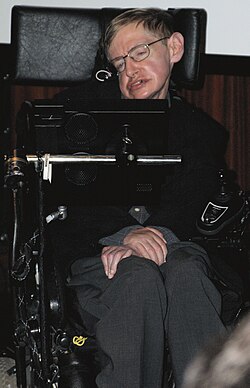
Stephen Hawking
Stephen William Hawking was a British theoretical physicist and cosmologist, widely regarded as one of the most brilliant scientists of the modern era. He is best known for his work on black holes and his bestselling book A Brief History of Time.
Why Stephen Hawking Appears in the Documents
Stephen Hawking is mentioned in 35 documents within the Epstein file corpus, consisting of 18 emails, 8 articles, 4 books, 2 legals, 1 chat, 1 data, 1 unknown, originating from the House Oversight Committee.
These documents include court filings, media articles, emails. The presence of Stephen Hawking's name in these specific document types reflects the scope of the released corpus, which contains a wide range of records from legal proceedings, investigations, and media coverage.
Disclaimer: Appearing in the Epstein document corpus does not imply wrongdoing, guilt, or any form of association with criminal activity. Many public figures are mentioned incidentally in these documents due to the broad scope of the released materials.
Documents (35)
Re: How are you holding up? Currency discussion and personal notes
This document is a January 2015 email thread between Jeffrey E. and Landon Thomas Jr. that blends currency market chatter—discussing the dollar, Bitcoin, and global currency imbalances—with notes about reputational risk and a possible public statement, alongside a lengthy personal confession in which Jeffrey describes a serious past relationship with his former girlfriend, asserts what she witnessed, denies involvement of certain high-profile figures, and recounts sensational details about their life together and the people around them.
Source: House Oversight Committee
Shocking True Story of Jeffrey Epstein
House Oversight presents a photo-rich, documentary account of Jeffrey Epstein’s rise and fall, weaving affidavits, police records, and media imagery to reveal a web of wealth, power, and alleged sexual exploitation spanning New York mansions, a private Caribbean island, and a Gulfstream jet. It traces Epstein’s opulent properties, his flight operations, and his circle of influential associates—including Ghislaine Maxwell, Prince Andrew, Donald Trump, Leslie Wexner, Alan Dershowitz, and Stephen Hawking—highlighting how money and influence intersected with criminal investigations and public narratives. The report foregrounds key episodes from the 2008 plea and continued investigations to questions about accountability within elite circles.
Source: House Oversight Committee
Filthy Rich
Filthy Rich is an investigative chronicle of Jeffrey Epstein’s multimillionaire network, exposing how a convicted sex offender leveraged immense wealth, access, and fear to prey on underage girls for years. Through a tapestry of interviews, court papers, and the accounts of associates, it reveals Epstein’s entanglements with powerful figures—Prince Andrew, Alan Dershowitz, Ghislaine Maxwell, Scott Rothstein, Leslie Wexner, and others—while victims recount manipulation, coercion, and captivity. It also traces the ensuing legal battles, counterclaims, and high-stakes media coverage that blurred the line between justice and power, culminating in continuing investigations and litigation that cast a long shadow over Epstein’s circle.
Source: House Oversight Committee
Filthy Rich
Filthy Rich is an investigative chronicle of Jeffrey Epstein’s multimillionaire network, exposing how a convicted sex offender leveraged immense wealth, access, and fear to prey on underage girls for years. Through a tapestry of interviews, court papers, and the accounts of associates, it reveals Epstein’s entanglements with powerful figures—Prince Andrew, Alan Dershowitz, Ghislaine Maxwell, Scott Rothstein, Leslie Wexner, and others—while victims recount manipulation, coercion, and captivity. It also traces the ensuing legal battles, counterclaims, and high-stakes media coverage that blurred the line between justice and power, culminating in continuing investigations and litigation that cast a long shadow over Epstein’s circle.
Source: House Oversight Committee
Filthy Rich
Filthy Rich is an investigative chronicle of Jeffrey Epstein’s multimillionaire network, exposing how a convicted sex offender leveraged immense wealth, access, and fear to prey on underage girls for years. Through a tapestry of interviews, court papers, and the accounts of associates, it reveals Epstein’s entanglements with powerful figures—Prince Andrew, Alan Dershowitz, Ghislaine Maxwell, Scott Rothstein, Leslie Wexner, and others—while victims recount manipulation, coercion, and captivity. It also traces the ensuing legal battles, counterclaims, and high-stakes media coverage that blurred the line between justice and power, culminating in continuing investigations and litigation that cast a long shadow over Epstein’s circle.
Source: House Oversight Committee
Filthy Rich: The Jeffrey Epstein Case (Chapters 39–56)
This section of Filthy Rich lays bare Jeffrey Epstein’s hidden, moneyed world and thePalm Beach police investigation that attempted to hold him to account, only to be upstaged by a cascade of extraordinary legal maneuvers and political pressure. It traces the Vanity Fair probe into Epstein’s rampant entanglements, the Palm Beach State Attorney Barry Krischer’s controversial handling, the federal non-prosecution agreement engineered by a star-studded defense team, and a 2008 Florida plea that allowed Epstein to serve a brief jail term with far-reaching implications for his victims, while detailing how elite allies, from Dershowitz and Starr to Ghislaine Maxwell and Prince Andrew, surrounded Epstein and shaped the pursuit of justice. The narrative casts a sharp eye on how wealth, influence, and procedural maneuvering often eclipsed the voices of victims and raised enduring questions about accountability.
Source: House Oversight Committee
Filthy Rich
Filthy Rich chronicles Jeffrey Epstein’s rise from a Brooklyn-born financier to a billionaire whose velvet circle—Ghislaine Maxwell and a constellation of powerful men including Les Wexner, Donald Trump, Prince Andrew, and Alan Dershowitz—helped him recruit, traffic, and conceal underage victims. The narrative threads through Epstein’s charm, leverage, and expansive network that opened doors to elite wealth and influence, including his patronage of scientists and high-society mind-shifts, while detailing how Maxwell and others facilitated the abuse, transported girls, and kept a precarious duplicitous system afloat. It also exposes the legal arc surrounding his crimes: a controversial 2007–2008 non-prosecution agreement, a 2008 state guilty plea that resulted in a relatively light sentence and life-time sex-offender registration, and later civil suits and federal probes that continued to haunt his associates and the public conscience. Against the glittering glamour of elite access lies a culture of entitlements where money and status often shielded horrific acts, a truth slowly laid bare by victims’ testimonies and investigative scrutiny.
Source: House Oversight Committee
Filthy Rich
Filthy Rich chronicles Jeffrey Epstein’s rise from a Brooklyn-born financier to a billionaire whose velvet circle—Ghislaine Maxwell and a constellation of powerful men including Les Wexner, Donald Trump, Prince Andrew, and Alan Dershowitz—helped him recruit, traffic, and conceal underage victims. The narrative threads through Epstein’s charm, leverage, and expansive network that opened doors to elite wealth and influence, including his patronage of scientists and high-society mind-shifts, while detailing how Maxwell and others facilitated the abuse, transported girls, and kept a precarious duplicitous system afloat. It also exposes the legal arc surrounding his crimes: a controversial 2007–2008 non-prosecution agreement, a 2008 state guilty plea that resulted in a relatively light sentence and life-time sex-offender registration, and later civil suits and federal probes that continued to haunt his associates and the public conscience. Against the glittering glamour of elite access lies a culture of entitlements where money and status often shielded horrific acts, a truth slowly laid bare by victims’ testimonies and investigative scrutiny.
Source: House Oversight Committee
Filthy Rich
Filthy Rich chronicles Jeffrey Epstein’s rise from a Brooklyn-born financier to a billionaire whose velvet circle—Ghislaine Maxwell and a constellation of powerful men including Les Wexner, Donald Trump, Prince Andrew, and Alan Dershowitz—helped him recruit, traffic, and conceal underage victims. The narrative threads through Epstein’s charm, leverage, and expansive network that opened doors to elite wealth and influence, including his patronage of scientists and high-society mind-shifts, while detailing how Maxwell and others facilitated the abuse, transported girls, and kept a precarious duplicitous system afloat. It also exposes the legal arc surrounding his crimes: a controversial 2007–2008 non-prosecution agreement, a 2008 state guilty plea that resulted in a relatively light sentence and life-time sex-offender registration, and later civil suits and federal probes that continued to haunt his associates and the public conscience. Against the glittering glamour of elite access lies a culture of entitlements where money and status often shielded horrific acts, a truth slowly laid bare by victims’ testimonies and investigative scrutiny.
Source: House Oversight Committee
Filthy Rich
Filthy Rich chronicles Jeffrey Epstein’s rise from a Brooklyn-born financier to a billionaire whose velvet circle—Ghislaine Maxwell and a constellation of powerful men including Les Wexner, Donald Trump, Prince Andrew, and Alan Dershowitz—helped him recruit, traffic, and conceal underage victims. The narrative threads through Epstein’s charm, leverage, and expansive network that opened doors to elite wealth and influence, including his patronage of scientists and high-society mind-shifts, while detailing how Maxwell and others facilitated the abuse, transported girls, and kept a precarious duplicitous system afloat. It also exposes the legal arc surrounding his crimes: a controversial 2007–2008 non-prosecution agreement, a 2008 state guilty plea that resulted in a relatively light sentence and life-time sex-offender registration, and later civil suits and federal probes that continued to haunt his associates and the public conscience. Against the glittering glamour of elite access lies a culture of entitlements where money and status often shielded horrific acts, a truth slowly laid bare by victims’ testimonies and investigative scrutiny.
Source: House Oversight Committee
Filthy Rich
Filthy Rich chronicles Jeffrey Epstein’s rise from a Brooklyn-born financier to a billionaire whose velvet circle—Ghislaine Maxwell and a constellation of powerful men including Les Wexner, Donald Trump, Prince Andrew, and Alan Dershowitz—helped him recruit, traffic, and conceal underage victims. The narrative threads through Epstein’s charm, leverage, and expansive network that opened doors to elite wealth and influence, including his patronage of scientists and high-society mind-shifts, while detailing how Maxwell and others facilitated the abuse, transported girls, and kept a precarious duplicitous system afloat. It also exposes the legal arc surrounding his crimes: a controversial 2007–2008 non-prosecution agreement, a 2008 state guilty plea that resulted in a relatively light sentence and life-time sex-offender registration, and later civil suits and federal probes that continued to haunt his associates and the public conscience. Against the glittering glamour of elite access lies a culture of entitlements where money and status often shielded horrific acts, a truth slowly laid bare by victims’ testimonies and investigative scrutiny.
Source: House Oversight Committee
Edwards and Cassell's Response to Dershowitz's Motion to Determine Confidentiality of Court Records
Source: House Oversight Committee
HOUSE_OVERSIGHT_022839.txt
An early 2015 email exchange between Jeffrey E. and New York Times financial reporter Landon Thomas Jr. centers on coping with reputational damage from global currency instability, weighing a public statement to distance Jeffrey from allegations about Andrew, and in a detailed personal reply, Jeffrey defends his private life by describing his former relationship, denying misconduct or involvement of underage individuals, and asserting who was present and involved to counter rumors, all set against ongoing media scrutiny.
Source: House Oversight Committee
Re: How are you holding up?
This private email thread between Landon Thomas Jr. of the New York Times and an associate centers on how to handle a damaging rumor about a prominent figure. The core tension is whether to publicly distance the subject from a collaborator named Andrew to starve the story, and whether to issue a clarifying statement, all while protecting a former girlfriend who traveled with him and could be dragged into the controversy. The discussion includes assertions about consensual relationships, attempts to deny or minimize specific claims, and the belief that the public does not understand that the subject has moved on unless he speaks up. The exchange highlights PR strategy, the fragility of reputations, and the reluctance to expose private details, ending with a formal confidentiality notice and attribution to a New York Times source.
Source: House Oversight Committee
Email containing political allegations and confidentiality notice
The document is a 2016 confidential email containing unverified, sensational allegations about public figures (including Clinton, Al Gore, and Ehud Barak; with references to Stephen Hawking and Marvin Minsky), asserting there were no island meetings and implying legal counsel may be involved in fabrications, followed by a standard attorney‑client privilege notice and a House Oversight file tag "030383."
Source: House Oversight Committee
HOUSE_OVERSIGHT_022839.txt
An early 2015 email exchange between Jeffrey E. and New York Times financial reporter Landon Thomas Jr. centers on coping with reputational damage from global currency instability, weighing a public statement to distance Jeffrey from allegations about Andrew, and in a detailed personal reply, Jeffrey defends his private life by describing his former relationship, denying misconduct or involvement of underage individuals, and asserting who was present and involved to counter rumors, all set against ongoing media scrutiny.
Source: House Oversight Committee
Email discussing personal relationships and alleged misconduct
An email in which Jeffrey E. asserts he protected his former girlfriend from a sordid situation by keeping her name out of it, claiming she traveled with him and saw nothing improper, while detailing alleged massage arrangements with local strippers and staff, insisting there was no sexual involvement with public figures such as Stephen Hawking or Ehud and that Clinton was not on the island; he argues the girlfriend would corroborate these points and notes the communication is confidential, potentially attorney‑client privileged, and part of a House Oversight file.
Source: House Oversight Committee
Re: thoughts
These confidential emails discuss whether to publicly feature Jeffrey E.’s former girlfriend to advance a narrative, while the girlfriend is presented as a key corroborator who traveled with him and can attest that no one was ever alone at the house, that the encounters involved adult staff and masseurs, and that there was no sex with Clinton, Steven Hawking, or Ehud on the island; the correspondence emphasizes protection of her and the sensitive, privileged nature of the information.
Source: House Oversight Committee
iMessage chat log with Woody Allen (2018-03-14)
This is a brief timestamped iMessage exchange between user jee and Woody Allen from March 14, 2018, in which they mourn Stephen Hawking and discuss his long illness, volley political opinions about Donald Trump’s choices for CIA and Secretary of State, debate a prospective female candidate for an undercover role (joking about Kate Upton), and reference an upcoming New York expose, with entries tagged by “House Oversight.”
Source: House Oversight Committee
Re: thoughts
These confidential emails discuss whether to publicly feature Jeffrey E.’s former girlfriend to advance a narrative, while the girlfriend is presented as a key corroborator who traveled with him and can attest that no one was ever alone at the house, that the encounters involved adult staff and masseurs, and that there was no sex with Clinton, Steven Hawking, or Ehud on the island; the correspondence emphasizes protection of her and the sensitive, privileged nature of the information.
Source: House Oversight Committee
iMessage chat log: House Oversight discussions and documentary interview planning
An archived December 2018 iMessage thread labeled “HOUSE OVERSIGHT” captures a multi-person conversation in which participants debate US–China policy, economic reform and geopolitical strategy, sketch plans for a documentary and interviews with alleged victims, and exchange personal, sometimes provocative observations about political figures and ongoing legal matters, interwoven with scheduling and project logistics.
Source: House Oversight Committee
Free Growth and Other Surprises
Gordon Getty’s Free Growth and Other Surprises argues that genuine economic growth comes not from thrift or traditional investment incentives, but from “free growth”—driven by productivity gains and the generation-to-generation transfer of total capital (human plus physical). He introduces the Y rule and the pay rule, reframes output as growth plus cash flow, and argues that human depreciation is expected to be recovered in pay even as depreciation itself rises over time. Drawing on Mill, Petty, and a new simultaneous rates method tested against market-valued capital data from Piketty and Zucman (and stock-market data), he maintains that growth at the macro scale has largely been a matter of free growth rather than savings-driven acceleration. The book then lays out sweeping policy reform: integrate human capital into national accounts, shift money toward real (inflation-adjusted) dollars, end the corporate double tax, tax capital gains like ordinary income, and split banks into deposit and lending entities so an omnibus fund can manage liquidity with low-cost derivatives. Interlacing biology and economics through Hamilton’s rule and bioeconomics, Getty frames tastes and investments as evolving under the biological imperative of lineage survival, offering a data-driven, history-grounded blueprint for a more resilient, innovation-driven economy.
Source: House Oversight Committee
BBC Today interview request regarding Epstein and Prince Andrew
An internal BBC outreach in which Kirsty MacKenzie, Interviews Editor for the Today Programme, asks Jeffrey Epstein’s attorney to forward a request to interview Epstein so the programme can address circulating but inaccurate stories about him and Prince Andrew; she emphasizes the Today Programme’s prestige, global reach, and track record of interviewing major figures, and aims to obtain Epstein’s first-hand perspective to scrutinize the reporting.
Source: House Oversight Committee
Email chain about interviewing Jeffrey Epstein on BBC Today programme
This March 7, 2011 email thread shows Kirsty Mackenzie, Interviews Editor for the BBC Today programme, seeking to arrange an interview with Jeffrey Epstein through his attorney to address circulating but inaccurate stories about him and Prince Andrew; the message underscores the Today programme’s prestige, reach, and history of high-profile guests, while noting a terse reply from Peter Mandelson and containing confidentiality and attorney‑client privilege disclosures, highlighting sensitive media communications around Epstein and the Prince Andrew matter.
Source: House Oversight Committee
BBC Today interview request regarding Epstein and Prince Andrew
An internal BBC outreach in which Kirsty MacKenzie, Interviews Editor for the Today Programme, asks Jeffrey Epstein’s attorney to forward a request to interview Epstein so the programme can address circulating but inaccurate stories about him and Prince Andrew; she emphasizes the Today Programme’s prestige, global reach, and track record of interviewing major figures, and aims to obtain Epstein’s first-hand perspective to scrutinize the reporting.
Source: House Oversight Committee
Email chain about interviewing Jeffrey Epstein on BBC Today programme
This March 7, 2011 email thread shows Kirsty Mackenzie, Interviews Editor for the BBC Today programme, seeking to arrange an interview with Jeffrey Epstein through his attorney to address circulating but inaccurate stories about him and Prince Andrew; the message underscores the Today programme’s prestige, reach, and history of high-profile guests, while noting a terse reply from Peter Mandelson and containing confidentiality and attorney‑client privilege disclosures, highlighting sensitive media communications around Epstein and the Prince Andrew matter.
Source: House Oversight Committee
Forwarded message: Interview request with Jeffrey Epstein regarding Prince Andrew (BBC Today Programme)
An email chain shows Kirsty Mackenzie of the BBC’s Today programme seeking to interview Jeffrey Epstein to address circulating but inaccurate stories about him and Prince Andrew, describing Today as a premier, globally reaching news platform that interviews major political and business figures and asking Epstein’s attorney to forward the request; the thread includes communications with Peter Mandelson and Epstein, along with standard confidentiality and copyright notices.
Source: House Oversight Committee
BBC Today Programme interview request about Jeffrey Epstein and Prince Andrew
An internal 2011 BBC email reveals Kirsty Mackenzie, Interviews Editor for the Today Programme, asking a colleague to forward an invitation for Jeffrey Epstein to be interviewed about circulating but inaccurate stories about him and Prince Andrew; she touts Today as the BBC’s premier morning show with wide reach across BBC radio, television, and online networks and a history of high-profile guests, positioning the interview as a way to scrutinise sensational UK reporting, while including Epstein’s contact details and confidentiality notices.
Source: House Oversight Committee
Proposed BBC Today interview with Jeffrey Epstein
An email from Kirsty Mackenzie, Interviews Editor for the BBC Today Programme, dated March 7, 2011, to Peggy Siegal proposing an interview with Jeffrey Epstein to address circulating but inaccurate stories about him and Prince Andrew; the message emphasizes the Today programme’s prestige and global reach across BBC outlets and pitches Epstein for a first-hand interview to scrutinise UK press coverage, including contact details and standard confidentiality notices.
Source: House Oversight Committee
Email discussing an interview with Jeffrey Epstein for BBC Today programme
This document is an email exchange in which Kirsty Mackenzie, Interviews Editor for the BBC’s Today programme, pitches interviewing Jeffrey Epstein to address circulating but inaccurate stories about him and Prince Andrew, emphasizing the show’s global reach across BBC radio, TV, and online networks and listing past high-profile guests to underscore its influence, while inviting Epstein to respond, with the thread accompanying Epstein’s original message and standard confidentiality notices.
Source: House Oversight Committee
Forwarded message: Interview request with Jeffrey Epstein regarding Prince Andrew (BBC Today Programme)
An email chain shows Kirsty Mackenzie of the BBC’s Today programme seeking to interview Jeffrey Epstein to address circulating but inaccurate stories about him and Prince Andrew, describing Today as a premier, globally reaching news platform that interviews major political and business figures and asking Epstein’s attorney to forward the request; the thread includes communications with Peter Mandelson and Epstein, along with standard confidentiality and copyright notices.
Source: House Oversight Committee
BBC Today Programme interview request about Jeffrey Epstein and Prince Andrew
An internal 2011 BBC email reveals Kirsty Mackenzie, Interviews Editor for the Today Programme, asking a colleague to forward an invitation for Jeffrey Epstein to be interviewed about circulating but inaccurate stories about him and Prince Andrew; she touts Today as the BBC’s premier morning show with wide reach across BBC radio, television, and online networks and a history of high-profile guests, positioning the interview as a way to scrutinise sensational UK reporting, while including Epstein’s contact details and confidentiality notices.
Source: House Oversight Committee
Forwarded email requesting interview with Jeffrey Epstein for BBC Today Programme
An outreach email from Kirsty Mackenzie, Interviews Editor for the BBC's Today programme, asks Jack Goldberger to relay a request to Jeffrey Epstein to participate in an interview about circulating but inaccurate stories concerning Epstein and Prince Andrew; Mackenzie extols the Today programme’s prestige, global reach, and influence in shaping the UK and international news agenda, cites notable past guests, and invites Epstein to speak firsthand to help scrutinise the media coverage.
Source: House Oversight Committee
Private Donor Helps Fund Scientists After Trump's Proposed 'Anti-Science' Budget Cuts
Facing President Trump’s proposed cuts to NIH, CDC and climate-related programs, this piece argues that science could stall without private philanthropy stepping in. It spotlights Jeffery Epstein and his foundation, whose decades of funding—from Harvard’s Program for Evolutionary Dynamics to cancer and HIV research—has empowered scientists to pursue ideas with less red tape, a point echoed by beneficiaries like Robert Trivers who credit Epstein’s sustained, flexible support. While not a substitute for public investment, the article contends that private donations can be a crucial lifeline that keeps scientific progress moving when federal funding wanes.
Source: House Oversight Committee
Are the Androids Dreaming Yet?: Amazing Brain. Human Communication, Creativity & Free Will.
Source: House Oversight Committee