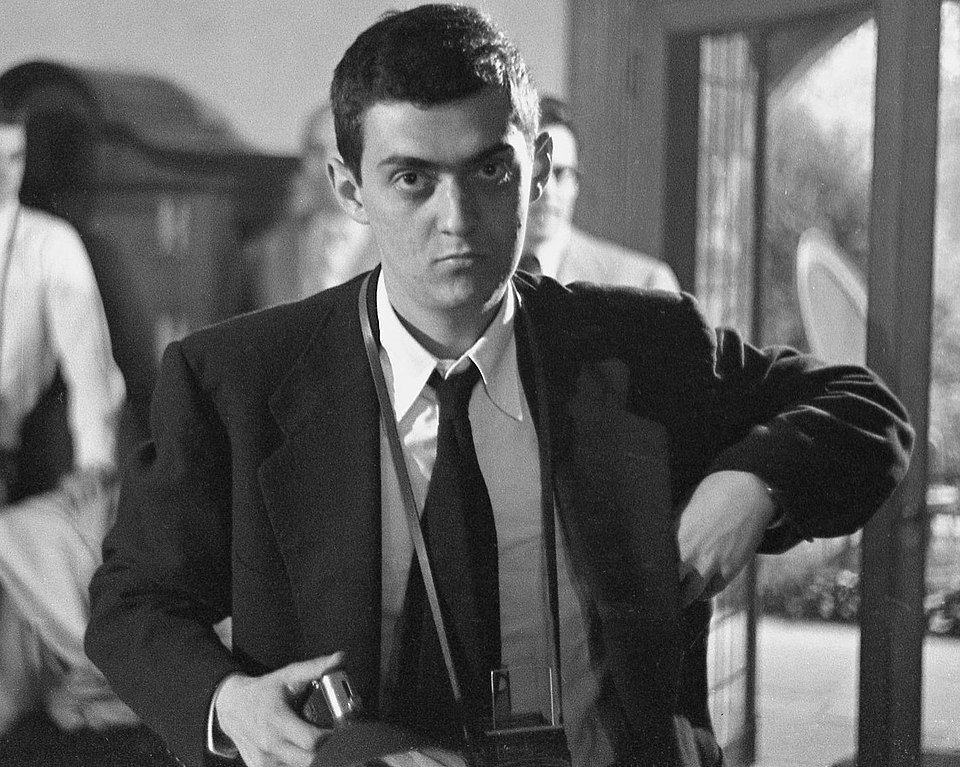
Stanley Kubrick
Stanley Kubrick was an American filmmaker and photographer. A major figure of the post-war film industry, Kubrick is widely regarded as one of the greatest and most influential filmmakers in the history of cinema.
Why Stanley Kubrick Appears in the Documents
Stanley Kubrick is mentioned in 4 documents within the Epstein file corpus, consisting of 2 articles, 2 emails, originating from the House Oversight Committee.
These documents include titles such as "They're Not Really Out to Get You", "Email discussing WSJ article They're Not Really Out to Get You and conspiracy theories". Stanley Kubrick's name appears across these documents in various contexts. The document corpus contains a wide range of materials including media coverage, government records, and legal proceedings where many public figures are mentioned.
Disclaimer: Appearing in the Epstein document corpus does not imply wrongdoing, guilt, or any form of association with criminal activity. Many public figures are mentioned incidentally in these documents due to the broad scope of the released materials.
Documents (4)
They're Not Really Out to Get You
Edward Jay Epstein’s Wall Street Journal review of Rob Brotherton’s Suspicious Minds argues that conspiracy thinking emerges from ordinary cognitive quirks—such as confirmation bias and biased assimilation—that cause people to seek evidence that confirms preconceptions, allowing pseudo-conspiracies to spread while real conspiracies occur in fields from terrorism to finance; he traces the historical shift in how we use the term “conspiracy theory” after the Warren Commission, contrasts plausible investigations (like the Confederate role in Lincoln’s assassination) with patently unfounded claims (the moon landing was faked, Area 51 aliens, Obama as a Kenyan communist), and through Brotherton’s framework offers a thoughtful guide to evaluating conspiracies, noting there is no simple cure for our brains’ tendency to leap to conspiratorial conclusions.
Source: House Oversight Committee
They're Not Really Out to Get You
Edward Jay Epstein’s Wall Street Journal review of Rob Brotherton’s Suspicious Minds argues that conspiracy thinking emerges from ordinary cognitive quirks—such as confirmation bias and biased assimilation—that cause people to seek evidence that confirms preconceptions, allowing pseudo-conspiracies to spread while real conspiracies occur in fields from terrorism to finance; he traces the historical shift in how we use the term “conspiracy theory” after the Warren Commission, contrasts plausible investigations (like the Confederate role in Lincoln’s assassination) with patently unfounded claims (the moon landing was faked, Area 51 aliens, Obama as a Kenyan communist), and through Brotherton’s framework offers a thoughtful guide to evaluating conspiracies, noting there is no simple cure for our brains’ tendency to leap to conspiratorial conclusions.
Source: House Oversight Committee
Email discussing WSJ article They're Not Really Out to Get You and conspiracy theories
This document is an email that highlights a Wall Street Journal piece by Edward Jay Epstein exploring why conspiracy theories endure, noting that real conspiracies—terrorist plots, corporate malfeasance, and government inquiries—do exist, even as many claims are pseudo-conspiracies born from cognitive biases like confirmation bias and biased assimilation; it cites Rob Brotherton’s book Suspicious Minds to show how these thinking errors can make conspiracies thrive in the mainstream, and it uses examples from Lincoln’s assassination, the Kennedy era, the moon landing, Area 51, and political claims about Obama to illustrate how the line between plausible inquiry and paranoid fantasy is often drawn by the observer.
Source: House Oversight Committee
Email discussing WSJ article They're Not Really Out to Get You and conspiracy theories
This document is an email that highlights a Wall Street Journal piece by Edward Jay Epstein exploring why conspiracy theories endure, noting that real conspiracies—terrorist plots, corporate malfeasance, and government inquiries—do exist, even as many claims are pseudo-conspiracies born from cognitive biases like confirmation bias and biased assimilation; it cites Rob Brotherton’s book Suspicious Minds to show how these thinking errors can make conspiracies thrive in the mainstream, and it uses examples from Lincoln’s assassination, the Kennedy era, the moon landing, Area 51, and political claims about Obama to illustrate how the line between plausible inquiry and paranoid fantasy is often drawn by the observer.
Source: House Oversight Committee