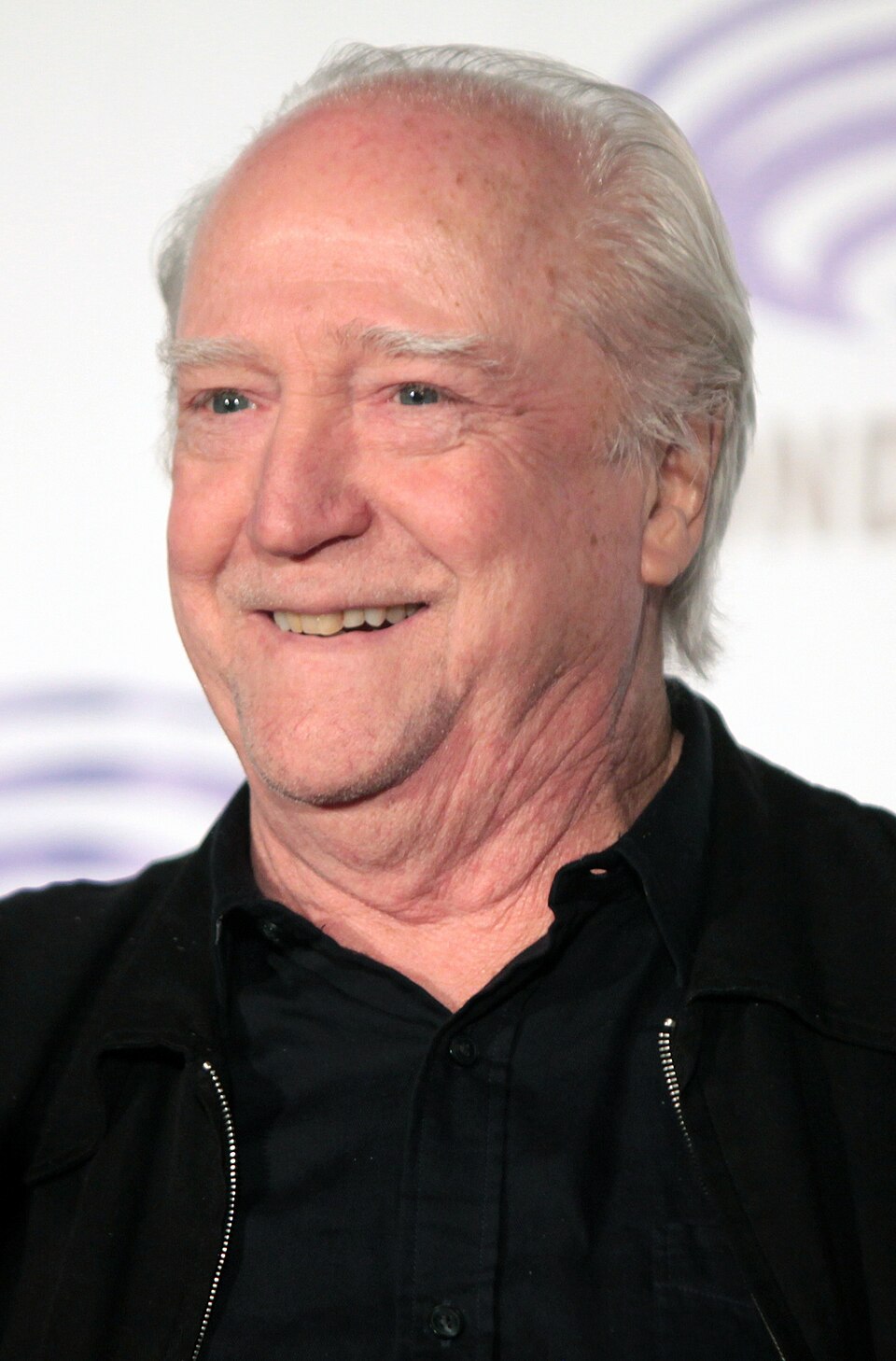
Scott Wilson
William Delano Wilson, known professionally as Scott Wilson, was an American film and television actor.
Why Scott Wilson Appears in the Documents
Scott Wilson is mentioned in 4 documents within the Epstein file corpus, consisting of 3 articles, 1 email, originating from the House Oversight Committee.
These documents include titles such as "Feb 2013 International Affairs Digest: Middle East Peace, Iran Talks, and Global Economy", "Foreign Policy Articles Collection (February 2013)". Scott Wilson's name appears across these documents in various contexts. The document corpus contains a wide range of materials including media coverage, government records, and legal proceedings where many public figures are mentioned.
Disclaimer: Appearing in the Epstein document corpus does not imply wrongdoing, guilt, or any form of association with criminal activity. Many public figures are mentioned incidentally in these documents due to the broad scope of the released materials.
Documents (4)
Feb 2013 International Affairs Digest: Middle East Peace, Iran Talks, and Global Economy
A curated mix of articles from early 2013 surveys how the United States and its partners confront a transformed global landscape: Obama’s renewed focus on the Middle East with an Israeli visit, shifting Israeli-Palestinian dynamics, and the roles of Egypt and Gulf states, alongside Iran’s stalled nuclear talks and the specter of renewed regional conflict; reflections on Shimon Peres’s legacy and Israel’s political culture; and comparative analysis of India, China, and Egypt amid demographic shifts and governance challenges. The collection also advocates a recalibrated American strategy—stronger, WTO-focused economic leadership, investments in infrastructure and gender equality, and a more agile military posture in CENTCOM to deter and manage a nuclear-tinged Gulf, a rising China, and complex regional security challenges. Taken together, these pieces illuminate how demographic change, political transitions, and new power alignments demand a cohesive approach that blends diplomacy with economic resilience to secure stability and growth.
Source: House Oversight Committee
Feb 2013 International Affairs Digest: Middle East Peace, Iran Talks, and Global Economy
A curated mix of articles from early 2013 surveys how the United States and its partners confront a transformed global landscape: Obama’s renewed focus on the Middle East with an Israeli visit, shifting Israeli-Palestinian dynamics, and the roles of Egypt and Gulf states, alongside Iran’s stalled nuclear talks and the specter of renewed regional conflict; reflections on Shimon Peres’s legacy and Israel’s political culture; and comparative analysis of India, China, and Egypt amid demographic shifts and governance challenges. The collection also advocates a recalibrated American strategy—stronger, WTO-focused economic leadership, investments in infrastructure and gender equality, and a more agile military posture in CENTCOM to deter and manage a nuclear-tinged Gulf, a rising China, and complex regional security challenges. Taken together, these pieces illuminate how demographic change, political transitions, and new power alignments demand a cohesive approach that blends diplomacy with economic resilience to secure stability and growth.
Source: House Oversight Committee
Foreign Policy Articles Collection (February 2013)
This collection of articles from major outlets in early 2013 maps a US foreign policy in flux: Obama’s planned trip to Israel signals a renewed push for a two-state peace amid a region reshaped by uprisings, while interviews and commentary from Saeb Erekat to Shimon Peres examine the fragility and legacy of the peace process; broader geopolitical analysis contrasts India, China, and Egypt to stress how demography, governance, and economic reform will decide who thrives in the 21st century; warnings about future American military commitments in the Middle East and South Asia sit alongside in-depth coverage of Iran’s nuclear diplomacy and sanctions, and Robert Zoellick’s five-part blueprint calls for a comprehensive U.S. international economic strategy to lead a more liberal, integrated world order.
Source: House Oversight Committee
Foreign Policy Articles Collection (February 2013)
This collection of articles from major outlets in early 2013 maps a US foreign policy in flux: Obama’s planned trip to Israel signals a renewed push for a two-state peace amid a region reshaped by uprisings, while interviews and commentary from Saeb Erekat to Shimon Peres examine the fragility and legacy of the peace process; broader geopolitical analysis contrasts India, China, and Egypt to stress how demography, governance, and economic reform will decide who thrives in the 21st century; warnings about future American military commitments in the Middle East and South Asia sit alongside in-depth coverage of Iran’s nuclear diplomacy and sanctions, and Robert Zoellick’s five-part blueprint calls for a comprehensive U.S. international economic strategy to lead a more liberal, integrated world order.
Source: House Oversight Committee