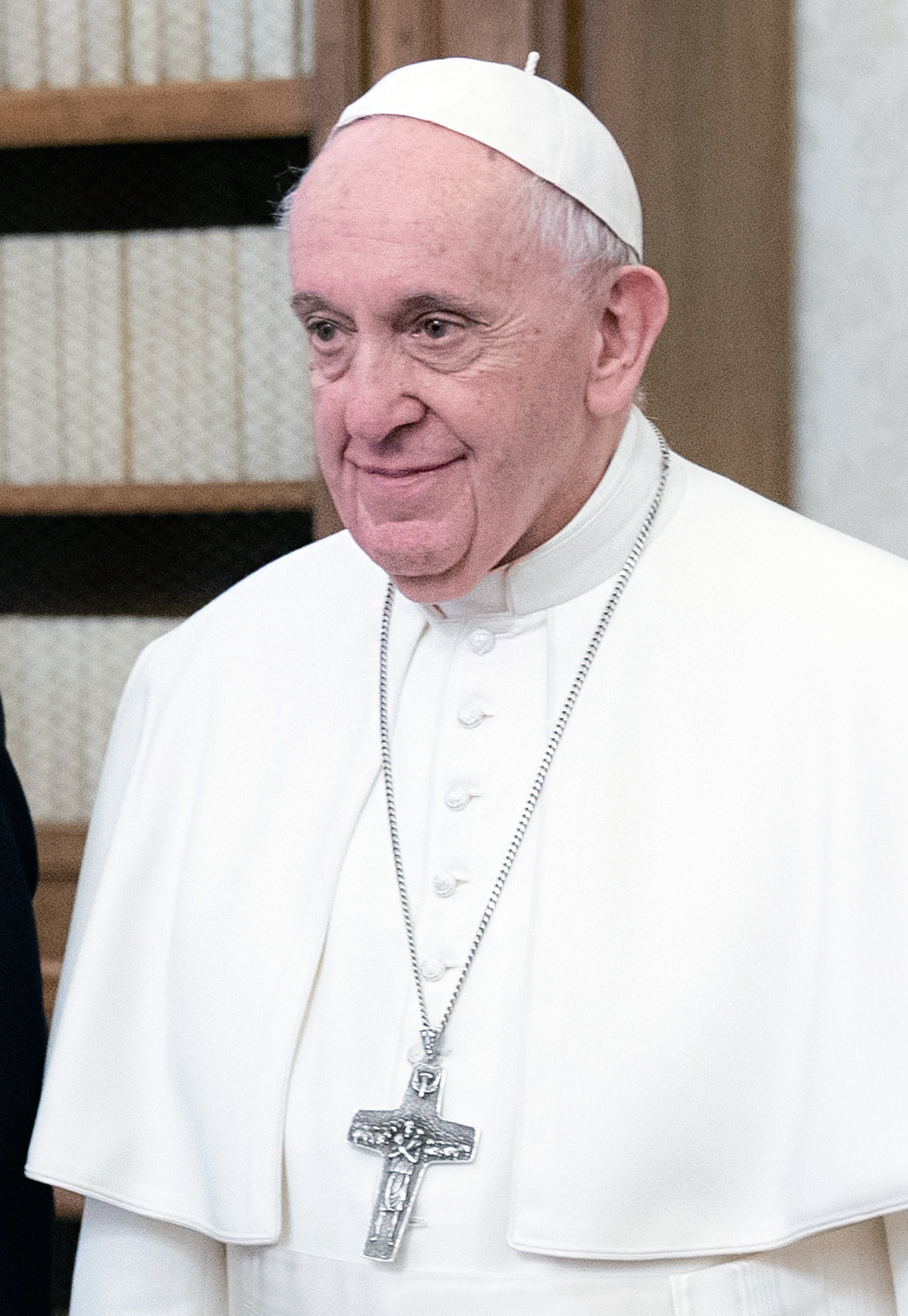
Pope Francis
Pope Francis, born Jorge Mario Bergoglio, is the head of the Catholic Church and sovereign of Vatican City. He is the first pope from the Americas, the first Jesuit pope, and is known for his emphasis on compassion, humility, and social justice.
Why Pope Francis Appears in the Documents
Pope Francis is mentioned in 22 documents within the Epstein file corpus, consisting of 7 articles, 6 emails, 3 speechs, 3 transcripts, 1 analysis, 1 briefing, 1 data, originating from the House Oversight Committee.
These documents include titles such as "The Onion – House Oversight Headlines (Satire)", "Cuba in its new stage: SWOT Analysis", "Transcript of Steve Bannon's Vatican Conference Remarks on Capitalism, Populism, and Global Security" among others. Many of these appearances are in entertainment industry coverage and media articles that mention numerous public figures. Pope Francis's inclusion in these documents reflects their public profile rather than any specific connection to Epstein.
Disclaimer: Appearing in the Epstein document corpus does not imply wrongdoing, guilt, or any form of association with criminal activity. Many public figures are mentioned incidentally in these documents due to the broad scope of the released materials.
Documents (22)
The Onion – House Oversight Headlines (Satire)
This document is a 2018 satirical compilation from The Onion’s “House Oversight” section, presenting spoof headlines and brief faux-news items across politics, sports, and culture—including a Christmas-themed ransom gag by Santa—designed to parody sensational media coverage and the news cycle.
Source: House Oversight Committee
Cuba in its new stage: SWOT Analysis
This 2015 SWOT analysis presents Cuba’s post-embargo moment as a high-potential but high-risk opportunity for investors: strengths include broad reconciliation momentum, substantial foreign interest, a large, educated workforce, and solid state institutions; opportunities span infrastructure rebuilding, agriculture, tourism, medical research and services, and potential U.S.-Cuba trade and logistics hubs. Yet serious weaknesses persist, such as continued single-party rule and state control over major enterprises, an underdeveloped legal and financial system, currency distortions and low wages, bureaucratic inertia, and pervasive surveillance of foreign business; and threats arise from uncertain embargo repeal timing, Helms-Burton repeal dependencies, Venezuela’s volatility, looming leadership succession, possible asset confiscations and related legal claims, and potential compliance challenges for multinational firms operating under Cuba’s regime. The document thus argues that Cuba could become a strategic, lucrative gateway to the Caribbean and Latin America if investors navigate substantial political, legal, and economic risks with a clear, cautious approach.
Source: House Oversight Committee
Cuba in its new stage: SWOT Analysis
This 2015 SWOT analysis presents Cuba’s post-embargo moment as a high-potential but high-risk opportunity for investors: strengths include broad reconciliation momentum, substantial foreign interest, a large, educated workforce, and solid state institutions; opportunities span infrastructure rebuilding, agriculture, tourism, medical research and services, and potential U.S.-Cuba trade and logistics hubs. Yet serious weaknesses persist, such as continued single-party rule and state control over major enterprises, an underdeveloped legal and financial system, currency distortions and low wages, bureaucratic inertia, and pervasive surveillance of foreign business; and threats arise from uncertain embargo repeal timing, Helms-Burton repeal dependencies, Venezuela’s volatility, looming leadership succession, possible asset confiscations and related legal claims, and potential compliance challenges for multinational firms operating under Cuba’s regime. The document thus argues that Cuba could become a strategic, lucrative gateway to the Caribbean and Latin America if investors navigate substantial political, legal, and economic risks with a clear, cautious approach.
Source: House Oversight Committee
Transcript of Steve Bannon's Vatican Conference Remarks on Capitalism, Populism, and Global Security
The document presents Steve Bannon’s 2014 Vatican remarks in which he argues that the Judeo-Christian West is in a crisis of capitalism and faith and must reconnect wealth creation to moral purpose through an “enlightened capitalism” grounded in Christian ethics. He criticizes crony, state-sponsored capitalism and libertarian individualism, warns that secularization and Islamic extremism threaten Western civilization, and advocates a global center-right populist movement—with Breitbart as its international voice—supporting groups like UKIP and Front National while remaining wary of Putin. He denounces bank bailouts and the political establishment as fueling a working-class revolt, and characterizes ISIS as a modern, media-savvy threat requiring aggressive, purpose-driven action. The transcript thus reveals a strategy to fuse religion, nationalism, and media power to reshape Western politics and defend what he views as the core foundations of Western civilization.
Source: House Oversight Committee
Transcript of Steve Bannon's Vatican Conference Remarks on Capitalism, Populism, and Global Security
The document presents Steve Bannon’s 2014 Vatican remarks in which he argues that the Judeo-Christian West is in a crisis of capitalism and faith and must reconnect wealth creation to moral purpose through an “enlightened capitalism” grounded in Christian ethics. He criticizes crony, state-sponsored capitalism and libertarian individualism, warns that secularization and Islamic extremism threaten Western civilization, and advocates a global center-right populist movement—with Breitbart as its international voice—supporting groups like UKIP and Front National while remaining wary of Putin. He denounces bank bailouts and the political establishment as fueling a working-class revolt, and characterizes ISIS as a modern, media-savvy threat requiring aggressive, purpose-driven action. The transcript thus reveals a strategy to fuse religion, nationalism, and media power to reshape Western politics and defend what he views as the core foundations of Western civilization.
Source: House Oversight Committee
Transcript of Steve Bannon's Vatican Conference Remarks on Capitalism, Populism, and Global Security
The document presents Steve Bannon’s 2014 Vatican remarks in which he argues that the Judeo-Christian West is in a crisis of capitalism and faith and must reconnect wealth creation to moral purpose through an “enlightened capitalism” grounded in Christian ethics. He criticizes crony, state-sponsored capitalism and libertarian individualism, warns that secularization and Islamic extremism threaten Western civilization, and advocates a global center-right populist movement—with Breitbart as its international voice—supporting groups like UKIP and Front National while remaining wary of Putin. He denounces bank bailouts and the political establishment as fueling a working-class revolt, and characterizes ISIS as a modern, media-savvy threat requiring aggressive, purpose-driven action. The transcript thus reveals a strategy to fuse religion, nationalism, and media power to reshape Western politics and defend what he views as the core foundations of Western civilization.
Source: House Oversight Committee
Steve Bannon Vatican Conference Remarks (2014)
This is a verbatim transcript of Steve Bannon’s 2014 Vatican conference remarks in which he advocates a global center-right populist “tea party” movement rooted in Judeo-Christian Western capitalism, warning of a crisis of capitalism and secularization, railing against crony capitalism and elite dominance, and urging wealth be reinvested to serve positive, faith-based ends; he frames an impending war against jihadist Islamic fascism, praises Breitbart as a worldwide platform for working- and middle-class resistance to centralized power, and discusses European populist parties and Russia’s influence while calling for a principled defense of traditional values.
Source: House Oversight Committee
Steve Bannon Vatican Conference Remarks (2014)
This is a verbatim transcript of Steve Bannon’s 2014 Vatican conference remarks in which he advocates a global center-right populist “tea party” movement rooted in Judeo-Christian Western capitalism, warning of a crisis of capitalism and secularization, railing against crony capitalism and elite dominance, and urging wealth be reinvested to serve positive, faith-based ends; he frames an impending war against jihadist Islamic fascism, praises Breitbart as a worldwide platform for working- and middle-class resistance to centralized power, and discusses European populist parties and Russia’s influence while calling for a principled defense of traditional values.
Source: House Oversight Committee
Steve Bannon Vatican Conference Remarks (2014)
This is a verbatim transcript of Steve Bannon’s 2014 Vatican conference remarks in which he advocates a global center-right populist “tea party” movement rooted in Judeo-Christian Western capitalism, warning of a crisis of capitalism and secularization, railing against crony capitalism and elite dominance, and urging wealth be reinvested to serve positive, faith-based ends; he frames an impending war against jihadist Islamic fascism, praises Breitbart as a worldwide platform for working- and middle-class resistance to centralized power, and discusses European populist parties and Russia’s influence while calling for a principled defense of traditional values.
Source: House Oversight Committee
Bannon Lays Out Global Populist Strategy in Europe Tour
Former Trump adviser Stephen Bannon used his European tour—including Zurich, Milan, and Rome—to unveil a blueprint for a global populist movement: build a European-wide network of populist parties, media outlets, and a think tank to train “foot soldiers” and weaponize populist ideas online, with English-language sites as a base and crypto-tied funding from Europe’s tech hubs. He envisions extending Breitbart-like influence across the continent to challenge Brussels, forging ties with leaders such as Le Pen and Orban, and moving the battle of populism into new media and social platforms, potentially via a pan-European media outlet that monetizes data. He spoke of training Europe’s budding populists to do what he did and of leveraging crypto currencies and a high-velocity media operation to sustain the movement, as he eyes a long-term, Europe-first expansion of his project. The effort comes as Italy’s strong populist parties and anti-establishment sentiment make Europe ripe for such a strategy.
Source: House Oversight Committee
Steve Bannon Vatican Conference Remarks Transcript
This document is a verbatim transcript of Steve Bannon’s 2014 Skype remarks at a Vatican poverty conference, in which he argues that the Judeo-Christian West faces a crisis of capitalism and faith, critiques both state-sponsored and Ayn Rand–style libertarian capitalism, champions an “enlightened capitalism” rooted in Christian values, warns against secularization and the rise of jihadist Islamic fascism, portrays a global center-right “tea party” movement opposing crony capitalists and centralized government, analyzes populist currents in Europe and America (including UKIP, Front National, and Breitbart’s rise), discusses the role of Putin, and urges reforms in banking, reinvestment in positive causes, and a united, faith‑driven response to emerging global threats.
Source: House Oversight Committee
Steve Bannon Vatican Conference Remarks Transcript
This document is a verbatim transcript of Steve Bannon’s 2014 Skype remarks at a Vatican poverty conference, in which he argues that the Judeo-Christian West faces a crisis of capitalism and faith, critiques both state-sponsored and Ayn Rand–style libertarian capitalism, champions an “enlightened capitalism” rooted in Christian values, warns against secularization and the rise of jihadist Islamic fascism, portrays a global center-right “tea party” movement opposing crony capitalists and centralized government, analyzes populist currents in Europe and America (including UKIP, Front National, and Breitbart’s rise), discusses the role of Putin, and urges reforms in banking, reinvestment in positive causes, and a united, faith‑driven response to emerging global threats.
Source: House Oversight Committee
Steve Bannon Vatican Conference Remarks Transcript
This document is a verbatim transcript of Steve Bannon’s 2014 Skype remarks at a Vatican poverty conference, in which he argues that the Judeo-Christian West faces a crisis of capitalism and faith, critiques both state-sponsored and Ayn Rand–style libertarian capitalism, champions an “enlightened capitalism” rooted in Christian values, warns against secularization and the rise of jihadist Islamic fascism, portrays a global center-right “tea party” movement opposing crony capitalists and centralized government, analyzes populist currents in Europe and America (including UKIP, Front National, and Breitbart’s rise), discusses the role of Putin, and urges reforms in banking, reinvestment in positive causes, and a united, faith‑driven response to emerging global threats.
Source: House Oversight Committee
Revealed: the world's most admired people
The Times-YouGov global survey reveals Bill Gates as the world’s most admired person, with Pope Francis, Barack Obama, Billy Graham and George W. Bush ahead of him in the U.S. and Gates topping the list in China; the Queen is the most admired woman overall, trailed by Jolie and Oprah, and the results show strong political, business and sports figures across nations while highlighting gender imbalances in some countries. The study also maps national leaders (Putin in Russia, Merkel in Germany, Sarkozy in France, Goodluck Jonathan in Nigeria) and notes that few local politicians reach the top ten in Australia and the UK, illustrates the media’s influence on who people admire (Pope Francis rising after Time’s Person of the Year) and even mentions Mandela’s near-top status had he been considered earlier; a concise Who’s Who section lists figures like Modi, Bachchan, Abdul Kalam, Anna Hazare, Arvind Kejriwal, Peng Liyuan, Abdul Sattar Edhi and Jokowi Widodo. Based on surveys of 13,895 people in 13 countries, the document also asks who is the most famous person in the world, with Obama leading that question.
Source: House Oversight Committee
Revealed: the world's most admired people
The Times-YouGov global survey reveals Bill Gates as the world’s most admired person, with Pope Francis, Barack Obama, Billy Graham and George W. Bush ahead of him in the U.S. and Gates topping the list in China; the Queen is the most admired woman overall, trailed by Jolie and Oprah, and the results show strong political, business and sports figures across nations while highlighting gender imbalances in some countries. The study also maps national leaders (Putin in Russia, Merkel in Germany, Sarkozy in France, Goodluck Jonathan in Nigeria) and notes that few local politicians reach the top ten in Australia and the UK, illustrates the media’s influence on who people admire (Pope Francis rising after Time’s Person of the Year) and even mentions Mandela’s near-top status had he been considered earlier; a concise Who’s Who section lists figures like Modi, Bachchan, Abdul Kalam, Anna Hazare, Arvind Kejriwal, Peng Liyuan, Abdul Sattar Edhi and Jokowi Widodo. Based on surveys of 13,895 people in 13 countries, the document also asks who is the most famous person in the world, with Obama leading that question.
Source: House Oversight Committee
Your Monday News Briefing: Kavanaugh, Brexit, Sky
Europe Edition’s Your Monday News Briefing offers a tight, global snapshot for readers in Europe: the Kavanaugh confirmation saga intensifies as Ford agrees to testify; Brexit dominates UK politics with pressure for a second referendum; Comcast outbids Disney to take Sky, reshaping the European media landscape; Macron’s presidency faces scrutiny as France grapples with reforms and public sentiment; and across business, foreign policy, culture, and practical tips the briefing weaves context, graphics, and concise takes to illuminate the week’s key developments.
Source: House Oversight Committee
Your Monday News Briefing: Kavanaugh, Brexit, Sky
Europe Edition’s Your Monday News Briefing offers a tight, global snapshot for readers in Europe: the Kavanaugh confirmation saga intensifies as Ford agrees to testify; Brexit dominates UK politics with pressure for a second referendum; Comcast outbids Disney to take Sky, reshaping the European media landscape; Macron’s presidency faces scrutiny as France grapples with reforms and public sentiment; and across business, foreign policy, culture, and practical tips the briefing weaves context, graphics, and concise takes to illuminate the week’s key developments.
Source: House Oversight Committee
Deutsche Bank screenshow template
Deutsche Bank's Global Public Affairs briefing provides a forward-looking risk map for 2015–2016, arguing that geopolitics and energy dynamics will increasingly drive markets, with Middle East instability, a rising NAFTA energy bloc, and China’s ongoing transformation creating long‑term uncertainty; it highlights near-term catalysts such as the Iran nuclear deal, the Trans-Pacific Partnership, and the lifting of oil and gas export bans, while outlining U.S. domestic policy risks in 2015–16 (tax reform, regulatory relief for banks, and housing‑finance reform) alongside a broad sweep of global flashpoints—from Yemen, Libya, and Venezuela to Russia–China energy ties and Cuba—emphasizing how these developments, intertwined with the 2016 U.S. election cycle, could shape investment and strategic risk for financial and corporate clients.
Source: House Oversight Committee
iMessage Archive: House Oversight Chat Transcript (2019)
This is a verbatim iMessage archive from mid-2019 in which a group calling themselves HOUSE OVERSIGHT coordinates a high-stakes political-media operation: planning films and interviews, lining up subject-matter experts, coordinating with lawyers, and scheduling travel across Europe and the U.S., while weaving rapid-fire political analysis, links to news coverage, and personal tension into a dense, behind-the-scenes view of a campaign-style effort in motion.
Source: House Oversight Committee
iMessage Archive: House Oversight Chat Transcript (2019)
This is a verbatim iMessage archive from mid-2019 in which a group calling themselves HOUSE OVERSIGHT coordinates a high-stakes political-media operation: planning films and interviews, lining up subject-matter experts, coordinating with lawyers, and scheduling travel across Europe and the U.S., while weaving rapid-fire political analysis, links to news coverage, and personal tension into a dense, behind-the-scenes view of a campaign-style effort in motion.
Source: House Oversight Committee
Revealed: the world's most admired people
According to a global YouGov survey for The Times, Bill Gates is the world’s most admired person, with Pope Francis and Barack Obama also highly regarded, while regional differences prevail—Britain’s Queen is the top female figure, Putin dominates in Russia, and politicians often outrank entertainers in several countries; the poll also finds Obama to be the most famous person globally and demonstrates how media coverage can rapidly reshape public admiration.
Source: House Oversight Committee
Revealed: the world's most admired people
According to a global YouGov survey for The Times, Bill Gates is the world’s most admired person, with Pope Francis and Barack Obama also highly regarded, while regional differences prevail—Britain’s Queen is the top female figure, Putin dominates in Russia, and politicians often outrank entertainers in several countries; the poll also finds Obama to be the most famous person globally and demonstrates how media coverage can rapidly reshape public admiration.
Source: House Oversight Committee