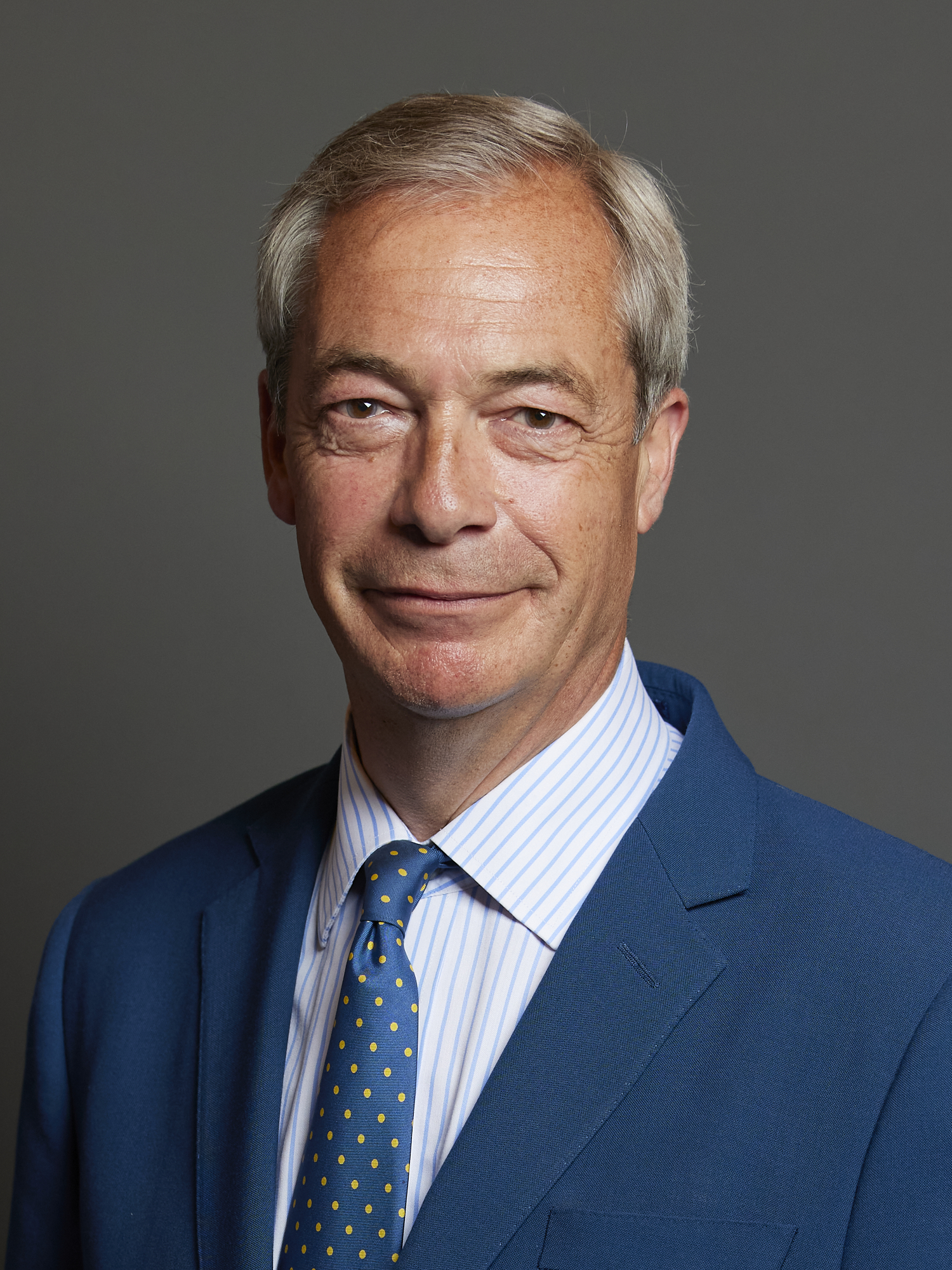
Nigel Farage
Nigel Paul Farage is a British politician and broadcaster who served as leader of the UK Independence Party and was a key figure in the campaign for Brexit, Britain's withdrawal from the European Union.
Why Nigel Farage Appears in the Documents
Nigel Farage is mentioned in 55 documents within the Epstein file corpus, consisting of 20 articles, 17 datas, 12 emails, 4 transcripts, 1 index, 1 report, originating from the House Oversight Committee.
These documents include titles such as "Bannon's Movement in Europe", "Forwarded email: The Movement and European populist coordination", "Email chain about The Movement and European populist alliance" among others. Nigel Farage's name appears across these documents in various contexts. The document corpus contains a wide range of materials including media coverage, government records, and legal proceedings where many public figures are mentioned.
Disclaimer: Appearing in the Epstein document corpus does not imply wrongdoing, guilt, or any form of association with criminal activity. Many public figures are mentioned incidentally in these documents due to the broad scope of the released materials.
Documents (50)
Bannon's Movement in Europe
This document reveals Steve Bannon’s plan to launch “The Movement,” a Brussels-based, transnational right-wing alliance intended to coordinate Europe’s populist leaders—such as Salvini, Orban, Le Pen, Farage, and the Italian Lega/5 Star coalition—into a single think-tank-like entity that analyzes data, gives strategic advice, and raises funds to form a “populist international” capable of influencing the 2019 European Parliament elections, potentially conquering a significant bloc. Bannon envisions a small staff, a deeper European presence, and close ties to nationalist figures and the Dignitatis Humanae Institute, leveraging networks established by his prior work with Cambridge Analytica and the Freedom Caucus. The memo casts this as a bold, high-stakes effort to reshape European politics and counter perceived pro-Soros NGO influence.
Source: House Oversight Committee
Bannon's Movement in Europe
This document reveals Steve Bannon’s plan to launch “The Movement,” a Brussels-based, transnational right-wing alliance intended to coordinate Europe’s populist leaders—such as Salvini, Orban, Le Pen, Farage, and the Italian Lega/5 Star coalition—into a single think-tank-like entity that analyzes data, gives strategic advice, and raises funds to form a “populist international” capable of influencing the 2019 European Parliament elections, potentially conquering a significant bloc. Bannon envisions a small staff, a deeper European presence, and close ties to nationalist figures and the Dignitatis Humanae Institute, leveraging networks established by his prior work with Cambridge Analytica and the Freedom Caucus. The memo casts this as a bold, high-stakes effort to reshape European politics and counter perceived pro-Soros NGO influence.
Source: House Oversight Committee
Forwarded email: The Movement and European populist coordination
The document reports that Steve Bannon is launching a Europe-centered movement—The Movement—as a strategy to unite the continent’s populist right and coordinate a cross-border alliance for the 2019 European elections, potentially shaping up to a third of the Parliament. It describes the plan as a right-wing think tank that provides strategic advice and fundraising to loosely organized groups led by figures such as Matteo Salvini, Viktor Orban, Marine Le Pen, Nigel Farage, and others from Lega and the Five Star Movement, in order to influence policy across Europe. Bannon aims to spend more time in Europe, viewing Open Society founder George Soros as a target and Cambridge Analytica-style data tactics as a tool, with ambitions to create a powerful, continent-wide populist bloc.
Source: House Oversight Committee
Email chain about The Movement and European populist alliance
These emails reveal Steve Bannon’s plan to launch The Movement, a European populist-right think tank and network intended to coordinate leaders from Salvini and Orban to Le Pen, Farage, and others into a transnational alliance ahead of the 2019 European elections. The correspondence describes building a small Brussels-based operation, raising funds, and supplying strategic analysis to channel discontent into a unified “populist international” that could command a substantial share of European Parliament seats. It emphasizes long-form, in-person engagement over remote influence and frames the effort as exporting a model across countries, while casting the project in opposition to liberal institutions and linking it to Cambridge Analytica and Open Society narratives. In sum, the documents depict a deliberate, high-stakes drive to reshape European politics through coordinated, pan-European populism coordinated by Bannon and his allies.
Source: House Oversight Committee
Forwarded email: The Movement and European populist coordination
The document reports that Steve Bannon is launching a Europe-centered movement—The Movement—as a strategy to unite the continent’s populist right and coordinate a cross-border alliance for the 2019 European elections, potentially shaping up to a third of the Parliament. It describes the plan as a right-wing think tank that provides strategic advice and fundraising to loosely organized groups led by figures such as Matteo Salvini, Viktor Orban, Marine Le Pen, Nigel Farage, and others from Lega and the Five Star Movement, in order to influence policy across Europe. Bannon aims to spend more time in Europe, viewing Open Society founder George Soros as a target and Cambridge Analytica-style data tactics as a tool, with ambitions to create a powerful, continent-wide populist bloc.
Source: House Oversight Committee
Email chain about The Movement and European populist alliance
These emails reveal Steve Bannon’s plan to launch The Movement, a European populist-right think tank and network intended to coordinate leaders from Salvini and Orban to Le Pen, Farage, and others into a transnational alliance ahead of the 2019 European elections. The correspondence describes building a small Brussels-based operation, raising funds, and supplying strategic analysis to channel discontent into a unified “populist international” that could command a substantial share of European Parliament seats. It emphasizes long-form, in-person engagement over remote influence and frames the effort as exporting a model across countries, while casting the project in opposition to liberal institutions and linking it to Cambridge Analytica and Open Society narratives. In sum, the documents depict a deliberate, high-stakes drive to reshape European politics through coordinated, pan-European populism coordinated by Bannon and his allies.
Source: House Oversight Committee
FH_Authoritarians_Report_2017.indd
Breaking Down Democracy surveys how 21st-century authoritarians, led by Russia and China, survive and spread by masking autocratic rule as pluralism: conducting formal elections while skewing the playing field, saturating domestic and international media with propaganda, hollowing out civil society, rewriting history, and embedding illiberal practices within liberal institutions. It shows how these regimes co-opt open economies, exploit global networks, and foster illiberal democracies in places like Hungary and Poland, while exporting tactics through NGOs, lobbyists, and overseas media to influence democracies abroad. The report argues this modern authoritarianism is durable and increasingly adept at seizing power from within and eroding the liberal international order, threatening freedom unless democracies repair their resilience across government, media, academia, business, and civil society, with Ukraine as a frontline case study and a set of concrete recommendations for a coordinated response.
Source: House Oversight Committee
FH_Authoritarians_Report_2017.indd
Breaking Down Democracy surveys how 21st-century authoritarians, led by Russia and China, survive and spread by masking autocratic rule as pluralism: conducting formal elections while skewing the playing field, saturating domestic and international media with propaganda, hollowing out civil society, rewriting history, and embedding illiberal practices within liberal institutions. It shows how these regimes co-opt open economies, exploit global networks, and foster illiberal democracies in places like Hungary and Poland, while exporting tactics through NGOs, lobbyists, and overseas media to influence democracies abroad. The report argues this modern authoritarianism is durable and increasingly adept at seizing power from within and eroding the liberal international order, threatening freedom unless democracies repair their resilience across government, media, academia, business, and civil society, with Ukraine as a frontline case study and a set of concrete recommendations for a coordinated response.
Source: House Oversight Committee
FH_Authoritarians_Report_2017.indd
Breaking Down Democracy surveys how 21st-century authoritarians, led by Russia and China, survive and spread by masking autocratic rule as pluralism: conducting formal elections while skewing the playing field, saturating domestic and international media with propaganda, hollowing out civil society, rewriting history, and embedding illiberal practices within liberal institutions. It shows how these regimes co-opt open economies, exploit global networks, and foster illiberal democracies in places like Hungary and Poland, while exporting tactics through NGOs, lobbyists, and overseas media to influence democracies abroad. The report argues this modern authoritarianism is durable and increasingly adept at seizing power from within and eroding the liberal international order, threatening freedom unless democracies repair their resilience across government, media, academia, business, and civil society, with Ukraine as a frontline case study and a set of concrete recommendations for a coordinated response.
Source: House Oversight Committee
Movement in Europe: Bannon's populist alliance
The document is an email thread describing Steve Bannon’s plan to launch “The Movement,” a Europe-based right-wing think tank and network aimed at uniting populist leaders (Salvini, Orban, Le Pen, Farage, Lega, Five Stars) into a coordinated “populist internationale” ahead of the 2019 European elections. It outlines how the group would provide strategic advice, raise funds, and apply data-driven campaigning to win significant influence in European policy, with the aim of countering George Soros’s Open Society and expanding Bannon’s presence in Europe.
Source: House Oversight Committee
Movement in Europe: Bannon's populist alliance
The document is an email thread describing Steve Bannon’s plan to launch “The Movement,” a Europe-based right-wing think tank and network aimed at uniting populist leaders (Salvini, Orban, Le Pen, Farage, Lega, Five Stars) into a coordinated “populist internationale” ahead of the 2019 European elections. It outlines how the group would provide strategic advice, raise funds, and apply data-driven campaigning to win significant influence in European policy, with the aim of countering George Soros’s Open Society and expanding Bannon’s presence in Europe.
Source: House Oversight Committee
Bannon's Movement launches European populist alliance
The document reveals Steve Bannon’s plan to launch The Movement, a Europe-based right-wing think tank designed to coordinate a transnational populist bloc for the 2019 European elections, providing strategic guidance and fundraising to unite leaders from Italy’s Lega and 5 Stars, Hungary’s Viktor Orbán, France’s Marine Le Pen, and Nigel Farage, with the ambition of potentially winning a significant share of the European Parliament and forging a “populist international” to counter George Soros’s Open Society. It describes a small staff operation, data-driven analysis, and Bannon’s role as central coordinator, aiming to spend more time in Europe after the U.S. midterms and leveraging his prior networks and ventures to influence European politics.
Source: House Oversight Committee
Bannon's Movement launches European populist alliance
The document reveals Steve Bannon’s plan to launch The Movement, a Europe-based right-wing think tank designed to coordinate a transnational populist bloc for the 2019 European elections, providing strategic guidance and fundraising to unite leaders from Italy’s Lega and 5 Stars, Hungary’s Viktor Orbán, France’s Marine Le Pen, and Nigel Farage, with the ambition of potentially winning a significant share of the European Parliament and forging a “populist international” to counter George Soros’s Open Society. It describes a small staff operation, data-driven analysis, and Bannon’s role as central coordinator, aiming to spend more time in Europe after the U.S. midterms and leveraging his prior networks and ventures to influence European politics.
Source: House Oversight Committee
Email chain about Steve Bannon and The Movement in Europe
The emails reveal Steve Bannon’s plan to build a pan-European populist network through a new “Movement” think tank that would coordinate, fund, and advise right-wing leaders (Salvini, Orban, Le Pen, Farage, Lega, Five Star, etc.) to win seats in the 2019 European Parliament elections, functioning as a “populist international” with data-driven strategy and on-the-ground fundraising, while stressing immersive face-to-face diplomacy and linking to a separate film project, American Carnage.
Source: House Oversight Committee
Email chain about Steve Bannon and The Movement in Europe
The emails reveal Steve Bannon’s plan to build a pan-European populist network through a new “Movement” think tank that would coordinate, fund, and advise right-wing leaders (Salvini, Orban, Le Pen, Farage, Lega, Five Star, etc.) to win seats in the 2019 European Parliament elections, functioning as a “populist international” with data-driven strategy and on-the-ground fundraising, while stressing immersive face-to-face diplomacy and linking to a separate film project, American Carnage.
Source: House Oversight Committee
Steve Bannon's Movement in Europe
The document reveals Steve Bannon’s plan to launch The Movement, a Europe-centered, extreme-right think tank intended to coordinate a “populist international” of European nationalist leaders (including Salvini, Orban, Le Pen, Farage, Lega, and the 5 Stars) to influence the 2019 European elections. It describes providing strategic advice, fundraising, and data-driven analysis to channel discontent and build a unified front capable of winning a significant share of the European Parliament, in part to challenge George Soros’s Open Society. It notes Bannon’s aim to spend more time in Europe, his ties to Cambridge Analytica, and his broader effort to marshal right-wing forces across the continent, alongside provocative language about a systemic clash with liberalDemocratic values. The exchanges also include confidential, inside-information-style notices typical of sensitive communications.
Source: House Oversight Committee
Bannon the European: He's opening the populist fort in Brussels
The document outlines Steve Bannon’s plan to launch The Movement, a Europe-centered, ultra-right think tank and fundraising network designed to coordinate a transnational populist alliance of leaders such as Salvini, Orban, Le Pen, and Farage to influence the 2019 European Parliament elections, potentially winning a substantial share of seats; the aim is to outmaneuver George Soros’s Open Society networks and position Bannon as the coordinator of a new “populist international,” with a small staff and a growing European footprint as he shifts focus from American politics to Europe.
Source: House Oversight Committee
Steve Bannon's Movement in Europe
The document reveals Steve Bannon’s plan to launch The Movement, a Europe-centered, extreme-right think tank intended to coordinate a “populist international” of European nationalist leaders (including Salvini, Orban, Le Pen, Farage, Lega, and the 5 Stars) to influence the 2019 European elections. It describes providing strategic advice, fundraising, and data-driven analysis to channel discontent and build a unified front capable of winning a significant share of the European Parliament, in part to challenge George Soros’s Open Society. It notes Bannon’s aim to spend more time in Europe, his ties to Cambridge Analytica, and his broader effort to marshal right-wing forces across the continent, alongside provocative language about a systemic clash with liberalDemocratic values. The exchanges also include confidential, inside-information-style notices typical of sensitive communications.
Source: House Oversight Committee
Bannon the European: He's opening the populist fort in Brussels
The document outlines Steve Bannon’s plan to launch The Movement, a Europe-centered, ultra-right think tank and fundraising network designed to coordinate a transnational populist alliance of leaders such as Salvini, Orban, Le Pen, and Farage to influence the 2019 European Parliament elections, potentially winning a substantial share of seats; the aim is to outmaneuver George Soros’s Open Society networks and position Bannon as the coordinator of a new “populist international,” with a small staff and a growing European footprint as he shifts focus from American politics to Europe.
Source: House Oversight Committee
Transcript of Steve Bannon's Vatican Conference Remarks on Capitalism, Populism, and Global Security
The document presents Steve Bannon’s 2014 Vatican remarks in which he argues that the Judeo-Christian West is in a crisis of capitalism and faith and must reconnect wealth creation to moral purpose through an “enlightened capitalism” grounded in Christian ethics. He criticizes crony, state-sponsored capitalism and libertarian individualism, warns that secularization and Islamic extremism threaten Western civilization, and advocates a global center-right populist movement—with Breitbart as its international voice—supporting groups like UKIP and Front National while remaining wary of Putin. He denounces bank bailouts and the political establishment as fueling a working-class revolt, and characterizes ISIS as a modern, media-savvy threat requiring aggressive, purpose-driven action. The transcript thus reveals a strategy to fuse religion, nationalism, and media power to reshape Western politics and defend what he views as the core foundations of Western civilization.
Source: House Oversight Committee
Transcript of Steve Bannon's Vatican Conference Remarks on Capitalism, Populism, and Global Security
The document presents Steve Bannon’s 2014 Vatican remarks in which he argues that the Judeo-Christian West is in a crisis of capitalism and faith and must reconnect wealth creation to moral purpose through an “enlightened capitalism” grounded in Christian ethics. He criticizes crony, state-sponsored capitalism and libertarian individualism, warns that secularization and Islamic extremism threaten Western civilization, and advocates a global center-right populist movement—with Breitbart as its international voice—supporting groups like UKIP and Front National while remaining wary of Putin. He denounces bank bailouts and the political establishment as fueling a working-class revolt, and characterizes ISIS as a modern, media-savvy threat requiring aggressive, purpose-driven action. The transcript thus reveals a strategy to fuse religion, nationalism, and media power to reshape Western politics and defend what he views as the core foundations of Western civilization.
Source: House Oversight Committee
Steve Bannon Vatican Conference Remarks (2014)
This is a verbatim transcript of Steve Bannon’s 2014 Vatican conference remarks in which he advocates a global center-right populist “tea party” movement rooted in Judeo-Christian Western capitalism, warning of a crisis of capitalism and secularization, railing against crony capitalism and elite dominance, and urging wealth be reinvested to serve positive, faith-based ends; he frames an impending war against jihadist Islamic fascism, praises Breitbart as a worldwide platform for working- and middle-class resistance to centralized power, and discusses European populist parties and Russia’s influence while calling for a principled defense of traditional values.
Source: House Oversight Committee
Steve Bannon Vatican Conference Remarks (2014)
This is a verbatim transcript of Steve Bannon’s 2014 Vatican conference remarks in which he advocates a global center-right populist “tea party” movement rooted in Judeo-Christian Western capitalism, warning of a crisis of capitalism and secularization, railing against crony capitalism and elite dominance, and urging wealth be reinvested to serve positive, faith-based ends; he frames an impending war against jihadist Islamic fascism, praises Breitbart as a worldwide platform for working- and middle-class resistance to centralized power, and discusses European populist parties and Russia’s influence while calling for a principled defense of traditional values.
Source: House Oversight Committee
Fire and Fury
Source: House Oversight Committee
Fire and Fury
Source: House Oversight Committee
Email thread about Steve Bannon and The Movement in Europe
This 2018 email chain reveals Steve Bannon’s blueprint for a Europe-focused, pan-right populist network called The Movement (II Movimento) to coordinate leaders such as Salvini, Orban, Le Pen, Farage, and others into a cohesive bloc aimed at influencing the 2019 European Parliament elections. The plan envisions a populist think tank that analyzes data, raises funds, and provides strategic advice to channel discontent across Europe, effectively creating a “populist international” that could reshape EU policy if successful. Bannon stresses extensive in-person engagement, a small European-based staff, and deeper ties with European nationalists while leveraging past U.S. networks and Cambridge Analytica know-how, all as part of a broader effort to counter Open Society and influence global politics.
Source: House Oversight Committee
Bannon's European populist movement
The document describes Steve Bannon’s plan to launch “The Movement,” a Europe-based ultra-right think tank and fundraising network intended to coordinate a pan-European populist alliance for the 2019 European elections, courting leaders such as Orban, Le Pen, Salvini, and Farage to potentially control a significant bloc in the European Parliament and reshape EU policy, marking a strategic expansion of his influence from the United States into Europe and drawing on his Breitbart and Cambridge Analytica background.
Source: House Oversight Committee
Bannon's European populist movement
The document describes Steve Bannon’s plan to launch “The Movement,” a Europe-based ultra-right think tank and fundraising network intended to coordinate a pan-European populist alliance for the 2019 European elections, courting leaders such as Orban, Le Pen, Salvini, and Farage to potentially control a significant bloc in the European Parliament and reshape EU policy, marking a strategic expansion of his influence from the United States into Europe and drawing on his Breitbart and Cambridge Analytica background.
Source: House Oversight Committee
Email thread about Steve Bannon and The Movement in Europe
This 2018 email chain reveals Steve Bannon’s blueprint for a Europe-focused, pan-right populist network called The Movement (II Movimento) to coordinate leaders such as Salvini, Orban, Le Pen, Farage, and others into a cohesive bloc aimed at influencing the 2019 European Parliament elections. The plan envisions a populist think tank that analyzes data, raises funds, and provides strategic advice to channel discontent across Europe, effectively creating a “populist international” that could reshape EU policy if successful. Bannon stresses extensive in-person engagement, a small European-based staff, and deeper ties with European nationalists while leveraging past U.S. networks and Cambridge Analytica know-how, all as part of a broader effort to counter Open Society and influence global politics.
Source: House Oversight Committee
Steve Bannon Vatican Conference Remarks Transcript
This document is a verbatim transcript of Steve Bannon’s 2014 Skype remarks at a Vatican poverty conference, in which he argues that the Judeo-Christian West faces a crisis of capitalism and faith, critiques both state-sponsored and Ayn Rand–style libertarian capitalism, champions an “enlightened capitalism” rooted in Christian values, warns against secularization and the rise of jihadist Islamic fascism, portrays a global center-right “tea party” movement opposing crony capitalists and centralized government, analyzes populist currents in Europe and America (including UKIP, Front National, and Breitbart’s rise), discusses the role of Putin, and urges reforms in banking, reinvestment in positive causes, and a united, faith‑driven response to emerging global threats.
Source: House Oversight Committee
Steve Bannon Vatican Conference Remarks Transcript
This document is a verbatim transcript of Steve Bannon’s 2014 Skype remarks at a Vatican poverty conference, in which he argues that the Judeo-Christian West faces a crisis of capitalism and faith, critiques both state-sponsored and Ayn Rand–style libertarian capitalism, champions an “enlightened capitalism” rooted in Christian values, warns against secularization and the rise of jihadist Islamic fascism, portrays a global center-right “tea party” movement opposing crony capitalists and centralized government, analyzes populist currents in Europe and America (including UKIP, Front National, and Breitbart’s rise), discusses the role of Putin, and urges reforms in banking, reinvestment in positive causes, and a united, faith‑driven response to emerging global threats.
Source: House Oversight Committee
Email chain about The Movement and European populist coordination
The emails reveal Steve Bannon’s plan to export his populist strategy to Europe by launching The Movement, a Europe‑based think tank intended to coordinate a populist alliance of right-wing leaders—Salvini and Orban, Le Pen, Farage, Lega, and others—to influence the 2019 European Parliament elections. The initiative aims to provide strategic advice, raise funds, and marshal data-driven campaigning as a coordinated “populist international,” with a small staff and heavy emphasis on in-person diplomacy and face-to-face engagement, including collaboration with the Dignitatis Humanae Institute. In short, the correspondence portrays a concerted effort to replicate a U.S.-style populist network on the European stage to confront Open Society and shape continental politics.
Source: House Oversight Committee
Email chain about The Movement and European populist coordination
The emails reveal Steve Bannon’s plan to export his populist strategy to Europe by launching The Movement, a Europe‑based think tank intended to coordinate a populist alliance of right-wing leaders—Salvini and Orban, Le Pen, Farage, Lega, and others—to influence the 2019 European Parliament elections. The initiative aims to provide strategic advice, raise funds, and marshal data-driven campaigning as a coordinated “populist international,” with a small staff and heavy emphasis on in-person diplomacy and face-to-face engagement, including collaboration with the Dignitatis Humanae Institute. In short, the correspondence portrays a concerted effort to replicate a U.S.-style populist network on the European stage to confront Open Society and shape continental politics.
Source: House Oversight Committee
Revealed: the world's most admired people
The Times-YouGov global survey reveals Bill Gates as the world’s most admired person, with Pope Francis, Barack Obama, Billy Graham and George W. Bush ahead of him in the U.S. and Gates topping the list in China; the Queen is the most admired woman overall, trailed by Jolie and Oprah, and the results show strong political, business and sports figures across nations while highlighting gender imbalances in some countries. The study also maps national leaders (Putin in Russia, Merkel in Germany, Sarkozy in France, Goodluck Jonathan in Nigeria) and notes that few local politicians reach the top ten in Australia and the UK, illustrates the media’s influence on who people admire (Pope Francis rising after Time’s Person of the Year) and even mentions Mandela’s near-top status had he been considered earlier; a concise Who’s Who section lists figures like Modi, Bachchan, Abdul Kalam, Anna Hazare, Arvind Kejriwal, Peng Liyuan, Abdul Sattar Edhi and Jokowi Widodo. Based on surveys of 13,895 people in 13 countries, the document also asks who is the most famous person in the world, with Obama leading that question.
Source: House Oversight Committee
Revealed: the world's most admired people
The Times-YouGov global survey reveals Bill Gates as the world’s most admired person, with Pope Francis, Barack Obama, Billy Graham and George W. Bush ahead of him in the U.S. and Gates topping the list in China; the Queen is the most admired woman overall, trailed by Jolie and Oprah, and the results show strong political, business and sports figures across nations while highlighting gender imbalances in some countries. The study also maps national leaders (Putin in Russia, Merkel in Germany, Sarkozy in France, Goodluck Jonathan in Nigeria) and notes that few local politicians reach the top ten in Australia and the UK, illustrates the media’s influence on who people admire (Pope Francis rising after Time’s Person of the Year) and even mentions Mandela’s near-top status had he been considered earlier; a concise Who’s Who section lists figures like Modi, Bachchan, Abdul Kalam, Anna Hazare, Arvind Kejriwal, Peng Liyuan, Abdul Sattar Edhi and Jokowi Widodo. Based on surveys of 13,895 people in 13 countries, the document also asks who is the most famous person in the world, with Obama leading that question.
Source: House Oversight Committee
iMessage Archive: House Oversight Chat (Nov 2018)
This is a detailed iMessage archive from November 2018 (labeled HOUSE OVERSIGHT) that documents a coordinated political effort in which the participants discuss travel logistics, arrange high-level meetings, and shape media strategy across Europe and the United States; the conversation repeatedly centers on building and maintaining a movement, with messaging themes around nationalism, wages, voter suppression, and geopolitical issues involving the Middle East, Russia, and Brexit. The thread reveals ongoing coordination of jet charters, meetings with influential contacts (references to Jabor, HBJ, and others), and real-time discussions about public relations risks, outreach, and how to present allies and opponents. It reads as a working log of strategic planning, blending organizational logistics, policy framing, and on-the-ground outreach to influence public discourse and potential political outcomes.
Source: House Oversight Committee
Revealed: the world's most admired people
According to a global YouGov survey for The Times, Bill Gates is the world’s most admired person, with Pope Francis and Barack Obama also highly regarded, while regional differences prevail—Britain’s Queen is the top female figure, Putin dominates in Russia, and politicians often outrank entertainers in several countries; the poll also finds Obama to be the most famous person globally and demonstrates how media coverage can rapidly reshape public admiration.
Source: House Oversight Committee
Revealed: the world's most admired people
According to a global YouGov survey for The Times, Bill Gates is the world’s most admired person, with Pope Francis and Barack Obama also highly regarded, while regional differences prevail—Britain’s Queen is the top female figure, Putin dominates in Russia, and politicians often outrank entertainers in several countries; the poll also finds Obama to be the most famous person globally and demonstrates how media coverage can rapidly reshape public admiration.
Source: House Oversight Committee
Brexit Statistics from Twitter (June 23, 2016)
Brexit Statistics is a Twitter-based sentiment snapshot from June 23, 2016, covering twelve hours (12 AM–11 PM CEST) and comprising roughly 302,000 tweets; among them about 157,000 were positive, 93,000 negative, and 52,000 neutral, reflecting a worldwide, multilingual Brexit discourse with real-time reactions to polls, forecasts, and political figures.
Source: House Oversight Committee
Brexit Statistics from Twitter (June 23, 2016)
Brexit Statistics is a Twitter-based sentiment snapshot from June 23, 2016, covering twelve hours (12 AM–11 PM CEST) and comprising roughly 302,000 tweets; among them about 157,000 were positive, 93,000 negative, and 52,000 neutral, reflecting a worldwide, multilingual Brexit discourse with real-time reactions to polls, forecasts, and political figures.
Source: House Oversight Committee
Brexit Statistics from Twitter (June 23, 2016)
Brexit Statistics is a Twitter-based sentiment snapshot from June 23, 2016, covering twelve hours (12 AM–11 PM CEST) and comprising roughly 302,000 tweets; among them about 157,000 were positive, 93,000 negative, and 52,000 neutral, reflecting a worldwide, multilingual Brexit discourse with real-time reactions to polls, forecasts, and political figures.
Source: House Oversight Committee
Brexit Statistics from Twitter (June 23, 2016)
Brexit Statistics is a Twitter-based sentiment snapshot from June 23, 2016, covering twelve hours (12 AM–11 PM CEST) and comprising roughly 302,000 tweets; among them about 157,000 were positive, 93,000 negative, and 52,000 neutral, reflecting a worldwide, multilingual Brexit discourse with real-time reactions to polls, forecasts, and political figures.
Source: House Oversight Committee
Brexit Statistics from Twitter (June 23, 2016)
Brexit Statistics is a Twitter-based sentiment snapshot from June 23, 2016, covering twelve hours (12 AM–11 PM CEST) and comprising roughly 302,000 tweets; among them about 157,000 were positive, 93,000 negative, and 52,000 neutral, reflecting a worldwide, multilingual Brexit discourse with real-time reactions to polls, forecasts, and political figures.
Source: House Oversight Committee
Brexit Statistics from Twitter (June 23, 2016)
Brexit Statistics is a Twitter-based sentiment snapshot from June 23, 2016, covering twelve hours (12 AM–11 PM CEST) and comprising roughly 302,000 tweets; among them about 157,000 were positive, 93,000 negative, and 52,000 neutral, reflecting a worldwide, multilingual Brexit discourse with real-time reactions to polls, forecasts, and political figures.
Source: House Oversight Committee
Brexit Statistics from Twitter (June 23, 2016)
Brexit Statistics is a Twitter-based sentiment snapshot from June 23, 2016, covering twelve hours (12 AM–11 PM CEST) and comprising roughly 302,000 tweets; among them about 157,000 were positive, 93,000 negative, and 52,000 neutral, reflecting a worldwide, multilingual Brexit discourse with real-time reactions to polls, forecasts, and political figures.
Source: House Oversight Committee
Brexit Statistics from Twitter (June 23, 2016)
Brexit Statistics is a Twitter-based sentiment snapshot from June 23, 2016, covering twelve hours (12 AM–11 PM CEST) and comprising roughly 302,000 tweets; among them about 157,000 were positive, 93,000 negative, and 52,000 neutral, reflecting a worldwide, multilingual Brexit discourse with real-time reactions to polls, forecasts, and political figures.
Source: House Oversight Committee
Brexit Statistics from Twitter (June 23, 2016)
Brexit Statistics is a Twitter-based sentiment snapshot from June 23, 2016, covering twelve hours (12 AM–11 PM CEST) and comprising roughly 302,000 tweets; among them about 157,000 were positive, 93,000 negative, and 52,000 neutral, reflecting a worldwide, multilingual Brexit discourse with real-time reactions to polls, forecasts, and political figures.
Source: House Oversight Committee
Brexit Statistics from Twitter (June 23, 2016)
Brexit Statistics is a Twitter-based sentiment snapshot from June 23, 2016, covering twelve hours (12 AM–11 PM CEST) and comprising roughly 302,000 tweets; among them about 157,000 were positive, 93,000 negative, and 52,000 neutral, reflecting a worldwide, multilingual Brexit discourse with real-time reactions to polls, forecasts, and political figures.
Source: House Oversight Committee
Brexit Statistics from Twitter (June 23, 2016)
Brexit Statistics is a Twitter-based sentiment snapshot from June 23, 2016, covering twelve hours (12 AM–11 PM CEST) and comprising roughly 302,000 tweets; among them about 157,000 were positive, 93,000 negative, and 52,000 neutral, reflecting a worldwide, multilingual Brexit discourse with real-time reactions to polls, forecasts, and political figures.
Source: House Oversight Committee
Brexit Statistics from Twitter (June 23, 2016)
Brexit Statistics is a Twitter-based sentiment snapshot from June 23, 2016, covering twelve hours (12 AM–11 PM CEST) and comprising roughly 302,000 tweets; among them about 157,000 were positive, 93,000 negative, and 52,000 neutral, reflecting a worldwide, multilingual Brexit discourse with real-time reactions to polls, forecasts, and political figures.
Source: House Oversight Committee