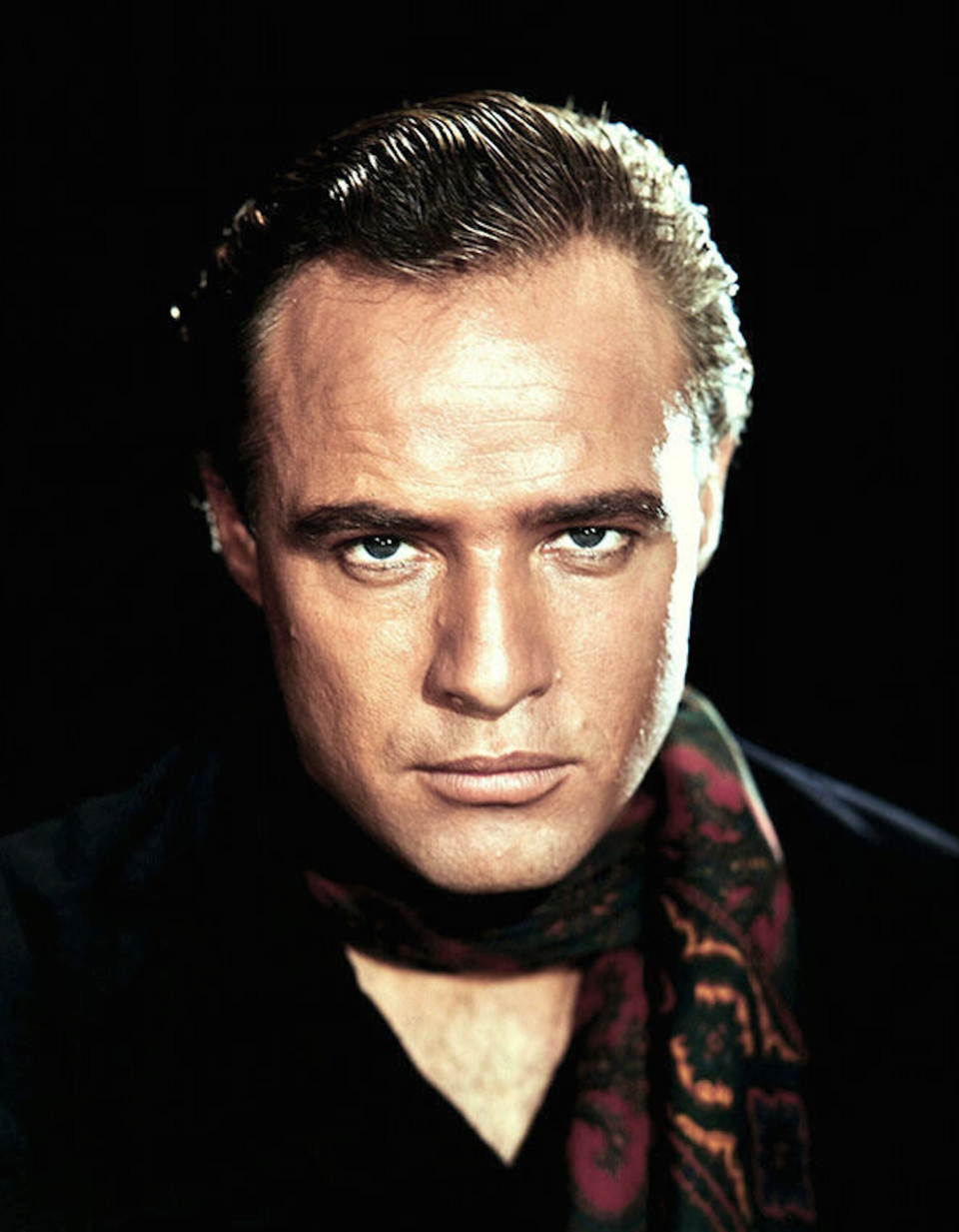
Marlon Brando
Marlon Brando Jr. was an American actor widely regarded as one of the greatest and most influential performers in the history of cinema.
Why Marlon Brando Appears in the Documents
Marlon Brando is mentioned in 9 documents within the Epstein file corpus, consisting of 7 articles, 2 books, originating from the House Oversight Committee.
These documents include titles such as "Filthy Rich", "Filthy Rich: Jeffrey Epstein (Chapters 20-38)", "Alan Dershowitz: Takes The Stand—An Autobiography" among others. Marlon Brando's name appears across these documents in various contexts. The document corpus contains a wide range of materials including media coverage, government records, and legal proceedings where many public figures are mentioned.
Disclaimer: Appearing in the Epstein document corpus does not imply wrongdoing, guilt, or any form of association with criminal activity. Many public figures are mentioned incidentally in these documents due to the broad scope of the released materials.
Documents (9)
Filthy Rich
Filthy Rich chronicles Jeffrey Epstein’s rise from a Brooklyn-born financier to a billionaire whose velvet circle—Ghislaine Maxwell and a constellation of powerful men including Les Wexner, Donald Trump, Prince Andrew, and Alan Dershowitz—helped him recruit, traffic, and conceal underage victims. The narrative threads through Epstein’s charm, leverage, and expansive network that opened doors to elite wealth and influence, including his patronage of scientists and high-society mind-shifts, while detailing how Maxwell and others facilitated the abuse, transported girls, and kept a precarious duplicitous system afloat. It also exposes the legal arc surrounding his crimes: a controversial 2007–2008 non-prosecution agreement, a 2008 state guilty plea that resulted in a relatively light sentence and life-time sex-offender registration, and later civil suits and federal probes that continued to haunt his associates and the public conscience. Against the glittering glamour of elite access lies a culture of entitlements where money and status often shielded horrific acts, a truth slowly laid bare by victims’ testimonies and investigative scrutiny.
Source: House Oversight Committee
Filthy Rich
Filthy Rich chronicles Jeffrey Epstein’s rise from a Brooklyn-born financier to a billionaire whose velvet circle—Ghislaine Maxwell and a constellation of powerful men including Les Wexner, Donald Trump, Prince Andrew, and Alan Dershowitz—helped him recruit, traffic, and conceal underage victims. The narrative threads through Epstein’s charm, leverage, and expansive network that opened doors to elite wealth and influence, including his patronage of scientists and high-society mind-shifts, while detailing how Maxwell and others facilitated the abuse, transported girls, and kept a precarious duplicitous system afloat. It also exposes the legal arc surrounding his crimes: a controversial 2007–2008 non-prosecution agreement, a 2008 state guilty plea that resulted in a relatively light sentence and life-time sex-offender registration, and later civil suits and federal probes that continued to haunt his associates and the public conscience. Against the glittering glamour of elite access lies a culture of entitlements where money and status often shielded horrific acts, a truth slowly laid bare by victims’ testimonies and investigative scrutiny.
Source: House Oversight Committee
Filthy Rich
Filthy Rich chronicles Jeffrey Epstein’s rise from a Brooklyn-born financier to a billionaire whose velvet circle—Ghislaine Maxwell and a constellation of powerful men including Les Wexner, Donald Trump, Prince Andrew, and Alan Dershowitz—helped him recruit, traffic, and conceal underage victims. The narrative threads through Epstein’s charm, leverage, and expansive network that opened doors to elite wealth and influence, including his patronage of scientists and high-society mind-shifts, while detailing how Maxwell and others facilitated the abuse, transported girls, and kept a precarious duplicitous system afloat. It also exposes the legal arc surrounding his crimes: a controversial 2007–2008 non-prosecution agreement, a 2008 state guilty plea that resulted in a relatively light sentence and life-time sex-offender registration, and later civil suits and federal probes that continued to haunt his associates and the public conscience. Against the glittering glamour of elite access lies a culture of entitlements where money and status often shielded horrific acts, a truth slowly laid bare by victims’ testimonies and investigative scrutiny.
Source: House Oversight Committee
Filthy Rich: Jeffrey Epstein (Chapters 20-38)
Filthy Rich traces Jeffrey Epstein’s ascent from a Brooklyn-born prodigy to a billionaire whose influence stretched across finance, fashion, and high society, aided by mentors and collaborators like Ace Greenberg, Leslie Wexner, Ghislaine Maxwell, and others who opened doors to wealth, power, and glamorous access. It chronicles his improbable career moves—from Bear Stearns to independent ventures and tax-weaving schemes—while revealing a pattern of cultivating a circle of beautiful women and underage girls, with Maxwell helping recruit and facilitate abuse, and victims’ accounts that span Palm Beach, New York, and beyond. The book also details how Epstein and his allies navigated investigations, media scrutiny, and lawsuits—illustrating how money, secrecy, and social connections enabled seemingly untouchable influence, even as explosive allegations and investigations mounted against him.
Source: House Oversight Committee
Filthy Rich: Jeffrey Epstein (Chapters 20-38)
Filthy Rich traces Jeffrey Epstein’s ascent from a Brooklyn-born prodigy to a billionaire whose influence stretched across finance, fashion, and high society, aided by mentors and collaborators like Ace Greenberg, Leslie Wexner, Ghislaine Maxwell, and others who opened doors to wealth, power, and glamorous access. It chronicles his improbable career moves—from Bear Stearns to independent ventures and tax-weaving schemes—while revealing a pattern of cultivating a circle of beautiful women and underage girls, with Maxwell helping recruit and facilitate abuse, and victims’ accounts that span Palm Beach, New York, and beyond. The book also details how Epstein and his allies navigated investigations, media scrutiny, and lawsuits—illustrating how money, secrecy, and social connections enabled seemingly untouchable influence, even as explosive allegations and investigations mounted against him.
Source: House Oversight Committee
Filthy Rich: Jeffrey Epstein (Chapters 20-38)
Filthy Rich traces Jeffrey Epstein’s ascent from a Brooklyn-born prodigy to a billionaire whose influence stretched across finance, fashion, and high society, aided by mentors and collaborators like Ace Greenberg, Leslie Wexner, Ghislaine Maxwell, and others who opened doors to wealth, power, and glamorous access. It chronicles his improbable career moves—from Bear Stearns to independent ventures and tax-weaving schemes—while revealing a pattern of cultivating a circle of beautiful women and underage girls, with Maxwell helping recruit and facilitate abuse, and victims’ accounts that span Palm Beach, New York, and beyond. The book also details how Epstein and his allies navigated investigations, media scrutiny, and lawsuits—illustrating how money, secrecy, and social connections enabled seemingly untouchable influence, even as explosive allegations and investigations mounted against him.
Source: House Oversight Committee
Alan Dershowitz: Takes The Stand—An Autobiography
Source: House Oversight Committee
The Greatest Dirty Joke Ever Told
Frank Rich argues that the trauma of 9/11 intensified a cultural fight over freedom of expression in America, celebrating Gilbert Gottfried’s infamous Aristocrats routine at the Friars Club roast as a moment of shock therapy that helped a grieving city begin to live again. He uses the documentary The Aristocrats to show how comedians across generations push boundaries, even as their material unsettles power and propriety. Rich then critiques a rising decency police—embodied by Ted Stevens’s threats to regulate language, the censorship surrounding Deadwood, and bipartisan political correctness—that seeks to rewrite American history and culture to fit narrow agendas. He argues that vulgarity and frontier frankness are part of the nation’s birthright, and that suppressing them threatens the very essence of American freedom.
Source: House Oversight Committee
The Greatest Dirty Joke Ever Told
Frank Rich argues that the trauma of 9/11 intensified a cultural fight over freedom of expression in America, celebrating Gilbert Gottfried’s infamous Aristocrats routine at the Friars Club roast as a moment of shock therapy that helped a grieving city begin to live again. He uses the documentary The Aristocrats to show how comedians across generations push boundaries, even as their material unsettles power and propriety. Rich then critiques a rising decency police—embodied by Ted Stevens’s threats to regulate language, the censorship surrounding Deadwood, and bipartisan political correctness—that seeks to rewrite American history and culture to fit narrow agendas. He argues that vulgarity and frontier frankness are part of the nation’s birthright, and that suppressing them threatens the very essence of American freedom.
Source: House Oversight Committee