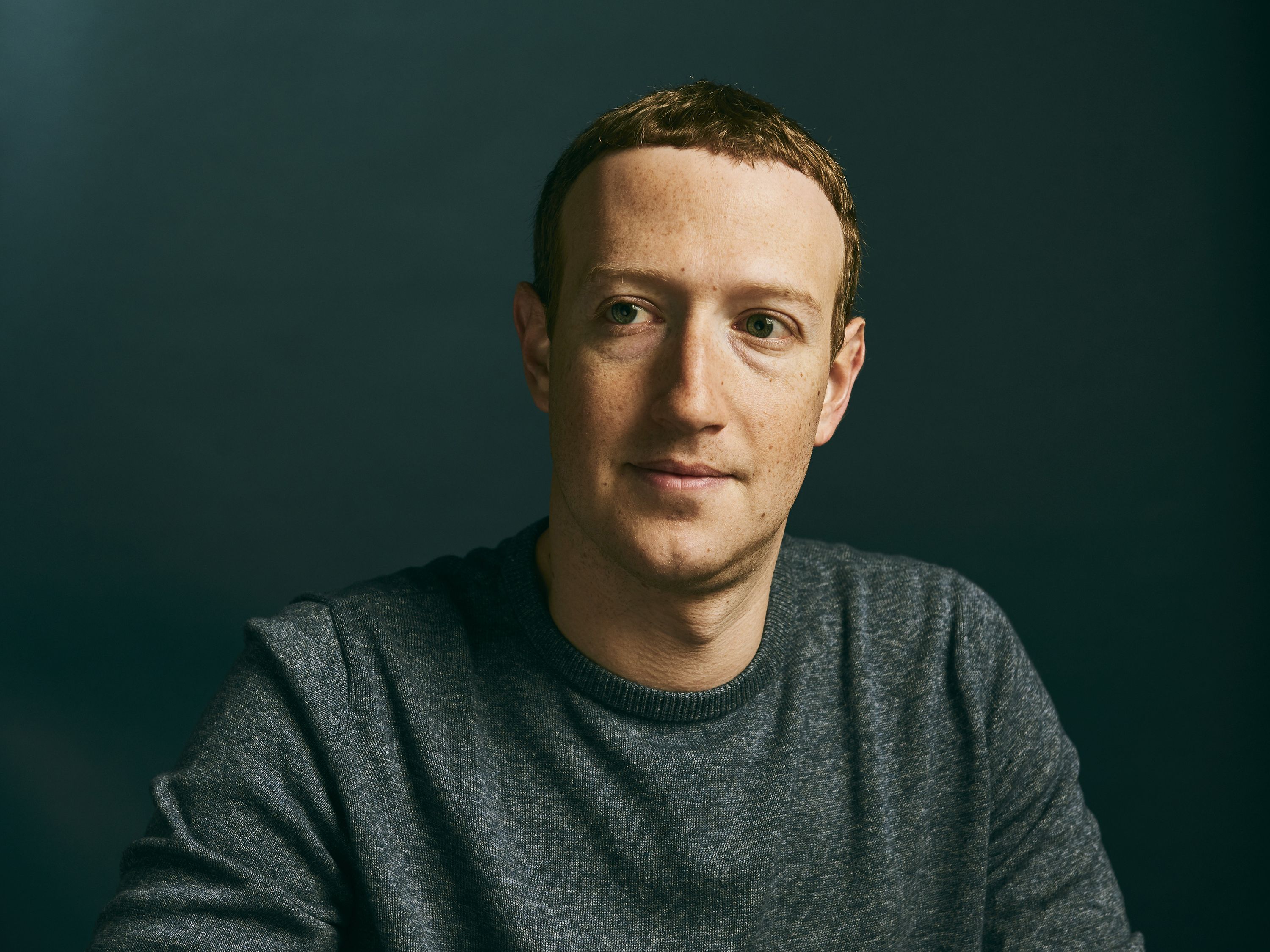
Mark Zuckerberg
Mark Elliot Zuckerberg is an American technology entrepreneur and philanthropist. He co-founded Facebook (now Meta Platforms) from his Harvard dorm room in 2004 and serves as its CEO, making him one of the youngest self-made billionaires in history.
Why Mark Zuckerberg Appears in the Documents
Mark Zuckerberg is mentioned in 11 documents within the Epstein file corpus, consisting of 7 articles, 4 emails, originating from the House Oversight Committee.
These documents include titles such as "Peter Thiel’s Money Talks, in Contentious Ways. But What Does He Say?", "Last Remaining Tickets: Mark Zuckerberg On Trial – Will He Be Held Accountable?", "Oscars Weekend 2011: A Publicist's Diary" among others. Mark Zuckerberg's name appears across these documents in various contexts. The document corpus contains a wide range of materials including media coverage, government records, and legal proceedings where many public figures are mentioned.
Disclaimer: Appearing in the Epstein document corpus does not imply wrongdoing, guilt, or any form of association with criminal activity. Many public figures are mentioned incidentally in these documents due to the broad scope of the released materials.
Documents (11)
Peter Thiel’s Money Talks, in Contentious Ways. But What Does He Say?
Peter Thiel, Silicon Valley’s controversial investor and long‑time Facebook board member, is portrayed in this profile as a Cassandra who warned about tech arrogance even as he helped shape it, backing Donald Trump and shaping the Facebook era while quietly pursuing ambitions in media that could outflank Breitbart and Fox. The piece traces his eclectic influences—from Girard-inspired ideas about mimetic desire to libertarian ideals—and shows how his moves—from funding the Hulk Hogan–Gawker case to relocating from San Francisco to Los Angeles—reflect his struggle to reconcile big‑tech power with accountability and to decide what comes next for the industry and society.
Source: House Oversight Committee
Last Remaining Tickets: Mark Zuckerberg On Trial – Will He Be Held Accountable?
Intelligence Squared invites you to a live June 18 debate at the Emmanuel Centre, titled “Mark Zuckerberg on Trial: Will He Be Held Accountable?”, to weigh whether Facebook damages society through fake news, data privacy scandals, and political polarization against defenders who argue the platform has connected billions and spurred social change; the panel features Damian Collins, Nina Schick, Dex Torricke-Barton, Ed Vaizey and Helen Lewis, with additional commentary from The Daily, and tickets are selling fast.
Source: House Oversight Committee
Last Remaining Tickets: Mark Zuckerberg On Trial – Will He Be Held Accountable?
Intelligence Squared invites you to a live June 18 debate at the Emmanuel Centre, titled “Mark Zuckerberg on Trial: Will He Be Held Accountable?”, to weigh whether Facebook damages society through fake news, data privacy scandals, and political polarization against defenders who argue the platform has connected billions and spurred social change; the panel features Damian Collins, Nina Schick, Dex Torricke-Barton, Ed Vaizey and Helen Lewis, with additional commentary from The Daily, and tickets are selling fast.
Source: House Oversight Committee
Peter Thiel’s Money Talks, in Contentious Ways. But What Does He Say?
Peter Thiel, Silicon Valley’s controversial investor and long‑time Facebook board member, is portrayed in this profile as a Cassandra who warned about tech arrogance even as he helped shape it, backing Donald Trump and shaping the Facebook era while quietly pursuing ambitions in media that could outflank Breitbart and Fox. The piece traces his eclectic influences—from Girard-inspired ideas about mimetic desire to libertarian ideals—and shows how his moves—from funding the Hulk Hogan–Gawker case to relocating from San Francisco to Los Angeles—reflect his struggle to reconcile big‑tech power with accountability and to decide what comes next for the industry and society.
Source: House Oversight Committee
Last Remaining Tickets: Mark Zuckerberg On Trial – Will He Be Held Accountable?
Intelligence Squared invites you to a live June 18 debate at the Emmanuel Centre, titled “Mark Zuckerberg on Trial: Will He Be Held Accountable?”, to weigh whether Facebook damages society through fake news, data privacy scandals, and political polarization against defenders who argue the platform has connected billions and spurred social change; the panel features Damian Collins, Nina Schick, Dex Torricke-Barton, Ed Vaizey and Helen Lewis, with additional commentary from The Daily, and tickets are selling fast.
Source: House Oversight Committee
Oscars Weekend 2011: A Publicist's Diary
A seasoned publicist chronicles the fevered 2011 Oscar season, tracing the race between The King’s Speech and The Social Network from glamorous pre-award parties to the desperate, carefully orchestrated campaigns of Harvey Weinstein, Tom Hooper, and their rivals. Through insider anecdotes, fashion, and backstage strategy, the piece exposes how prestige, timing, and relentless momentum shape the outcome, culminating in The King’s Speech capturing Best Picture and Hooper clinching Best Director on a night of glamor, anxiety, and institutional theater.
Source: House Oversight Committee
Collection of five 2011 opinion articles
Five 2011 articles survey post–Arab Spring transitions and the science of optimism: Friedman argues Egypt’s revolution has moved into a fragile, army‑driven phase that requires quiet U.S. engagement to steer a credible democratic path; Dershowitz contends Obama’s peace strategy has backfired by hardening positions and complicating Israeli–Palestinian talks; Said analyzes Egypt’s September elections as a contest between religious and secular forces, with the Muslim Brotherhood well positioned; Moubayed reports on Iraq’s Maliki–Allawi power struggle and the unfolding NCSP that could reshape governance; and Sharot explains the optimism bias—the brain’s tendency to imagine brighter futures—and its impact on politics, health and resilience. Together, the pieces illuminate how political upheaval, strategic missteps, and human psychology converge to shape democracy, peace, and everyday risk in the region and beyond.
Source: House Oversight Committee
Collection of five 2011 opinion articles
Five 2011 articles survey post–Arab Spring transitions and the science of optimism: Friedman argues Egypt’s revolution has moved into a fragile, army‑driven phase that requires quiet U.S. engagement to steer a credible democratic path; Dershowitz contends Obama’s peace strategy has backfired by hardening positions and complicating Israeli–Palestinian talks; Said analyzes Egypt’s September elections as a contest between religious and secular forces, with the Muslim Brotherhood well positioned; Moubayed reports on Iraq’s Maliki–Allawi power struggle and the unfolding NCSP that could reshape governance; and Sharot explains the optimism bias—the brain’s tendency to imagine brighter futures—and its impact on politics, health and resilience. Together, the pieces illuminate how political upheaval, strategic missteps, and human psychology converge to shape democracy, peace, and everyday risk in the region and beyond.
Source: House Oversight Committee
Oscar Diary
Stephanie’s Oscar diary offers an intimate, front‑row narrative of the 2011 awards season, charting the behind‑the‑scenes campaign between The King’s Speech and The Social Network, Harvey Weinstein’s relentless organizing, and a star‑studded crawl of pre‑ and post‑Oscar parties as Hollywood’s power players converge on the Kodak Theatre, culminating in The King’s Speech securing Best Picture and its champions grabbing the spotlight.
Source: House Oversight Committee
EDGE Annual Question 2012 Invitation (Confidential)
John Brockman circulates an invitation to prominent scientists and tech leaders to contribute to The Edge’s 2012 Annual Question, “What is your favorite deep, elegant, or beautiful explanation?”, framing it as a continuation of Freeman Dyson’s vision for a 21st‑century “Age of Wonder” at the intersection of biology and computation, and sharing submission details, deadlines, and strict editorial rules about originality, length, and tone under an embargo.
Source: House Oversight Committee
EDGE Annual Question 2012 Invitation (Confidential)
John Brockman circulates an invitation to prominent scientists and tech leaders to contribute to The Edge’s 2012 Annual Question, “What is your favorite deep, elegant, or beautiful explanation?”, framing it as a continuation of Freeman Dyson’s vision for a 21st‑century “Age of Wonder” at the intersection of biology and computation, and sharing submission details, deadlines, and strict editorial rules about originality, length, and tone under an embargo.
Source: House Oversight Committee