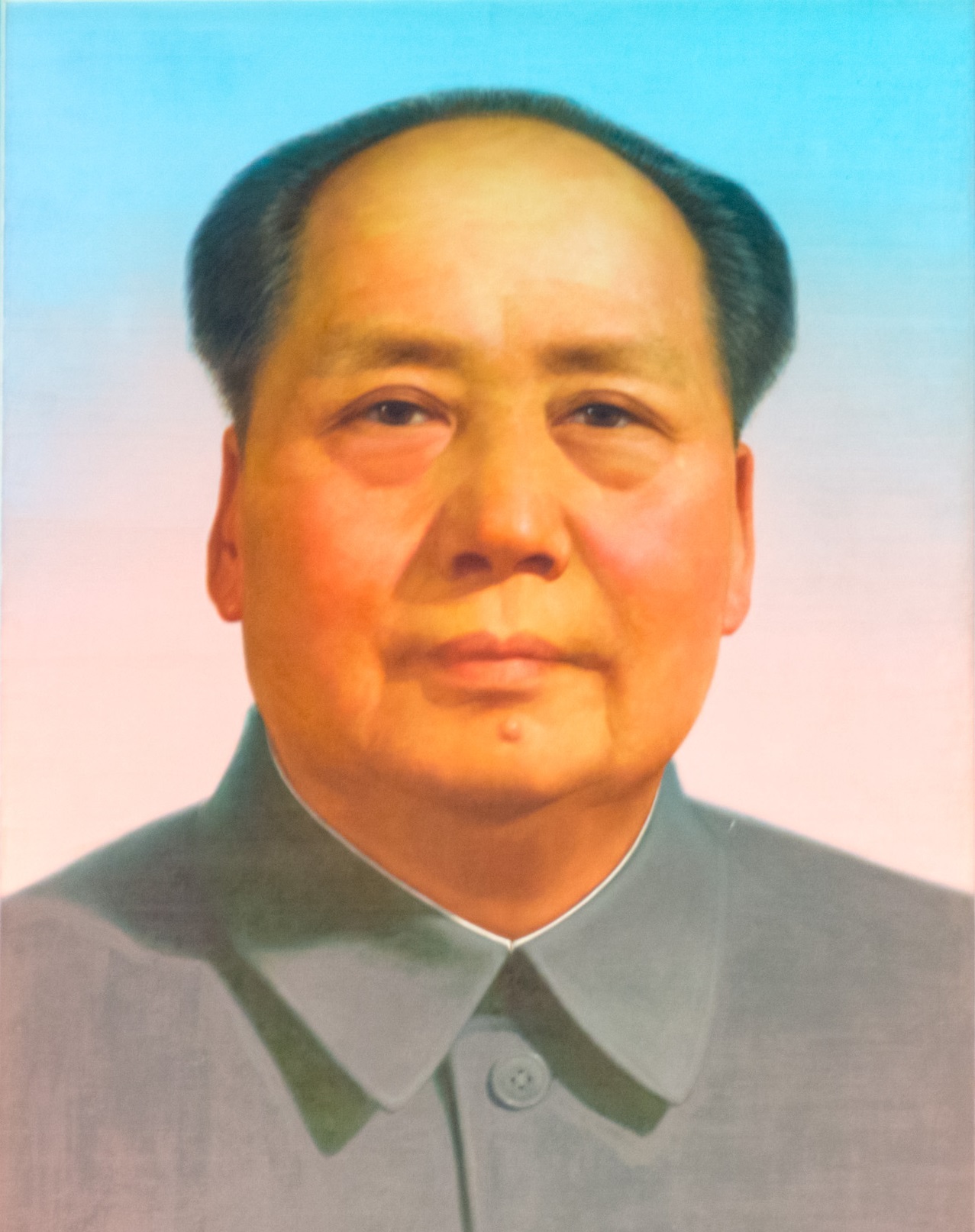
Mao Zedong
Mao Zedong was a Chinese communist revolutionary who was the founder of the People's Republic of China, which he led as the chairman of the Chinese Communist Party from the establishment of the PRC in 1949 until his death in 1976.
Why Mao Zedong Appears in the Documents
Mao Zedong is mentioned in 43 documents within the Epstein file corpus, consisting of 36 articles, 3 books, 1 data, 1 memoir, 1 opinion, 1 policy brief, originating from the House Oversight Committee.
These documents include titles such as "Preserving Mongolian Sovereignty and Culture", "FH_Authoritarians_Report_2017.indd", "Alan Dershowitz: Takes The Stand—An Autobiography" among others. Mao Zedong's name appears across these documents in various contexts. The document corpus contains a wide range of materials including media coverage, government records, and legal proceedings where many public figures are mentioned.
Disclaimer: Appearing in the Epstein document corpus does not imply wrongdoing, guilt, or any form of association with criminal activity. Many public figures are mentioned incidentally in these documents due to the broad scope of the released materials.
Documents (43)
Preserving Mongolian Sovereignty and Culture
This document argues that Mongolia’s sovereignty is under covert attack by the PRC, which seeks to restructure and integrate Mongolia through a multi-front campaign spanning economy, resources, media, culture, security, and politics, while marginalizing Russia and Western partners; it contends that China regards Mongolia as its “Ukraine” and aims to Sinicize the country, warning that without a global awareness and an education campaign to counter revisionist narratives, Mongolia could be fully assimilated within a decade, a development that would threaten Central Asian democracy and the balance of power in Eurasia.
Source: House Oversight Committee
Preserving Mongolian Sovereignty and Culture
This document argues that Mongolia’s sovereignty is under covert attack by the PRC, which seeks to restructure and integrate Mongolia through a multi-front campaign spanning economy, resources, media, culture, security, and politics, while marginalizing Russia and Western partners; it contends that China regards Mongolia as its “Ukraine” and aims to Sinicize the country, warning that without a global awareness and an education campaign to counter revisionist narratives, Mongolia could be fully assimilated within a decade, a development that would threaten Central Asian democracy and the balance of power in Eurasia.
Source: House Oversight Committee
FH_Authoritarians_Report_2017.indd
Breaking Down Democracy surveys how 21st-century authoritarians, led by Russia and China, survive and spread by masking autocratic rule as pluralism: conducting formal elections while skewing the playing field, saturating domestic and international media with propaganda, hollowing out civil society, rewriting history, and embedding illiberal practices within liberal institutions. It shows how these regimes co-opt open economies, exploit global networks, and foster illiberal democracies in places like Hungary and Poland, while exporting tactics through NGOs, lobbyists, and overseas media to influence democracies abroad. The report argues this modern authoritarianism is durable and increasingly adept at seizing power from within and eroding the liberal international order, threatening freedom unless democracies repair their resilience across government, media, academia, business, and civil society, with Ukraine as a frontline case study and a set of concrete recommendations for a coordinated response.
Source: House Oversight Committee
FH_Authoritarians_Report_2017.indd
Breaking Down Democracy surveys how 21st-century authoritarians, led by Russia and China, survive and spread by masking autocratic rule as pluralism: conducting formal elections while skewing the playing field, saturating domestic and international media with propaganda, hollowing out civil society, rewriting history, and embedding illiberal practices within liberal institutions. It shows how these regimes co-opt open economies, exploit global networks, and foster illiberal democracies in places like Hungary and Poland, while exporting tactics through NGOs, lobbyists, and overseas media to influence democracies abroad. The report argues this modern authoritarianism is durable and increasingly adept at seizing power from within and eroding the liberal international order, threatening freedom unless democracies repair their resilience across government, media, academia, business, and civil society, with Ukraine as a frontline case study and a set of concrete recommendations for a coordinated response.
Source: House Oversight Committee
FH_Authoritarians_Report_2017.indd
Breaking Down Democracy surveys how 21st-century authoritarians, led by Russia and China, survive and spread by masking autocratic rule as pluralism: conducting formal elections while skewing the playing field, saturating domestic and international media with propaganda, hollowing out civil society, rewriting history, and embedding illiberal practices within liberal institutions. It shows how these regimes co-opt open economies, exploit global networks, and foster illiberal democracies in places like Hungary and Poland, while exporting tactics through NGOs, lobbyists, and overseas media to influence democracies abroad. The report argues this modern authoritarianism is durable and increasingly adept at seizing power from within and eroding the liberal international order, threatening freedom unless democracies repair their resilience across government, media, academia, business, and civil society, with Ukraine as a frontline case study and a set of concrete recommendations for a coordinated response.
Source: House Oversight Committee
FH_Authoritarians_Report_2017.indd
Breaking Down Democracy surveys how 21st-century authoritarians, led by Russia and China, survive and spread by masking autocratic rule as pluralism: conducting formal elections while skewing the playing field, saturating domestic and international media with propaganda, hollowing out civil society, rewriting history, and embedding illiberal practices within liberal institutions. It shows how these regimes co-opt open economies, exploit global networks, and foster illiberal democracies in places like Hungary and Poland, while exporting tactics through NGOs, lobbyists, and overseas media to influence democracies abroad. The report argues this modern authoritarianism is durable and increasingly adept at seizing power from within and eroding the liberal international order, threatening freedom unless democracies repair their resilience across government, media, academia, business, and civil society, with Ukraine as a frontline case study and a set of concrete recommendations for a coordinated response.
Source: House Oversight Committee
FH_Authoritarians_Report_2017.indd
Breaking Down Democracy surveys how 21st-century authoritarians, led by Russia and China, survive and spread by masking autocratic rule as pluralism: conducting formal elections while skewing the playing field, saturating domestic and international media with propaganda, hollowing out civil society, rewriting history, and embedding illiberal practices within liberal institutions. It shows how these regimes co-opt open economies, exploit global networks, and foster illiberal democracies in places like Hungary and Poland, while exporting tactics through NGOs, lobbyists, and overseas media to influence democracies abroad. The report argues this modern authoritarianism is durable and increasingly adept at seizing power from within and eroding the liberal international order, threatening freedom unless democracies repair their resilience across government, media, academia, business, and civil society, with Ukraine as a frontline case study and a set of concrete recommendations for a coordinated response.
Source: House Oversight Committee
Alan Dershowitz: Takes The Stand—An Autobiography
Source: House Oversight Committee
Policy Principles for Constructive Vigilance: Report on Chinese Influence Activities in the United States
Source: House Oversight Committee
Policy Principles for Constructive Vigilance: Report on Chinese Influence Activities in the United States
Source: House Oversight Committee
Policy Principles for Constructive Vigilance: Report on Chinese Influence Activities in the United States
Source: House Oversight Committee
EB Draft Ch1-25
Source: House Oversight Committee
Evilicious
Marc D. Hauser’s Evilicious provides a science-grounded account of why humans commit extraordinary harms: evil is not a rare defect but an incidental byproduct of a promiscuously connected brain that can fuse desire with denial, reward with punishment, and in-group loyalty with out-group hostility. Drawing on evolution, genetics, neuroscience, and social science, Hauser traces how hormones like testosterone, neurotransmitters such as dopamine and serotonin, and genes like MAOA, DRD4, and COMT shape risk, self-control, and the taste for harm, while social dynamics—dehumanization, moral disengagement, bystander effects, and large-scale cooperation—show how everyday aggression can escalate into violence, genocide, or corruption. He argues that our capacity for both great kindness and great cruelty arises from the same core architecture, and that understanding these core ingredients can illuminate moral responsibility, inform policy and law, and equip us to foster a more humane future. A compact, provocative synthesis, the book reveals evil as a predictable, learnable aspect of human nature—and urges us to confront it with science, education, and compassion.
Source: House Oversight Committee
Evilicious
Marc D. Hauser’s Evilicious provides a science-grounded account of why humans commit extraordinary harms: evil is not a rare defect but an incidental byproduct of a promiscuously connected brain that can fuse desire with denial, reward with punishment, and in-group loyalty with out-group hostility. Drawing on evolution, genetics, neuroscience, and social science, Hauser traces how hormones like testosterone, neurotransmitters such as dopamine and serotonin, and genes like MAOA, DRD4, and COMT shape risk, self-control, and the taste for harm, while social dynamics—dehumanization, moral disengagement, bystander effects, and large-scale cooperation—show how everyday aggression can escalate into violence, genocide, or corruption. He argues that our capacity for both great kindness and great cruelty arises from the same core architecture, and that understanding these core ingredients can illuminate moral responsibility, inform policy and law, and equip us to foster a more humane future. A compact, provocative synthesis, the book reveals evil as a predictable, learnable aspect of human nature—and urges us to confront it with science, education, and compassion.
Source: House Oversight Committee
Evilicious
Marc D. Hauser’s Evilicious provides a science-grounded account of why humans commit extraordinary harms: evil is not a rare defect but an incidental byproduct of a promiscuously connected brain that can fuse desire with denial, reward with punishment, and in-group loyalty with out-group hostility. Drawing on evolution, genetics, neuroscience, and social science, Hauser traces how hormones like testosterone, neurotransmitters such as dopamine and serotonin, and genes like MAOA, DRD4, and COMT shape risk, self-control, and the taste for harm, while social dynamics—dehumanization, moral disengagement, bystander effects, and large-scale cooperation—show how everyday aggression can escalate into violence, genocide, or corruption. He argues that our capacity for both great kindness and great cruelty arises from the same core architecture, and that understanding these core ingredients can illuminate moral responsibility, inform policy and law, and equip us to foster a more humane future. A compact, provocative synthesis, the book reveals evil as a predictable, learnable aspect of human nature—and urges us to confront it with science, education, and compassion.
Source: House Oversight Committee
Evilicious
Marc D. Hauser’s Evilicious provides a science-grounded account of why humans commit extraordinary harms: evil is not a rare defect but an incidental byproduct of a promiscuously connected brain that can fuse desire with denial, reward with punishment, and in-group loyalty with out-group hostility. Drawing on evolution, genetics, neuroscience, and social science, Hauser traces how hormones like testosterone, neurotransmitters such as dopamine and serotonin, and genes like MAOA, DRD4, and COMT shape risk, self-control, and the taste for harm, while social dynamics—dehumanization, moral disengagement, bystander effects, and large-scale cooperation—show how everyday aggression can escalate into violence, genocide, or corruption. He argues that our capacity for both great kindness and great cruelty arises from the same core architecture, and that understanding these core ingredients can illuminate moral responsibility, inform policy and law, and equip us to foster a more humane future. A compact, provocative synthesis, the book reveals evil as a predictable, learnable aspect of human nature—and urges us to confront it with science, education, and compassion.
Source: House Oversight Committee
April 2011 Middle East Policy Commentary
The four excerpts, drawn from The Cairo Review of Global Affairs, Foreign Policy, The Washington Post, and The National Interest in April 2011, converge on a critical rethinking of U.S. policy in the Middle East and beyond in a moment of regional upheaval. William B. Quandt argues for a bold, internationally backed peace initiative that brackets the Israeli–Palestinian and Israeli–Syrian tracks, warning that delaying progress would marginalize the United States as the region shifts toward democracy. Colum Lynch details how U.S. diplomacy at the U.N. sought to blunt a Goldstone-style war-crimes investigation of Israel’s Gaza operation, highlighting deliberate American influence behind the scenes at the United Nations. David Ignatius calls for a strategic pivot in national security spending—prioritizing Egypt’s democratic transition and rebalancing Af–Pak policy toward diplomacy and reconstruction rather than full-scale military means. Jacob Heilbrunn, meanwhile, critiques the liberal-interventionist impulse embodied by Samantha Power, arguing that humanitarian interventions—like Libya—risk hubris and unintended consequences, and urging a more cautious appraisal of when, where, and how force should be used in pursuit of democracy and human rights.
Source: House Oversight Committee
TSS1211
Source: House Oversight Committee
TSS1211
Source: House Oversight Committee
TSS1211
Source: House Oversight Committee
TSS1211
Source: House Oversight Committee
TSS1211
Source: House Oversight Committee
The Fusion of Civilizations: The Case for Global Optimism
Kishore Mahbubani and Lawrence Summers argue that despite global turmoil, the past few decades have been the best in history and the world is moving toward a fusion of civilizations rather than a clash, as modernization spreads, Islam proves compatible with development, and China’s rise demonstrates the West’s model can adapt; reforging and reinforcing a fair, rules-based international order while highlighting positive trends—and engaging constructively with China and India—offers the best path to sustain progress, leverage the power of Western-style education and science, and continue lifting hundreds of millions out of poverty as a more interconnected, hopeful global system evolves.
Source: House Oversight Committee
The Fusion of Civilizations: The Case for Global Optimism
Kishore Mahbubani and Lawrence Summers argue that despite global turmoil, the past few decades have been the best in history and the world is moving toward a fusion of civilizations rather than a clash, as modernization spreads, Islam proves compatible with development, and China’s rise demonstrates the West’s model can adapt; reforging and reinforcing a fair, rules-based international order while highlighting positive trends—and engaging constructively with China and India—offers the best path to sustain progress, leverage the power of Western-style education and science, and continue lifting hundreds of millions out of poverty as a more interconnected, hopeful global system evolves.
Source: House Oversight Committee
Revealed: the world's most admired people
The Times-YouGov global survey reveals Bill Gates as the world’s most admired person, with Pope Francis, Barack Obama, Billy Graham and George W. Bush ahead of him in the U.S. and Gates topping the list in China; the Queen is the most admired woman overall, trailed by Jolie and Oprah, and the results show strong political, business and sports figures across nations while highlighting gender imbalances in some countries. The study also maps national leaders (Putin in Russia, Merkel in Germany, Sarkozy in France, Goodluck Jonathan in Nigeria) and notes that few local politicians reach the top ten in Australia and the UK, illustrates the media’s influence on who people admire (Pope Francis rising after Time’s Person of the Year) and even mentions Mandela’s near-top status had he been considered earlier; a concise Who’s Who section lists figures like Modi, Bachchan, Abdul Kalam, Anna Hazare, Arvind Kejriwal, Peng Liyuan, Abdul Sattar Edhi and Jokowi Widodo. Based on surveys of 13,895 people in 13 countries, the document also asks who is the most famous person in the world, with Obama leading that question.
Source: House Oversight Committee
The Fusion of Civilizations: The Case for Global Optimism
Kishore Mahbubani and Lawrence Summers argue that despite global turmoil, the past few decades have been the best in history and the world is moving toward a fusion of civilizations rather than a clash, as modernization spreads, Islam proves compatible with development, and China’s rise demonstrates the West’s model can adapt; reforging and reinforcing a fair, rules-based international order while highlighting positive trends—and engaging constructively with China and India—offers the best path to sustain progress, leverage the power of Western-style education and science, and continue lifting hundreds of millions out of poverty as a more interconnected, hopeful global system evolves.
Source: House Oversight Committee
The Middle East in May 2011: Peace, Democracy, and Geopolitics
This 2011 compilation surveys how the Arab Spring, the Syria crisis, and shifting great-power dynamics are reshaping Middle East peace prospects and regional alignments: Elliott Abrams argues there will be no meaningful peace with Assad and calls for quarantining his regime; Hamid Alkifaey suggests a democratic Arab world could embrace peace with Israel but warns that Israel’s policies may hinder that trajectory; Daniel Stone notes George Mitchell’s exit signaling stagnation in U.S.-led peace efforts; Nawaf Obaid describes a U.S.-Saudi split and a more assertive, Saudi-led regional posture; Niall Ferguson uses Henry Kissinger’s On China to illuminate how China’s rise could recalibrate U.S. strategy toward Asia and beyond; Yusuf Kanli frames Syria as Turkey’s domestic concern with regional spillovers; and STRATFOR provides a centuries-spanning geopolitical view of Israel, arguing its security depends on navigating great-power dynamics and geographic realities.
Source: House Oversight Committee
The Middle East in May 2011: Peace, Democracy, and Geopolitics
This 2011 compilation surveys how the Arab Spring, the Syria crisis, and shifting great-power dynamics are reshaping Middle East peace prospects and regional alignments: Elliott Abrams argues there will be no meaningful peace with Assad and calls for quarantining his regime; Hamid Alkifaey suggests a democratic Arab world could embrace peace with Israel but warns that Israel’s policies may hinder that trajectory; Daniel Stone notes George Mitchell’s exit signaling stagnation in U.S.-led peace efforts; Nawaf Obaid describes a U.S.-Saudi split and a more assertive, Saudi-led regional posture; Niall Ferguson uses Henry Kissinger’s On China to illuminate how China’s rise could recalibrate U.S. strategy toward Asia and beyond; Yusuf Kanli frames Syria as Turkey’s domestic concern with regional spillovers; and STRATFOR provides a centuries-spanning geopolitical view of Israel, arguing its security depends on navigating great-power dynamics and geographic realities.
Source: House Oversight Committee
The Middle East in May 2011: Peace, Democracy, and Geopolitics
This 2011 compilation surveys how the Arab Spring, the Syria crisis, and shifting great-power dynamics are reshaping Middle East peace prospects and regional alignments: Elliott Abrams argues there will be no meaningful peace with Assad and calls for quarantining his regime; Hamid Alkifaey suggests a democratic Arab world could embrace peace with Israel but warns that Israel’s policies may hinder that trajectory; Daniel Stone notes George Mitchell’s exit signaling stagnation in U.S.-led peace efforts; Nawaf Obaid describes a U.S.-Saudi split and a more assertive, Saudi-led regional posture; Niall Ferguson uses Henry Kissinger’s On China to illuminate how China’s rise could recalibrate U.S. strategy toward Asia and beyond; Yusuf Kanli frames Syria as Turkey’s domestic concern with regional spillovers; and STRATFOR provides a centuries-spanning geopolitical view of Israel, arguing its security depends on navigating great-power dynamics and geographic realities.
Source: House Oversight Committee
The Middle East in May 2011: Peace, Democracy, and Geopolitics
This 2011 compilation surveys how the Arab Spring, the Syria crisis, and shifting great-power dynamics are reshaping Middle East peace prospects and regional alignments: Elliott Abrams argues there will be no meaningful peace with Assad and calls for quarantining his regime; Hamid Alkifaey suggests a democratic Arab world could embrace peace with Israel but warns that Israel’s policies may hinder that trajectory; Daniel Stone notes George Mitchell’s exit signaling stagnation in U.S.-led peace efforts; Nawaf Obaid describes a U.S.-Saudi split and a more assertive, Saudi-led regional posture; Niall Ferguson uses Henry Kissinger’s On China to illuminate how China’s rise could recalibrate U.S. strategy toward Asia and beyond; Yusuf Kanli frames Syria as Turkey’s domestic concern with regional spillovers; and STRATFOR provides a centuries-spanning geopolitical view of Israel, arguing its security depends on navigating great-power dynamics and geographic realities.
Source: House Oversight Committee
The Middle East in May 2011: Peace, Democracy, and Geopolitics
This 2011 compilation surveys how the Arab Spring, the Syria crisis, and shifting great-power dynamics are reshaping Middle East peace prospects and regional alignments: Elliott Abrams argues there will be no meaningful peace with Assad and calls for quarantining his regime; Hamid Alkifaey suggests a democratic Arab world could embrace peace with Israel but warns that Israel’s policies may hinder that trajectory; Daniel Stone notes George Mitchell’s exit signaling stagnation in U.S.-led peace efforts; Nawaf Obaid describes a U.S.-Saudi split and a more assertive, Saudi-led regional posture; Niall Ferguson uses Henry Kissinger’s On China to illuminate how China’s rise could recalibrate U.S. strategy toward Asia and beyond; Yusuf Kanli frames Syria as Turkey’s domestic concern with regional spillovers; and STRATFOR provides a centuries-spanning geopolitical view of Israel, arguing its security depends on navigating great-power dynamics and geographic realities.
Source: House Oversight Committee
Paul Keating explains as never before
An extended interview with Paul Keating portrays him as arguing that leadership must be guided by a higher calling and a synthesis of beauty and reason, lamenting that Labor lacks an overarching narrative and calling for an Australia‑in‑Transition framework focused on productivity, savings, education and hi‑tech, cultural transformation, and closer East Asian ties—including a movement toward becoming a republic—to navigate a world increasingly shaped by China, with the US and Europe making strategic missteps that threaten global stability.
Source: House Oversight Committee
Paul Keating: After Words interview and related commentary
The document is a set of emails and newspaper excerpts centered on Paul Keating’s book After Words, a speeches collection in which Keating argues that creativity and reason—guided by an inner sense of purpose—should steer leadership and national strategy. It includes Katherine Keating forwarding a forward to her father’s book, and two Australian articles and an interview that sketch Keating’s philosophy of “Australia in Transition,” critique post–Cold War U.S. and European policy, assess China’s rise, and advocate cultural transformation and stronger East Asian ties as Australia’s path to future prosperity.
Source: House Oversight Committee
Paul Keating explains as never before
An extended interview with Paul Keating portrays him as arguing that leadership must be guided by a higher calling and a synthesis of beauty and reason, lamenting that Labor lacks an overarching narrative and calling for an Australia‑in‑Transition framework focused on productivity, savings, education and hi‑tech, cultural transformation, and closer East Asian ties—including a movement toward becoming a republic—to navigate a world increasingly shaped by China, with the US and Europe making strategic missteps that threaten global stability.
Source: House Oversight Committee
Xi Jinping and the New Politburo Standing Committee
Robert Lawrence Kuhn explains that Xi Jinping’s power is consolidated through his designation as Core and the incorporation of Xi Jinping Thought into the Party Constitution, even as the newly revealed Politburo Standing Committee shows no obvious successor and a balance of regional and factional ties; the interview outlines how collective leadership and democratic centralism will function with rigorous consultation, despite intensified media censorship during the 19th CPC National Congress, and sketches Xi’s policy agenda of rejuvenating China, deepening reform, and strengthening the rule of law, set against a cautious, protocol-driven approach to Donald Trump.
Source: House Oversight Committee
Creativity is central to our endeavours
Paul Keating's After Words collects his speeches to argue that creativity and the "inner command"—a Kantian sense of higher purpose—must guide leadership as much as policy briefings. In interviews, he lays out a cohesive vision for Australia’s future, urging a national story of "Australia in Transition," cultural transformation, and closer ties to East Asia, including republican reform to stay competitive in a China-led world. He critiques US and European missteps, champions liberal internationalism, and insists that progress comes from blending imagination—music, art, architecture—with reason, education, and productivity.
Source: House Oversight Committee
Paul Keating: After Words – interview and reflections
This document compiles emails and long excerpts about Paul Keating’s new book After Words and a companion Australian interview in which Keating argues that leadership should blend creativity, beauty, and intuition with reason, drawing on Kant’s notion of the inner self and an inner command to guide public life. He critiques the post–Cold War trajectory of the United States and Europe, foresees a 21st‑century order dominated by China, the US, and India, and advocates a cohesive Australian strategy—“Australia in Transition”—focused on reforming the economy, boosting savings, investing in hi‑tech and education, and strengthening East Asian ties, while making the case for Australia’s republic as essential to competing in Asia and avoiding the pitfalls of incrementalism.
Source: House Oversight Committee
Revealed: the world's most admired people
According to a global YouGov survey for The Times, Bill Gates is the world’s most admired person, with Pope Francis and Barack Obama also highly regarded, while regional differences prevail—Britain’s Queen is the top female figure, Putin dominates in Russia, and politicians often outrank entertainers in several countries; the poll also finds Obama to be the most famous person globally and demonstrates how media coverage can rapidly reshape public admiration.
Source: House Oversight Committee
Paul Keating: After Words – interview and reflections
This document compiles emails and long excerpts about Paul Keating’s new book After Words and a companion Australian interview in which Keating argues that leadership should blend creativity, beauty, and intuition with reason, drawing on Kant’s notion of the inner self and an inner command to guide public life. He critiques the post–Cold War trajectory of the United States and Europe, foresees a 21st‑century order dominated by China, the US, and India, and advocates a cohesive Australian strategy—“Australia in Transition”—focused on reforming the economy, boosting savings, investing in hi‑tech and education, and strengthening East Asian ties, while making the case for Australia’s republic as essential to competing in Asia and avoiding the pitfalls of incrementalism.
Source: House Oversight Committee
Revealed: the world's most admired people
According to a global YouGov survey for The Times, Bill Gates is the world’s most admired person, with Pope Francis and Barack Obama also highly regarded, while regional differences prevail—Britain’s Queen is the top female figure, Putin dominates in Russia, and politicians often outrank entertainers in several countries; the poll also finds Obama to be the most famous person globally and demonstrates how media coverage can rapidly reshape public admiration.
Source: House Oversight Committee
Keating Interview: Leadership, Australia in Transition, and the Global Order
Former Australian prime minister Paul Keating uses an expansive interview to argue that the 21st century requires a unifying national narrative and a cultural‑economic transition for Australia—anchored in creativity, savings, education, and a deeper pivot to East Asia—toward a republic and a more self‑reliant future. He critiques US and European leadership, links the 2008 crisis to global imbalances and policy missteps, praises Deng Xiaoping’s reform legacy, and forecast a 2050 world order led by China, the US, and India, urging Australia to adapt or fall behind. He also presses Labor to shed an insider, shortsighted culture and become the party of the new society, presenting a digestible framework—“Australia in Transition”—to unite reform with a compelling, widely understood story rather than incremental policy alone.
Source: House Oversight Committee
Intellectual Jazz: Biographies and Conference Schedule
Intellectual Jazz presents the WWW Conference, a high-powered, three-day gathering of fifty luminaries across science, design, art, and culture—people like David Agus, Craig Venter, Yo-Yo Ma, will.i.am, Norman Lear, Matt Groening, Jeffrey Katzenberg, and Steven Pinker—designed to spark unscripted, cross-disciplinary dialogue that the organizers call intellectual jazz. Hosted at The Mission Inn and Esri, the program pairs participants for intimate conversations, with meals, receptions, and talks arranged to emphasize spontaneous exchange over prepared lectures. The conversations will be filmed in black-and-white, unedited, and distributed via a forthcoming app that builds visual biographies and curated materials for each participant, with translations to reach a global audience. The accompanying memo explains a new modality for knowledge dissemination: a scalable, immersive platform that preserves core human curiosity, fosters fresh insights through improvised dialogue, and could redefine how we explore and share ideas across disciplines.
Source: House Oversight Committee
Robert Lawrence Kuhn: Profile and Commentary on China's Leadership and the New Era
Robert Lawrence Kuhn is a U.S.-based public intellectual, investment banker, and China expert who has advised Chinese leaders for decades and hosts Closer to China; this document collects his expansive analysis of Xi Jinping, Xi Jinping Thought, the “New Era,” and China’s path to mid‑century modernization, as well as his views on the 19th CPC National Congress, term‑limit changes, Belt and Road, governance reform, anti‑corruption, and U.S.–China relations, alongside profiles of his media work, writings on China’s leaders, and his broader effort to explain China to the world.
Source: House Oversight Committee