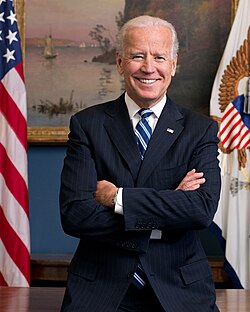
Joe Biden
Joseph Robinette Biden Jr. is an American politician who served as the 46th president of the United States from 2021 to 2025.
Why Joe Biden Appears in the Documents
Joe Biden is mentioned in 105 documents within the Epstein file corpus, consisting of 52 emails, 26 articles, 13 letters, 5 chats, 3 speechs, 1 announcement, 1 book, 1 briefing, 1 memo, 1 message, 1 unknown, originating from the House Oversight Committee.
These documents include address book or contact list entries, media articles, emails. The presence of Joe Biden's name in these specific document types reflects the scope of the released corpus, which contains a wide range of records from legal proceedings, investigations, and media coverage.
Disclaimer: Appearing in the Epstein document corpus does not imply wrongdoing, guilt, or any form of association with criminal activity. Many public figures are mentioned incidentally in these documents due to the broad scope of the released materials.
Documents (50)
Why I Leaked the Anita Hill Affidavit
This document is a confidential, first-person confession by a female aide to a Republican senator explaining why she leaked Anita Hill’s affidavit during Clarence Thomas’s confirmation hearings. It recounts an overheard, jocular conversation among Thomas and two senators about Hill and abortion, including a graphic sexual anecdote used to illustrate their attitudes toward the hearings, and explains that the leak to Nina Totenberg aimed to embarrass the Senate and force public hearings. The author expresses anger at perceived hypocrisy, defends her decision to leak, and notes that the disclosure delayed the vote and altered the hearing process, all framed within a broader reflection on politics, morality, and the confidential nature of the communication.
Source: House Oversight Committee
New York Post Morning Digest - July 1, 2016
This document is a forwarded New York Post Morning Digest from July 1, 2016, highlighting the top story that Louis Barbati, 61, co-owner of Brooklyn’s L&B Spumoni Gardens, was gunned down in a targeted hit outside his Dyker Heights home, and it also offers a broad roundup of other major headlines across politics, sports, entertainment, business and more.
Source: House Oversight Committee
New York Post Morning Digest - July 1, 2016
This document is a forwarded New York Post Morning Digest from July 1, 2016, highlighting the top story that Louis Barbati, 61, co-owner of Brooklyn’s L&B Spumoni Gardens, was gunned down in a targeted hit outside his Dyker Heights home, and it also offers a broad roundup of other major headlines across politics, sports, entertainment, business and more.
Source: House Oversight Committee
Policy Principles for Constructive Vigilance: Report on Chinese Influence Activities in the United States
Source: House Oversight Committee
New York Post Morning Digest – July 1, 2016 (email thread)
This July 1, 2016 New York Post Morning Digest email thread delivers a high-priority briefing centered on the targeted murder of Louis Barbati, co-owner of Brooklyn’s L&B Spumoni Gardens, who was shot outside his Dyker Heights home by a white man in his 30s wearing a black hoodie, and also curates a broad roundup of other top stories across crime, politics, entertainment, sports, and business for subscribers.
Source: House Oversight Committee
New York Post Morning Digest – July 1, 2016 (email thread)
This July 1, 2016 New York Post Morning Digest email thread delivers a high-priority briefing centered on the targeted murder of Louis Barbati, co-owner of Brooklyn’s L&B Spumoni Gardens, who was shot outside his Dyker Heights home by a white man in his 30s wearing a black hoodie, and also curates a broad roundup of other top stories across crime, politics, entertainment, sports, and business for subscribers.
Source: House Oversight Committee
Jeffrey Epstein Case: DOJ Communications, Plea Negotiations, and Related Legal Documents (2006–2008)
Source: House Oversight Committee
Editorials and Analyses on Iran and Middle East Politics (Feb 8, 2013)
This 2013-02 digest gathers several high-profile opinion pieces on Middle East diplomacy and upheaval, analyzing Iran’s nuclear program and the limits of Obama-era diplomacy and sanctions, the shifting dynamics in Egypt as it navigates post-revolution politics, Hamas’s cautious calculus over recognizing Israel amid siege and international pressure, Tunisia’s fragile democracy marred by assassination and political violence, and Iraq’s slide toward renewed sectarian conflict as Maliki’s government confronts Sunnis and Kurds. Taken together, the articles argue that sanctions have moderated Tehran but are unlikely to compel meaningful concessions without credible, reciprocal moves, and they warn that regional powers and Islamist movements—from Hamas to Iraq’s militias—complicate prospects for stability, demanding a nuanced, multi-faceted approach that blends diplomacy with clear red lines and continued pressure.
Source: House Oversight Committee
Editorials and Analyses on Iran and Middle East Politics (Feb 8, 2013)
This 2013-02 digest gathers several high-profile opinion pieces on Middle East diplomacy and upheaval, analyzing Iran’s nuclear program and the limits of Obama-era diplomacy and sanctions, the shifting dynamics in Egypt as it navigates post-revolution politics, Hamas’s cautious calculus over recognizing Israel amid siege and international pressure, Tunisia’s fragile democracy marred by assassination and political violence, and Iraq’s slide toward renewed sectarian conflict as Maliki’s government confronts Sunnis and Kurds. Taken together, the articles argue that sanctions have moderated Tehran but are unlikely to compel meaningful concessions without credible, reciprocal moves, and they warn that regional powers and Islamist movements—from Hamas to Iraq’s militias—complicate prospects for stability, demanding a nuanced, multi-faceted approach that blends diplomacy with clear red lines and continued pressure.
Source: House Oversight Committee
Editorials and Analyses on Iran and Middle East Politics (Feb 8, 2013)
This 2013-02 digest gathers several high-profile opinion pieces on Middle East diplomacy and upheaval, analyzing Iran’s nuclear program and the limits of Obama-era diplomacy and sanctions, the shifting dynamics in Egypt as it navigates post-revolution politics, Hamas’s cautious calculus over recognizing Israel amid siege and international pressure, Tunisia’s fragile democracy marred by assassination and political violence, and Iraq’s slide toward renewed sectarian conflict as Maliki’s government confronts Sunnis and Kurds. Taken together, the articles argue that sanctions have moderated Tehran but are unlikely to compel meaningful concessions without credible, reciprocal moves, and they warn that regional powers and Islamist movements—from Hamas to Iraq’s militias—complicate prospects for stability, demanding a nuanced, multi-faceted approach that blends diplomacy with clear red lines and continued pressure.
Source: House Oversight Committee
Will Hunter Biden jeopardize his father's campaign?
This Flipboard 10 Today email curates a quick-reading mix of timely stories—from a New Yorker feature examining Hunter Biden and potential implications for his father’s campaign to sports, culture, food, and science pieces—with direct links to outlets like The New Yorker, NYTimes, ESPN, Usatoday, Atlas Obscura, Time, Vanity Fair, Bon Appetit, and Dwell, plus reminders to use Flipboard on the web or mobile.
Source: House Oversight Committee
Policy analysis digest: State of the Union and Middle East coverage
This document is a curated snapshot of 2013 analyses from major outlets that trace Barack Obama’s emerging second-term agenda and the era’s volatile Middle East dynamics. It juxtaposes domestic imperatives—deficit reduction, entitlement reform, education, jobs, and tax reform—with the political realities of sequestration and a pragmatic approach to growth and the minimum wage. It also surveys foreign policy through a cautious lens: Afghanistan withdrawal, diplomacy with Iran, a restrained stance on Syria, and the complex politics surrounding Israel and Palestine, including Hezbollah’s hybrid identity. Interwoven is a case study in regional power games, exemplified by Rawabi, a privately funded Palestinian city in the West Bank backed by Qatar that tests sovereignty, economics, and cross-border cooperation amid a stalled peace process.
Source: House Oversight Committee
April 2011 Middle East Policy Commentary
The four excerpts, drawn from The Cairo Review of Global Affairs, Foreign Policy, The Washington Post, and The National Interest in April 2011, converge on a critical rethinking of U.S. policy in the Middle East and beyond in a moment of regional upheaval. William B. Quandt argues for a bold, internationally backed peace initiative that brackets the Israeli–Palestinian and Israeli–Syrian tracks, warning that delaying progress would marginalize the United States as the region shifts toward democracy. Colum Lynch details how U.S. diplomacy at the U.N. sought to blunt a Goldstone-style war-crimes investigation of Israel’s Gaza operation, highlighting deliberate American influence behind the scenes at the United Nations. David Ignatius calls for a strategic pivot in national security spending—prioritizing Egypt’s democratic transition and rebalancing Af–Pak policy toward diplomacy and reconstruction rather than full-scale military means. Jacob Heilbrunn, meanwhile, critiques the liberal-interventionist impulse embodied by Samantha Power, arguing that humanitarian interventions—like Libya—risk hubris and unintended consequences, and urging a more cautious appraisal of when, where, and how force should be used in pursuit of democracy and human rights.
Source: House Oversight Committee
April 2011 Middle East Policy Commentary
The four excerpts, drawn from The Cairo Review of Global Affairs, Foreign Policy, The Washington Post, and The National Interest in April 2011, converge on a critical rethinking of U.S. policy in the Middle East and beyond in a moment of regional upheaval. William B. Quandt argues for a bold, internationally backed peace initiative that brackets the Israeli–Palestinian and Israeli–Syrian tracks, warning that delaying progress would marginalize the United States as the region shifts toward democracy. Colum Lynch details how U.S. diplomacy at the U.N. sought to blunt a Goldstone-style war-crimes investigation of Israel’s Gaza operation, highlighting deliberate American influence behind the scenes at the United Nations. David Ignatius calls for a strategic pivot in national security spending—prioritizing Egypt’s democratic transition and rebalancing Af–Pak policy toward diplomacy and reconstruction rather than full-scale military means. Jacob Heilbrunn, meanwhile, critiques the liberal-interventionist impulse embodied by Samantha Power, arguing that humanitarian interventions—like Libya—risk hubris and unintended consequences, and urging a more cautious appraisal of when, where, and how force should be used in pursuit of democracy and human rights.
Source: House Oversight Committee
Kerry scheme
An internal email alleges a covert Kerry-backed political plot to derail Hillary Clinton by indicting her and installing a last-minute replacement candidate—either Joe Biden or John Kerry—with Kerry allegedly having the means to buy Biden out of the race; the message is framed as confidential, potentially privileged information-and appears to discuss insider strategies for influencing the election.
Source: House Oversight Committee
President Obama and Self-deception
This provocative piece argues that Barack Obama, though gifted at integrating opposing viewpoints, was undone by self-deception that surfaced in two major missteps: a too-small economic stimulus guided by Summers that failed to deliver a quick revival, and the decision to elevate Hillary Clinton, a move the author views as foreshadowing later political costs. It also critiques episodes such as the Gates arrest, Obama’s cautious stance on Syria, and his post-presidency demeanor, portraying these as evidence of flawed judgment rooted in self-deception.
Source: House Oversight Committee
Kerry scheme
An internal email alleges a covert Kerry-backed political plot to derail Hillary Clinton by indicting her and installing a last-minute replacement candidate—either Joe Biden or John Kerry—with Kerry allegedly having the means to buy Biden out of the race; the message is framed as confidential, potentially privileged information-and appears to discuss insider strategies for influencing the election.
Source: House Oversight Committee
President Obama and Self-deception
This provocative piece argues that Barack Obama, though gifted at integrating opposing viewpoints, was undone by self-deception that surfaced in two major missteps: a too-small economic stimulus guided by Summers that failed to deliver a quick revival, and the decision to elevate Hillary Clinton, a move the author views as foreshadowing later political costs. It also critiques episodes such as the Gates arrest, Obama’s cautious stance on Syria, and his post-presidency demeanor, portraying these as evidence of flawed judgment rooted in self-deception.
Source: House Oversight Committee
Reminder: AICE Update: Is UNRWA vital for the Palestinians' future?
This American-Israeli Cooperative Enterprise briefing surveys urgent Israel–Palestine issues by examining the Trump-era decision to cut UNRWA funding, contrasting it with Obama’s missed economic peace opportunity, honoring a Sobibor uprising survivor, and outlining Joe Biden’s Israel-related background for 2020, while weaving in ongoing updates, educational content, and fundraising appeals for readers.
Source: House Oversight Committee
Editorial and Opinion Pieces on Iran and Middle East Politics (February 2013)
This document collects several early February 2013 opinion pieces from major outlets—on Iran’s nuclear program and U.S. policy, Egypt and the broader Middle East after the Arab Spring, Hamas’s stance toward Israel, Tunisia’s political crisis, and Iraq’s slide toward renewed sectarian violence—together arguing that sanctions and engagement have not yielded clear results, that diplomacy is hampered by distrust and domestic politics, and that the United States should pursue a nuanced mix of multilateral pressure, support for reform-minded forces, prudent diplomacy, and targeted cooperation with regional powers to avert greater upheaval.
Source: House Oversight Committee
Editorial and Opinion Pieces on Iran and Middle East Politics (February 2013)
This document collects several early February 2013 opinion pieces from major outlets—on Iran’s nuclear program and U.S. policy, Egypt and the broader Middle East after the Arab Spring, Hamas’s stance toward Israel, Tunisia’s political crisis, and Iraq’s slide toward renewed sectarian violence—together arguing that sanctions and engagement have not yielded clear results, that diplomacy is hampered by distrust and domestic politics, and that the United States should pursue a nuanced mix of multilateral pressure, support for reform-minded forces, prudent diplomacy, and targeted cooperation with regional powers to avert greater upheaval.
Source: House Oversight Committee
Collection of foreign policy analyses on Obama’s State of the Union and Middle East developments (February 2013)
This collection surveys Obama’s second-term priorities—domestically aiming to revive growth through tax reform, education, and trade while pursuing deficit reduction—and pairs it with a sober, global outlook: a cautious Afghanistan drawdown, careful diplomacy on Iran and Syria, debates over Hezbollah’s designation in Europe, and the West Bank’s Rawabi private-sector development as a potential bridge between Israeli and Palestinian economies amid persistent conflict.
Source: House Oversight Committee
Collection of foreign policy analyses on Obama’s State of the Union and Middle East developments (February 2013)
This collection surveys Obama’s second-term priorities—domestically aiming to revive growth through tax reform, education, and trade while pursuing deficit reduction—and pairs it with a sober, global outlook: a cautious Afghanistan drawdown, careful diplomacy on Iran and Syria, debates over Hezbollah’s designation in Europe, and the West Bank’s Rawabi private-sector development as a potential bridge between Israeli and Palestinian economies amid persistent conflict.
Source: House Oversight Committee
iMessage Archive: House Oversight chat on geopolitics and trade (May 2019)
This is a private iMessage archive from May 9–20, 2019 labeled “HOUSE OVERSIGHT,”呈 capturing a lengthy, back-and-forth discussion between the user and others that blends geopolitical analysis, strategic commentary on the US–China trade war, Iran and Middle East tensions, European politics, and public figures, with numerous news links interspersed alongside personal notes and meeting logistics.
Source: House Oversight Committee
iMessage Archive Conversation
This document is an extended iMessage archive (September 17–23, 2018) capturing a fervent, informal political discussion between jee (e:jeeitunes@gmail.com) and associates as they dissect Trump-era controversies, media narratives, the Kavanaugh hearings, and related geopolitics, while coordinating travel and meetings in New York, during UNGA week, and in Europe. The thread blends sharp political analysis with pop-culture metaphors, article links, and candid reactions, illustrating how a small group hones messaging, defends viewpoints, and debates the consequences of current events.
Source: House Oversight Committee
iMessage chat log – film production negotiations and political commentary
This is a June 2019 iMessage archive capturing a high‑pressure, behind‑the‑scenes negotiation between jee and a collaborator about a film project: coordinating the entire cast, scheduling shoots across locations, securing legal counsel and financing, and managing production logistics, while peppering the chat with reactions to political events, media coverage, and other controversial topics, including references to litigation and government oversight.
Source: House Oversight Committee
iMessage chat log – film production negotiations and political commentary
This is a June 2019 iMessage archive capturing a high‑pressure, behind‑the‑scenes negotiation between jee and a collaborator about a film project: coordinating the entire cast, scheduling shoots across locations, securing legal counsel and financing, and managing production logistics, while peppering the chat with reactions to political events, media coverage, and other controversial topics, including references to litigation and government oversight.
Source: House Oversight Committee
End of Mideast Wholesale; Is This the End of the Assad Dynasty?; Mohamed ElBaradei, the Inspector; Hillary Clinton - Woman of the World
This collection juxtaposes 2011’s Middle East upheavals with the force and limits of Western diplomacy: Thomas Friedman argues that the era of Middle East wholesale stability is ending, forcing Israel, the Arab monarchies, and Egypt’s political actors to pay a higher “retail” price for peace and reform; Patrick Seale analyzes Bashar al-Assad’s Syria as a long‑standing autocracy pressured by demands for genuine reform and the risk of internal collapse; Leslie Gelb reviews Mohamed ElBaradei’s Age of Deception, advocating diplomacy and stronger international oversight to curb nuclear proliferation while warning that real progress requires major-power engagement; and Jonathan Alter profiles Hillary Clinton as secretary of state steering a 3‑D foreign policy—combining diplomacy, development, and coalition action—through the Libya intervention and a crisis‑ridden, WikiLeaks‑shadowed era, with her legacy tied to governing in a volatile region.
Source: House Oversight Committee
iMessage Archive: House Oversight Filming and Political Discussion
This is a sprawling May 2019 chat among members labeled “HOUSE OVERSIGHT,” including jee, outlining the planning and logistics of a documentary project: coordinating interviews and access to scientists and political figures, arranging film crews and travel across Europe and the United States, selecting locations (libraries, ranches, potential islands, and other venues), negotiating legal and ethical considerations, and weaving in current events and media links to frame a narrative about power, finance, policy, and governance.
Source: House Oversight Committee
Address on Middle East Security and Regional Peace
In this 2014 address, the speaker portrays the Middle East as a “perfect storm”—the Arab Spring’s aftermath, intra-Islamic conflict, and a world without a single geopolitical center—placing Israel at the center of existential threats from ISIS, Iran, and Hezbollah, but also at a unique strategic leverage point. He argues that Israel must act from a position of strength—militarily, economically, and diplomatically—while maintaining a moral high ground and close, trust-based ties with the United States. Cautioning against pessimism and complacency, he advocates blocking a nuclear Iran and pursuing a regional peace anchored by a two-state solution within a broader regional framework, potentially based on the Saudi proposal, even if achieved through interim steps. He warns that the gravest danger is a slide to a one-state reality and internal societal fracture, urging reforms in governance, the rule of law, and social cohesion, while prioritizing the younger generation. Ultimately, he calls for bold, principled leadership—Seizing opportunities as Ben-Gurion did—and translating vision into action through a sustainable regional agreement that secures Israel’s future.
Source: House Oversight Committee
Address on Middle East Security and Regional Peace
In this 2014 address, the speaker portrays the Middle East as a “perfect storm”—the Arab Spring’s aftermath, intra-Islamic conflict, and a world without a single geopolitical center—placing Israel at the center of existential threats from ISIS, Iran, and Hezbollah, but also at a unique strategic leverage point. He argues that Israel must act from a position of strength—militarily, economically, and diplomatically—while maintaining a moral high ground and close, trust-based ties with the United States. Cautioning against pessimism and complacency, he advocates blocking a nuclear Iran and pursuing a regional peace anchored by a two-state solution within a broader regional framework, potentially based on the Saudi proposal, even if achieved through interim steps. He warns that the gravest danger is a slide to a one-state reality and internal societal fracture, urging reforms in governance, the rule of law, and social cohesion, while prioritizing the younger generation. Ultimately, he calls for bold, principled leadership—Seizing opportunities as Ben-Gurion did—and translating vision into action through a sustainable regional agreement that secures Israel’s future.
Source: House Oversight Committee
The Middle East in May 2011: Peace, Democracy, and Geopolitics
This 2011 compilation surveys how the Arab Spring, the Syria crisis, and shifting great-power dynamics are reshaping Middle East peace prospects and regional alignments: Elliott Abrams argues there will be no meaningful peace with Assad and calls for quarantining his regime; Hamid Alkifaey suggests a democratic Arab world could embrace peace with Israel but warns that Israel’s policies may hinder that trajectory; Daniel Stone notes George Mitchell’s exit signaling stagnation in U.S.-led peace efforts; Nawaf Obaid describes a U.S.-Saudi split and a more assertive, Saudi-led regional posture; Niall Ferguson uses Henry Kissinger’s On China to illuminate how China’s rise could recalibrate U.S. strategy toward Asia and beyond; Yusuf Kanli frames Syria as Turkey’s domestic concern with regional spillovers; and STRATFOR provides a centuries-spanning geopolitical view of Israel, arguing its security depends on navigating great-power dynamics and geographic realities.
Source: House Oversight Committee
FP Briefing May 2014: Egypt, Lebanon, Cyprus, India, China Policy
This non-classified briefing assembles seven timely analyses (Egypt’s uncertain path under al-Sisi; the Saudi–Iran talks and their potential impact on Lebanon and the region; Modi’s emphatic electoral victory and India’s policy direction; India ready to dream big under the BJP; Cyprus’s renewed push for resolution; the strategic case that Stars Are Aligned for a Cyprus settlement; and China’s measured, principle-based Syria policy) to illuminate how leadership shifts, regional rivalries, and rising powers may reshape stability, growth, and alliances across the Middle East, South Asia, and Europe in 2014.
Source: House Oversight Committee
Deutsche Bank screenshow template
Deutsche Bank's Global Public Affairs briefing provides a forward-looking risk map for 2015–2016, arguing that geopolitics and energy dynamics will increasingly drive markets, with Middle East instability, a rising NAFTA energy bloc, and China’s ongoing transformation creating long‑term uncertainty; it highlights near-term catalysts such as the Iran nuclear deal, the Trans-Pacific Partnership, and the lifting of oil and gas export bans, while outlining U.S. domestic policy risks in 2015–16 (tax reform, regulatory relief for banks, and housing‑finance reform) alongside a broad sweep of global flashpoints—from Yemen, Libya, and Venezuela to Russia–China energy ties and Cuba—emphasizing how these developments, intertwined with the 2016 U.S. election cycle, could shape investment and strategic risk for financial and corporate clients.
Source: House Oversight Committee
Email thread about rights to Woody Allen footage for Harvard Modernism course
Harvard professor Elisa New explains in an email thread about an ambitious Modernism course project that she has been taping a who’s-who of figures—from politicians like Bill Clinton, Joe Biden, John McCain and Jerry Brown to diplomats, judges, journalists, artists, and scientists—for possible use in an online course and potentially a TV episode on poetry, art, sport, and play; Woody Allen’s lawyers have refused permission to use the footage online or for broadcast, leaving the future of the project contingent on permission and timing as the course is developed chronologically.
Source: House Oversight Committee
FP Briefing May 2014: Egypt, Lebanon, Cyprus, India, China Policy
This non-classified briefing assembles seven timely analyses (Egypt’s uncertain path under al-Sisi; the Saudi–Iran talks and their potential impact on Lebanon and the region; Modi’s emphatic electoral victory and India’s policy direction; India ready to dream big under the BJP; Cyprus’s renewed push for resolution; the strategic case that Stars Are Aligned for a Cyprus settlement; and China’s measured, principle-based Syria policy) to illuminate how leadership shifts, regional rivalries, and rising powers may reshape stability, growth, and alliances across the Middle East, South Asia, and Europe in 2014.
Source: House Oversight Committee
Re: Jed Rubenfeld
This 2018 email thread between Ken Starr and Jeffrey E. discusses the prospect of writing about Yale criminal-law professor Jed Rubenfeld, emphasizing his strong stance on procedural fairness in campus adjudications, and exploring how to make his work timely and engaging for today's audience, including provocative notes on presidential accountability and civil versus criminal process, as well as references to Clinton-era stories; the exchange also considers making Rubenfeld’s insights accessible during a book tour and notes Starr’s willingness to facilitate introductions and connections.
Source: House Oversight Committee
Deutsche Bank screenshow template
Deutsche Bank's Global Public Affairs briefing provides a forward-looking risk map for 2015–2016, arguing that geopolitics and energy dynamics will increasingly drive markets, with Middle East instability, a rising NAFTA energy bloc, and China’s ongoing transformation creating long‑term uncertainty; it highlights near-term catalysts such as the Iran nuclear deal, the Trans-Pacific Partnership, and the lifting of oil and gas export bans, while outlining U.S. domestic policy risks in 2015–16 (tax reform, regulatory relief for banks, and housing‑finance reform) alongside a broad sweep of global flashpoints—from Yemen, Libya, and Venezuela to Russia–China energy ties and Cuba—emphasizing how these developments, intertwined with the 2016 U.S. election cycle, could shape investment and strategic risk for financial and corporate clients.
Source: House Oversight Committee
Email thread about rights to Woody Allen footage for Harvard Modernism course
Harvard professor Elisa New explains in an email thread about an ambitious Modernism course project that she has been taping a who’s-who of figures—from politicians like Bill Clinton, Joe Biden, John McCain and Jerry Brown to diplomats, judges, journalists, artists, and scientists—for possible use in an online course and potentially a TV episode on poetry, art, sport, and play; Woody Allen’s lawyers have refused permission to use the footage online or for broadcast, leaving the future of the project contingent on permission and timing as the course is developed chronologically.
Source: House Oversight Committee
Feb 2013 International Affairs Digest: Middle East Peace, Iran Talks, and Global Economy
A curated mix of articles from early 2013 surveys how the United States and its partners confront a transformed global landscape: Obama’s renewed focus on the Middle East with an Israeli visit, shifting Israeli-Palestinian dynamics, and the roles of Egypt and Gulf states, alongside Iran’s stalled nuclear talks and the specter of renewed regional conflict; reflections on Shimon Peres’s legacy and Israel’s political culture; and comparative analysis of India, China, and Egypt amid demographic shifts and governance challenges. The collection also advocates a recalibrated American strategy—stronger, WTO-focused economic leadership, investments in infrastructure and gender equality, and a more agile military posture in CENTCOM to deter and manage a nuclear-tinged Gulf, a rising China, and complex regional security challenges. Taken together, these pieces illuminate how demographic change, political transitions, and new power alignments demand a cohesive approach that blends diplomacy with economic resilience to secure stability and growth.
Source: House Oversight Committee
Feb 2013 International Affairs Digest: Middle East Peace, Iran Talks, and Global Economy
A curated mix of articles from early 2013 surveys how the United States and its partners confront a transformed global landscape: Obama’s renewed focus on the Middle East with an Israeli visit, shifting Israeli-Palestinian dynamics, and the roles of Egypt and Gulf states, alongside Iran’s stalled nuclear talks and the specter of renewed regional conflict; reflections on Shimon Peres’s legacy and Israel’s political culture; and comparative analysis of India, China, and Egypt amid demographic shifts and governance challenges. The collection also advocates a recalibrated American strategy—stronger, WTO-focused economic leadership, investments in infrastructure and gender equality, and a more agile military posture in CENTCOM to deter and manage a nuclear-tinged Gulf, a rising China, and complex regional security challenges. Taken together, these pieces illuminate how demographic change, political transitions, and new power alignments demand a cohesive approach that blends diplomacy with economic resilience to secure stability and growth.
Source: House Oversight Committee
Israel Security and Regional Peace Strategy Speech (2014)
Against a backdrop of Arab upheaval, ISIS, Iran, and a geopolitically centerless world, the author argues that Israel remains the strongest regional power provided it combines military strength with prudent diplomacy and steadfast US backing. He stresses that Israel’s future hinges on maintaining its moral high ground, social cohesion, and economic vitality, even as it prepares for a prolonged struggle against radical terrorism. The core strategic path is to pursue a two-state solution within a broader regional framework—potentially anchored by Saudi proposals and a regional conference with moderate Arab states—supported by the international community and paired with a continued IDF edge. He cautions that regional instability stems from more than the Palestinian issue and warns against internal division and the slide toward a one-state outcome, urging bold leadership and long-term, imaginative statesmanship modeled on Israel’s great 20th-century leaders.
Source: House Oversight Committee
Israel Security and Regional Peace Strategy Speech (2014)
Against a backdrop of Arab upheaval, ISIS, Iran, and a geopolitically centerless world, the author argues that Israel remains the strongest regional power provided it combines military strength with prudent diplomacy and steadfast US backing. He stresses that Israel’s future hinges on maintaining its moral high ground, social cohesion, and economic vitality, even as it prepares for a prolonged struggle against radical terrorism. The core strategic path is to pursue a two-state solution within a broader regional framework—potentially anchored by Saudi proposals and a regional conference with moderate Arab states—supported by the international community and paired with a continued IDF edge. He cautions that regional instability stems from more than the Palestinian issue and warns against internal division and the slide toward a one-state outcome, urging bold leadership and long-term, imaginative statesmanship modeled on Israel’s great 20th-century leaders.
Source: House Oversight Committee
iMessage Source Entry: Political commentary and book discussions
This 2019 iMessage archive captures a long, real-time exchange between two correspondents, jee and jeeitunes@gmail.com, full of political commentary and publishing logistics as they discuss geopolitics ( Modi and India, China, Merkel and Europe) alongside strategic planning around Michael Wolff’s forthcoming book Siege and Trump-related coverage, including meeting and filming arrangements, travel between New York, Paris, and Cannes, royalties and publishing details, and reactions to the book’s portrayal of political figures.
Source: House Oversight Committee
iMessage Source Entry: Political commentary and book discussions
This 2019 iMessage archive captures a long, real-time exchange between two correspondents, jee and jeeitunes@gmail.com, full of political commentary and publishing logistics as they discuss geopolitics ( Modi and India, China, Merkel and Europe) alongside strategic planning around Michael Wolff’s forthcoming book Siege and Trump-related coverage, including meeting and filming arrangements, travel between New York, Paris, and Cannes, royalties and publishing details, and reactions to the book’s portrayal of political figures.
Source: House Oversight Committee
Foreign Policy Articles Collection (February 2013)
This collection of articles from major outlets in early 2013 maps a US foreign policy in flux: Obama’s planned trip to Israel signals a renewed push for a two-state peace amid a region reshaped by uprisings, while interviews and commentary from Saeb Erekat to Shimon Peres examine the fragility and legacy of the peace process; broader geopolitical analysis contrasts India, China, and Egypt to stress how demography, governance, and economic reform will decide who thrives in the 21st century; warnings about future American military commitments in the Middle East and South Asia sit alongside in-depth coverage of Iran’s nuclear diplomacy and sanctions, and Robert Zoellick’s five-part blueprint calls for a comprehensive U.S. international economic strategy to lead a more liberal, integrated world order.
Source: House Oversight Committee
iMessage Archive: House Oversight Chat Transcript (2019)
This is a verbatim iMessage archive from mid-2019 in which a group calling themselves HOUSE OVERSIGHT coordinates a high-stakes political-media operation: planning films and interviews, lining up subject-matter experts, coordinating with lawyers, and scheduling travel across Europe and the U.S., while weaving rapid-fire political analysis, links to news coverage, and personal tension into a dense, behind-the-scenes view of a campaign-style effort in motion.
Source: House Oversight Committee
iMessage Archive: House Oversight Chat Transcript (2019)
This is a verbatim iMessage archive from mid-2019 in which a group calling themselves HOUSE OVERSIGHT coordinates a high-stakes political-media operation: planning films and interviews, lining up subject-matter experts, coordinating with lawyers, and scheduling travel across Europe and the U.S., while weaving rapid-fire political analysis, links to news coverage, and personal tension into a dense, behind-the-scenes view of a campaign-style effort in motion.
Source: House Oversight Committee
iMessage chat about politics and media links (House Oversight)
This is a dated iMessage archive (June 11–13, 2019) from a private chat labeled House Oversight, in which participants including jee discuss political and media strategy, coordinate a campaign-related push, exchange urgent notes and links to news articles about current events (the Gulf of Oman oil incidents and related coverage, the Hatch Act, a New Yorker piece, and other outlets), request contact and legal details, review documents, and react with tense commentary, indicating ongoing planning and concern over forthcoming press and political developments.
Source: House Oversight Committee
iMessage chat about politics and media links (House Oversight)
This is a dated iMessage archive (June 11–13, 2019) from a private chat labeled House Oversight, in which participants including jee discuss political and media strategy, coordinate a campaign-related push, exchange urgent notes and links to news articles about current events (the Gulf of Oman oil incidents and related coverage, the Hatch Act, a New Yorker piece, and other outlets), request contact and legal details, review documents, and react with tense commentary, indicating ongoing planning and concern over forthcoming press and political developments.
Source: House Oversight Committee