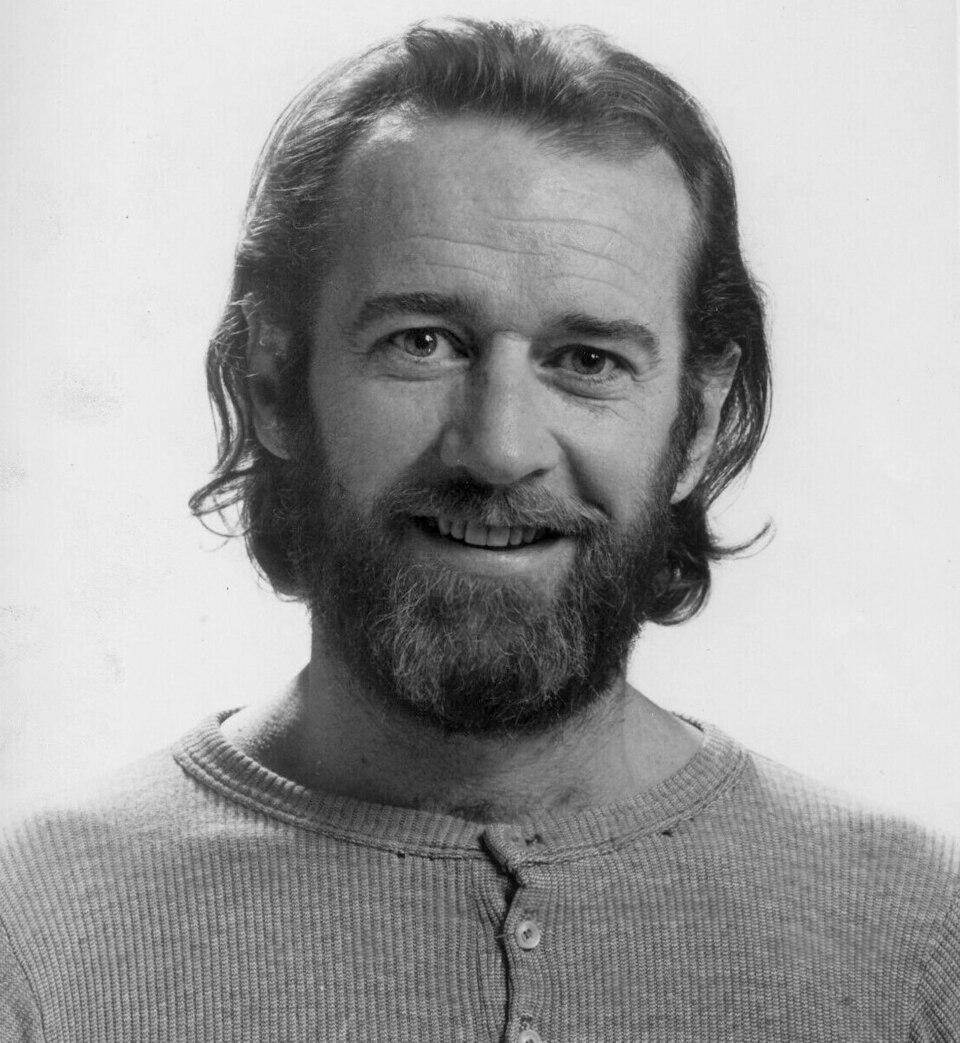
George Carlin
George Denis Patrick Carlin was an American stand-up comedian, social critic, actor and author. He was known for his dark comedy and reflections on politics, English, psychology, religion, and taboo subjects.
Why George Carlin Appears in the Documents
George Carlin is mentioned in 7 documents within the Epstein file corpus, consisting of 3 articles, 2 interviews, 1 book, 1 play, originating from the House Oversight Committee.
These documents include titles such as "Bystander_#4 JAN 17.indd", "Remembering Lenny Bruce", "The Greatest Dirty Joke Ever Told" among others. George Carlin's name appears across these documents in various contexts. The document corpus contains a wide range of materials including media coverage, government records, and legal proceedings where many public figures are mentioned.
Disclaimer: Appearing in the Epstein document corpus does not imply wrongdoing, guilt, or any form of association with criminal activity. Many public figures are mentioned incidentally in these documents due to the broad scope of the released materials.
Documents (7)
Bystander_#4 JAN 17.indd
An intimate, wide‑ranging interview with Paul Krassner, founder of The Realist, tracing how his fearless blend of satire and investigative reporting—shaped by Lenny Bruce, Abbie Hoffman, and a steadfast ethics—helped redefine American political discourse from the magazine’s early days to the Trump era, including controversial abortion-referral work and iconic pieces like the Disneyland Memorial Orgy and the LBJ takedown, while highlighting The Realist Archive Project and The Realist Cartoons as enduring showcases of how free expression can illuminate power, hypocrisy, and the urgent need for change.
Source: House Oversight Committee
Bystander_#4 JAN 17.indd
An intimate, wide‑ranging interview with Paul Krassner, founder of The Realist, tracing how his fearless blend of satire and investigative reporting—shaped by Lenny Bruce, Abbie Hoffman, and a steadfast ethics—helped redefine American political discourse from the magazine’s early days to the Trump era, including controversial abortion-referral work and iconic pieces like the Disneyland Memorial Orgy and the LBJ takedown, while highlighting The Realist Archive Project and The Realist Cartoons as enduring showcases of how free expression can illuminate power, hypocrisy, and the urgent need for change.
Source: House Oversight Committee
Remembering Lenny Bruce
Remembering Lenny Bruce is a memoir‑like tribute by Paul Krassner that traces Bruce’s fearless stand‑up and escalating battles with censorship, from his breakthrough in fringe clubs to his obsession with law and courtroom strategy, including the Café Au Go Go obscenity case and his eventual death, all told through Krassner’s intimate recollections of their friendship and collaboration. The piece blends vivid anecdotes of how Bruce transformed taboo subjects into a social critique, reshaping satire while paying a heavy personal and professional price. Interwoven are portraits of a working writer/editor navigating the era’s culture wars, the danger and dignity of free expression, and Bruce’s relentless pursuit of a truth he could perform as freely as he spoke. It culminates in a sharp political postscript, “The Last Word: Yikes!,” linking Bruce’s fight for artistic liberty to modern power struggles in American politics, including the Electoral College and the 2016 election.
Source: House Oversight Committee
Remembering Lenny Bruce
Remembering Lenny Bruce is a memoir‑like tribute by Paul Krassner that traces Bruce’s fearless stand‑up and escalating battles with censorship, from his breakthrough in fringe clubs to his obsession with law and courtroom strategy, including the Café Au Go Go obscenity case and his eventual death, all told through Krassner’s intimate recollections of their friendship and collaboration. The piece blends vivid anecdotes of how Bruce transformed taboo subjects into a social critique, reshaping satire while paying a heavy personal and professional price. Interwoven are portraits of a working writer/editor navigating the era’s culture wars, the danger and dignity of free expression, and Bruce’s relentless pursuit of a truth he could perform as freely as he spoke. It culminates in a sharp political postscript, “The Last Word: Yikes!,” linking Bruce’s fight for artistic liberty to modern power struggles in American politics, including the Electoral College and the 2016 election.
Source: House Oversight Committee
The Greatest Dirty Joke Ever Told
Frank Rich argues that the trauma of 9/11 intensified a cultural fight over freedom of expression in America, celebrating Gilbert Gottfried’s infamous Aristocrats routine at the Friars Club roast as a moment of shock therapy that helped a grieving city begin to live again. He uses the documentary The Aristocrats to show how comedians across generations push boundaries, even as their material unsettles power and propriety. Rich then critiques a rising decency police—embodied by Ted Stevens’s threats to regulate language, the censorship surrounding Deadwood, and bipartisan political correctness—that seeks to rewrite American history and culture to fit narrow agendas. He argues that vulgarity and frontier frankness are part of the nation’s birthright, and that suppressing them threatens the very essence of American freedom.
Source: House Oversight Committee
The Greatest Dirty Joke Ever Told
Frank Rich argues that the trauma of 9/11 intensified a cultural fight over freedom of expression in America, celebrating Gilbert Gottfried’s infamous Aristocrats routine at the Friars Club roast as a moment of shock therapy that helped a grieving city begin to live again. He uses the documentary The Aristocrats to show how comedians across generations push boundaries, even as their material unsettles power and propriety. Rich then critiques a rising decency police—embodied by Ted Stevens’s threats to regulate language, the censorship surrounding Deadwood, and bipartisan political correctness—that seeks to rewrite American history and culture to fit narrow agendas. He argues that vulgarity and frontier frankness are part of the nation’s birthright, and that suppressing them threatens the very essence of American freedom.
Source: House Oversight Committee
60 Years of Investigative Satire: The Best of Paul Krassner
Source: House Oversight Committee