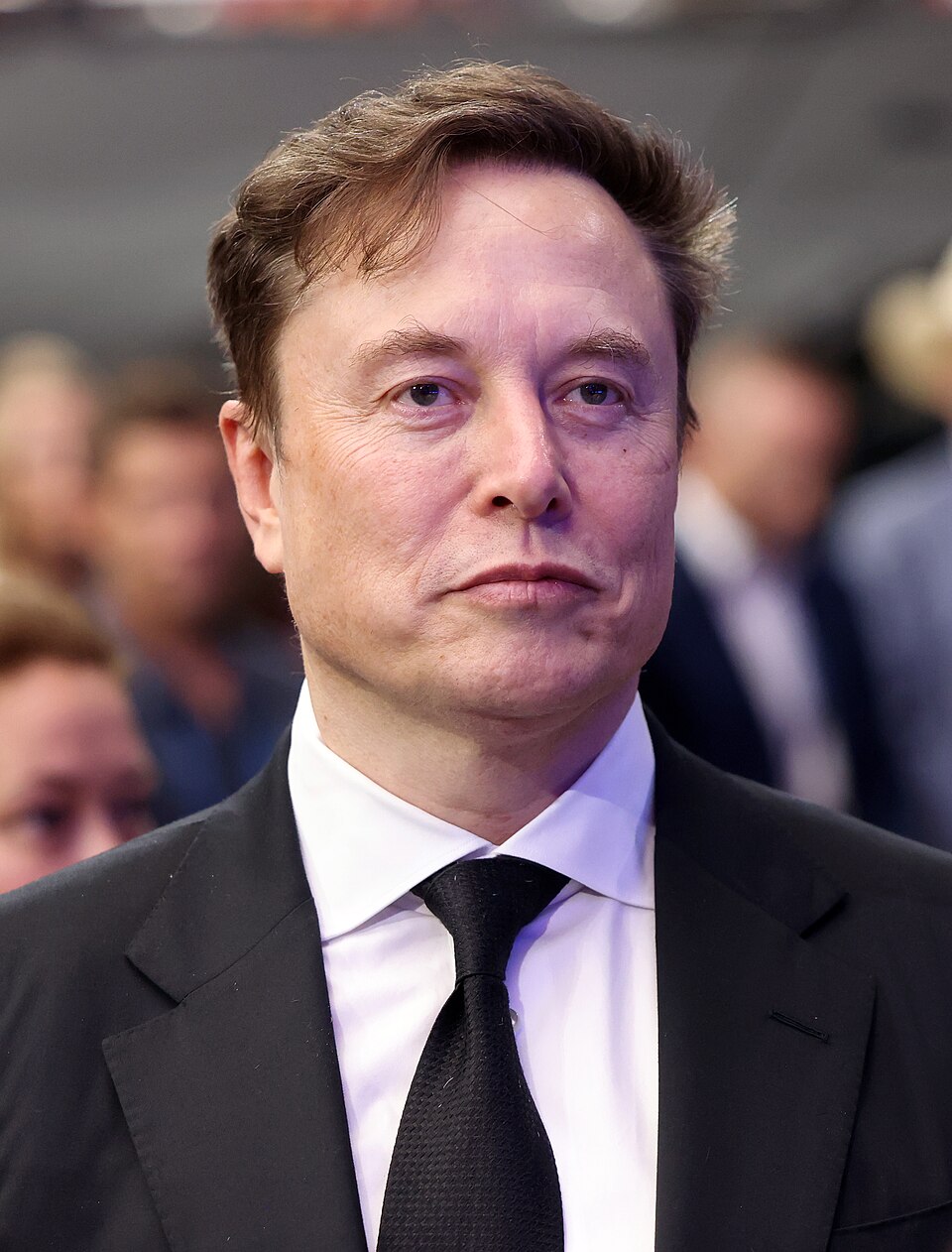
Elon Musk
Elon Reeve Musk is a businessman and entrepreneur known for his leadership of Tesla, SpaceX, Twitter, and xAI. Musk has been the wealthiest person in the world since 2021; as of January 2026, Forbes estimates his net worth to be around US$788 billion.
Why Elon Musk Appears in the Documents
Elon Musk is mentioned in 51 documents within the Epstein file corpus, consisting of 16 articles, 15 emails, 5 books, 4 Proposals, 2 reports, 2 televisions, 1 chat, 1 chat log, 1 essay, 1 policy, 1 program, 1 reference, 1 speech, originating from the House Oversight Committee.
These documents include court filings, media articles, emails. The presence of Elon Musk's name in these specific document types reflects the scope of the released corpus, which contains a wide range of records from legal proceedings, investigations, and media coverage.
Disclaimer: Appearing in the Epstein document corpus does not imply wrongdoing, guilt, or any form of association with criminal activity. Many public figures are mentioned incidentally in these documents due to the broad scope of the released materials.
Documents (50)
Re: Mechanisms for learning
The document is a wide-ranging meditation on how humans learn, proposing that cognition emerges from layered developmental stages learned over years, guided by a motivational system that directs attention and rewards, with language and higher cognition arising from this dynamic rather than from fixed modules. It weighs evidence from child development, cross-cultural differences, and advances in AI to argue that averages obscure divergent learning trajectories and that motivation plays a crucial role in what we come to understand, while offering provocative, controversial reflections on gender and ethnic differences as products of development timing and reward structures. Interwoven are speculative ideas about how culture, society, and governance might be understood if a society is treated as a living organism, and the piece touches on the limits of purely conceptual machine-learning approaches and the potential for AI to model cognitive programs. The tone is exploratory and provocative, blending neuroscience, cognitive science, and social commentary, and it treats public discourse as a site for testing ideas, sometimes crossing into sensitive territory.
Source: House Oversight Committee
Re: Mechanisms for learning
The document is a wide-ranging meditation on how humans learn, proposing that cognition emerges from layered developmental stages learned over years, guided by a motivational system that directs attention and rewards, with language and higher cognition arising from this dynamic rather than from fixed modules. It weighs evidence from child development, cross-cultural differences, and advances in AI to argue that averages obscure divergent learning trajectories and that motivation plays a crucial role in what we come to understand, while offering provocative, controversial reflections on gender and ethnic differences as products of development timing and reward structures. Interwoven are speculative ideas about how culture, society, and governance might be understood if a society is treated as a living organism, and the piece touches on the limits of purely conceptual machine-learning approaches and the potential for AI to model cognitive programs. The tone is exploratory and provocative, blending neuroscience, cognitive science, and social commentary, and it treats public discourse as a site for testing ideas, sometimes crossing into sensitive territory.
Source: House Oversight Committee
Filthy Rich
Filthy Rich is an investigative chronicle of Jeffrey Epstein’s multimillionaire network, exposing how a convicted sex offender leveraged immense wealth, access, and fear to prey on underage girls for years. Through a tapestry of interviews, court papers, and the accounts of associates, it reveals Epstein’s entanglements with powerful figures—Prince Andrew, Alan Dershowitz, Ghislaine Maxwell, Scott Rothstein, Leslie Wexner, and others—while victims recount manipulation, coercion, and captivity. It also traces the ensuing legal battles, counterclaims, and high-stakes media coverage that blurred the line between justice and power, culminating in continuing investigations and litigation that cast a long shadow over Epstein’s circle.
Source: House Oversight Committee
Filthy Rich
Filthy Rich is an investigative chronicle of Jeffrey Epstein’s multimillionaire network, exposing how a convicted sex offender leveraged immense wealth, access, and fear to prey on underage girls for years. Through a tapestry of interviews, court papers, and the accounts of associates, it reveals Epstein’s entanglements with powerful figures—Prince Andrew, Alan Dershowitz, Ghislaine Maxwell, Scott Rothstein, Leslie Wexner, and others—while victims recount manipulation, coercion, and captivity. It also traces the ensuing legal battles, counterclaims, and high-stakes media coverage that blurred the line between justice and power, culminating in continuing investigations and litigation that cast a long shadow over Epstein’s circle.
Source: House Oversight Committee
Filthy Rich
Filthy Rich chronicles Jeffrey Epstein’s rise from a Brooklyn-born financier to a billionaire whose velvet circle—Ghislaine Maxwell and a constellation of powerful men including Les Wexner, Donald Trump, Prince Andrew, and Alan Dershowitz—helped him recruit, traffic, and conceal underage victims. The narrative threads through Epstein’s charm, leverage, and expansive network that opened doors to elite wealth and influence, including his patronage of scientists and high-society mind-shifts, while detailing how Maxwell and others facilitated the abuse, transported girls, and kept a precarious duplicitous system afloat. It also exposes the legal arc surrounding his crimes: a controversial 2007–2008 non-prosecution agreement, a 2008 state guilty plea that resulted in a relatively light sentence and life-time sex-offender registration, and later civil suits and federal probes that continued to haunt his associates and the public conscience. Against the glittering glamour of elite access lies a culture of entitlements where money and status often shielded horrific acts, a truth slowly laid bare by victims’ testimonies and investigative scrutiny.
Source: House Oversight Committee
Filthy Rich
Filthy Rich chronicles Jeffrey Epstein’s rise from a Brooklyn-born financier to a billionaire whose velvet circle—Ghislaine Maxwell and a constellation of powerful men including Les Wexner, Donald Trump, Prince Andrew, and Alan Dershowitz—helped him recruit, traffic, and conceal underage victims. The narrative threads through Epstein’s charm, leverage, and expansive network that opened doors to elite wealth and influence, including his patronage of scientists and high-society mind-shifts, while detailing how Maxwell and others facilitated the abuse, transported girls, and kept a precarious duplicitous system afloat. It also exposes the legal arc surrounding his crimes: a controversial 2007–2008 non-prosecution agreement, a 2008 state guilty plea that resulted in a relatively light sentence and life-time sex-offender registration, and later civil suits and federal probes that continued to haunt his associates and the public conscience. Against the glittering glamour of elite access lies a culture of entitlements where money and status often shielded horrific acts, a truth slowly laid bare by victims’ testimonies and investigative scrutiny.
Source: House Oversight Committee
Filthy Rich
Filthy Rich chronicles Jeffrey Epstein’s rise from a Brooklyn-born financier to a billionaire whose velvet circle—Ghislaine Maxwell and a constellation of powerful men including Les Wexner, Donald Trump, Prince Andrew, and Alan Dershowitz—helped him recruit, traffic, and conceal underage victims. The narrative threads through Epstein’s charm, leverage, and expansive network that opened doors to elite wealth and influence, including his patronage of scientists and high-society mind-shifts, while detailing how Maxwell and others facilitated the abuse, transported girls, and kept a precarious duplicitous system afloat. It also exposes the legal arc surrounding his crimes: a controversial 2007–2008 non-prosecution agreement, a 2008 state guilty plea that resulted in a relatively light sentence and life-time sex-offender registration, and later civil suits and federal probes that continued to haunt his associates and the public conscience. Against the glittering glamour of elite access lies a culture of entitlements where money and status often shielded horrific acts, a truth slowly laid bare by victims’ testimonies and investigative scrutiny.
Source: House Oversight Committee
AI Workshop - Adverse Outcomes & Teams
An Origins Project workshop brings together experts to imagine adverse outcomes of AI across six domains—financial markets, democracy and information, war and peace, cybersecurity, AI-goals and inadvertent side effects, and deep societal influences. The discussions map how autonomous trading, propaganda and manipulation, autonomous weapons, AI-powered cyber operations, runaway optimization, and pervasive health/advocacy AI could unfold, highlighting plausible trajectories, failure modes, and timeframes from rapid market manipulation to destabilizing information ecosystems and global conflict. The group also sketches countermeasures—principled design, governance, monitoring, regulatory strategies, and cross-sector coordination—to prevent or mitigate these worst-case scenarios while harnessing AI’s benefits.
Source: House Oversight Committee
AI Workshop - Adverse Outcomes & Teams
An Origins Project workshop brings together experts to imagine adverse outcomes of AI across six domains—financial markets, democracy and information, war and peace, cybersecurity, AI-goals and inadvertent side effects, and deep societal influences. The discussions map how autonomous trading, propaganda and manipulation, autonomous weapons, AI-powered cyber operations, runaway optimization, and pervasive health/advocacy AI could unfold, highlighting plausible trajectories, failure modes, and timeframes from rapid market manipulation to destabilizing information ecosystems and global conflict. The group also sketches countermeasures—principled design, governance, monitoring, regulatory strategies, and cross-sector coordination—to prevent or mitigate these worst-case scenarios while harnessing AI’s benefits.
Source: House Oversight Committee
Re: Mechanisms for learning
An extended dialogue about how learning arises from layered brain development and motivational systems, comparing human cognition to AI progress, arguing that intellect and language emerge from slow, layerwise training guided by reward and attention rather than fixed modular circuits; it also probes individual and group differences, gender and cultural factors, and the political and ethical implications of viewing society as a self-organizing organism, while reflecting on how public communication shapes knowledge and understanding.
Source: House Oversight Committee
Re: Mechanisms for learning
An extended dialogue about how learning arises from layered brain development and motivational systems, comparing human cognition to AI progress, arguing that intellect and language emerge from slow, layerwise training guided by reward and attention rather than fixed modular circuits; it also probes individual and group differences, gender and cultural factors, and the political and ethical implications of viewing society as a self-organizing organism, while reflecting on how public communication shapes knowledge and understanding.
Source: House Oversight Committee
Re: Mechanisms for learning
This candid, exploratory exchange advances a multi-layer, developmental theory of learning in which cognition emerges as successive neural layers are trained over years, with motivation shaping what the brain attends to and learns; the author speculates that differences in motor versus cognitive development across populations and genders reflect timing and reward structures rather than fixed modules, and argues that language and abstract reasoning arise from extended training and the brain’s drive to build structured representations, not from a single specialized circuit. He then connects these ideas to recent advances in artificial intelligence, suggesting current systems capture only early perceptual layers and lack rich motivational dynamics, before weaving in broad reflections on language, culture, politics, and governance, including provocative comparisons to fascism and the plausibility of sociology-as-biology metaphors, all while noting the controversial, exploratory nature of the discussion and the confidential, private context of the correspondence.
Source: House Oversight Committee
Last Remaining Tickets: Mark Zuckerberg On Trial – Will He Be Held Accountable?
Intelligence Squared invites you to a live June 18 debate at the Emmanuel Centre, titled “Mark Zuckerberg on Trial: Will He Be Held Accountable?”, to weigh whether Facebook damages society through fake news, data privacy scandals, and political polarization against defenders who argue the platform has connected billions and spurred social change; the panel features Damian Collins, Nina Schick, Dex Torricke-Barton, Ed Vaizey and Helen Lewis, with additional commentary from The Daily, and tickets are selling fast.
Source: House Oversight Committee
Re: Mechanisms for learning
This is a candid, wide-ranging exchange exploring how learning and cognition arise—from layered brain development and motivational systems to language and machine learning—while weaving in social, cultural, and political dimensions and posing provocative hypotheses about gender and race, IQ, and how societies might be organized to optimize collective intelligence.
Source: House Oversight Committee
Re: Mechanisms for learning
This candid, exploratory exchange advances a multi-layer, developmental theory of learning in which cognition emerges as successive neural layers are trained over years, with motivation shaping what the brain attends to and learns; the author speculates that differences in motor versus cognitive development across populations and genders reflect timing and reward structures rather than fixed modules, and argues that language and abstract reasoning arise from extended training and the brain’s drive to build structured representations, not from a single specialized circuit. He then connects these ideas to recent advances in artificial intelligence, suggesting current systems capture only early perceptual layers and lack rich motivational dynamics, before weaving in broad reflections on language, culture, politics, and governance, including provocative comparisons to fascism and the plausibility of sociology-as-biology metaphors, all while noting the controversial, exploratory nature of the discussion and the confidential, private context of the correspondence.
Source: House Oversight Committee
Discussion on learning mechanisms, brain layers, and language
A dense set of reflections on the science of learning and cognition, exploring layered brain development and motivational systems, the emergence of language and culture, and how AI might mirror or extend these processes; the authors also grapple with controversial claims about cognitive differences across groups and the social signals that steer attention, then examine political and ethical implications—from democracy and public communication to fascism and the idea of treating society as an organism—culminating in a proposed modeling approach called “request-confirmation networks” for self-organizing cognitive programs.
Source: House Oversight Committee
Discussion on learning mechanisms, brain layers, and language
A dense set of reflections on the science of learning and cognition, exploring layered brain development and motivational systems, the emergence of language and culture, and how AI might mirror or extend these processes; the authors also grapple with controversial claims about cognitive differences across groups and the social signals that steer attention, then examine political and ethical implications—from democracy and public communication to fascism and the idea of treating society as an organism—culminating in a proposed modeling approach called “request-confirmation networks” for self-organizing cognitive programs.
Source: House Oversight Committee
Re: Mechanisms for learning
This exchange presents a layered, developmental theory of learning in which the brain builds cognitive ability from early perceptual layers to higher functions, guided by a motivational system that determines what it attends to and practices; language is viewed as emerging from general learning processes rather than a specialized circuit, a claim that parallels advances in machine learning and cognitive modeling. The notes weave in reflections on culture, social behavior, and the idea that “wisdom of crowds” and language structure arise from the interactions of layered brain processes and environment, using music and cross-cultural examples as windows into these layers. They also grapple with controversial claims about racial and gender differences, development, and education, and pivot to broader political questions—ranging from democracy and free inquiry to notions of social optimization—exploring how governance, censorship, and public communication intersect with cognitive science. Overall, the document offers a provocative attempt to link neural mechanisms, language, culture, and politics through a layered theory of learning and cognition.
Source: House Oversight Committee
Re: Mechanisms for learning
This exchange presents a layered, developmental theory of learning in which the brain builds cognitive ability from early perceptual layers to higher functions, guided by a motivational system that determines what it attends to and practices; language is viewed as emerging from general learning processes rather than a specialized circuit, a claim that parallels advances in machine learning and cognitive modeling. The notes weave in reflections on culture, social behavior, and the idea that “wisdom of crowds” and language structure arise from the interactions of layered brain processes and environment, using music and cross-cultural examples as windows into these layers. They also grapple with controversial claims about racial and gender differences, development, and education, and pivot to broader political questions—ranging from democracy and free inquiry to notions of social optimization—exploring how governance, censorship, and public communication intersect with cognitive science. Overall, the document offers a provocative attempt to link neural mechanisms, language, culture, and politics through a layered theory of learning and cognition.
Source: House Oversight Committee
Re: Mechanisms for learning
An intense, speculative discussion about learning mechanisms and cognitive development, arguing that brain development unfolds in layers with low-level perceptual systems maturing first and higher-level, social, and motivational systems developing later, influenced by reinforcement and context; the authors braid observations about population- and gender-difference patterns in development with cultural, political, and evolutionary explanations, contrast human learning with AI progress that models early cortical processes but lacks rich motivation, and consider the implications for education, governance, and discourse.
Source: House Oversight Committee
Re: Mechanisms for learning
An intense, speculative discussion about learning mechanisms and cognitive development, arguing that brain development unfolds in layers with low-level perceptual systems maturing first and higher-level, social, and motivational systems developing later, influenced by reinforcement and context; the authors braid observations about population- and gender-difference patterns in development with cultural, political, and evolutionary explanations, contrast human learning with AI progress that models early cortical processes but lacks rich motivation, and consider the implications for education, governance, and discourse.
Source: House Oversight Committee
Fire and Fury
Source: House Oversight Committee
Fire and Fury
Source: House Oversight Committee
Fire and Fury
Source: House Oversight Committee
Fire and Fury
Source: House Oversight Committee
Fire and Fury
Source: House Oversight Committee
Fire and Fury
Source: House Oversight Committee
iMessage chat log about Kavanaugh and US economy (House Oversight)
This is a private iMessage archive from September 26–28, 2018 in the HOUSE OVERSIGHT chat between jee and jeeitunes@gmail.com, capturing a candid political discussion focused on the Kavanaugh confirmation and related legal commentary, interwoven with reflections on the economy and the U.S. dollar, along with informal planning and personal exchanges.
Source: House Oversight Committee
iMessage chat log about Kavanaugh and US economy (House Oversight)
This is a private iMessage archive from September 26–28, 2018 in the HOUSE OVERSIGHT chat between jee and jeeitunes@gmail.com, capturing a candid political discussion focused on the Kavanaugh confirmation and related legal commentary, interwoven with reflections on the economy and the U.S. dollar, along with informal planning and personal exchanges.
Source: House Oversight Committee
AI Adverse Outcomes & Teams
An Origins Project Scientific Workshop (February 24–26, 2017) investigates the potential adverse outcomes of artificial intelligence across six domains—financial markets; democracy, information, and identity; war and peace; AI-enabled cybersecurity and attack surfaces; AI goals and inadvertent side effects; and deep long-term societal influences—laying out plausible trajectories from market manipulation and propaganda to autonomous weapons, pervasive cyber threats, runaway resource domination, and transformative yet opaque health and governance systems, while exploring safeguards, governance structures, and design principles to anticipate, thwart, or mitigate these risks.
Source: House Oversight Committee
iMessage Transcript: House Oversight Discussion and Film Promotion
This is a dense, unredacted iMessage-style transcript from August 2018 labeled HOUSE OVERSIGHT, capturing a real-time private exchange among political insiders discussing Trump-era politics, media strategy, and the production and promotion of related films (notably Errol Morris’s American Dharma and Trump@War). The dialogue covers arranging private screenings, coordinating with journalists and power players, references to public figures and ongoing political developments, and a stream of candid, sometimes provocative commentary that reveals insider chatter, strategy, and the tense dynamics of influence work during a pivotal moment in American politics.
Source: House Oversight Committee
Peggy Siegal’s Oscar Diary
Peggy Siegal’s Oscar Diary is a vivid, insider’s chronicle of the 2012 Oscars season, weaving behind-the-scenes campaigning, red-carpet glamour, and the social machinery of awards week into a narrative of how a Best Picture winner is forged—highlighting 12 Years a Slave’s emotional campaign and Steve McQueen’s historic triumph, Gravity’s technical triumph and seven trophies, and the casting of Lupita Nyong’o, Cate Blanchett, Jared Leto, and Matthew McConaughey as defining stars of the year. It reveals the craft of targeting a precise emotion to move a voting bloc, the force of power players like Harvey Weinstein and Brad Pitt, and the nonstop orbit of exclusive dinners, sponsor-driven events, and fashion moments that color the race. Interwoven are Siegal’s personal moments—an eye infection, travel, and candid observations on industry rituals—culminating in a reflection on the intense pride in American cinema and a forward glance to Cannes.
Source: House Oversight Committee
Nanosatellites: Nanosats are go!
Nanosatellites—tiny, inexpensive spacecraft built from off-the-shelf components—are transforming access to space by enabling startups, universities, and researchers to deploy fleets that gather data for a fraction of the cost of traditional satellites. CubeSats and small constellations from Planet Labs, Skybox, and others promise rapid, frequent Earth observation and scientific measurements, supported by cheaper launches from SpaceX and new propulsion and ground-system innovations. But this revolution also raises concerns about space debris and dual‑use military applications, prompting regulatory debates and a race to develop scalable launches, affordable ground stations, and reliable, long‑lasting nanosat fleets.
Source: House Oversight Committee
Nanosatellites: Nanosats are go!
Nanosatellites—tiny, inexpensive spacecraft built from off-the-shelf components—are transforming access to space by enabling startups, universities, and researchers to deploy fleets that gather data for a fraction of the cost of traditional satellites. CubeSats and small constellations from Planet Labs, Skybox, and others promise rapid, frequent Earth observation and scientific measurements, supported by cheaper launches from SpaceX and new propulsion and ground-system innovations. But this revolution also raises concerns about space debris and dual‑use military applications, prompting regulatory debates and a race to develop scalable launches, affordable ground stations, and reliable, long‑lasting nanosat fleets.
Source: House Oversight Committee
iMessage Archive: House Oversight Discussion (Aug-Sep 2018)
This is an iMessage archive from late August to early September 2018 in which “jee” and associates, operating under a “House Oversight” label, engage in high‑stakes political strategizing—coordinating meetings with influential figures, weighing allies and rivals, shaping media narratives, and planning travel and appearances across New York, Europe, Venice, and Palm Beach as they navigate national and international political maneuvering.
Source: House Oversight Committee
iMessage Archive: House Oversight Discussion (Aug-Sep 2018)
This is an iMessage archive from late August to early September 2018 in which “jee” and associates, operating under a “House Oversight” label, engage in high‑stakes political strategizing—coordinating meetings with influential figures, weighing allies and rivals, shaping media narratives, and planning travel and appearances across New York, Europe, Venice, and Palm Beach as they navigate national and international political maneuvering.
Source: House Oversight Committee
EDGE Annual Question 2012 Invitation (Confidential)
John Brockman circulates an invitation to prominent scientists and tech leaders to contribute to The Edge’s 2012 Annual Question, “What is your favorite deep, elegant, or beautiful explanation?”, framing it as a continuation of Freeman Dyson’s vision for a 21st‑century “Age of Wonder” at the intersection of biology and computation, and sharing submission details, deadlines, and strict editorial rules about originality, length, and tone under an embargo.
Source: House Oversight Committee
Trump meets with doctors today as Congress preps Obamacare repeal
On December 28, 2016, President-elect Donald Trump hosted at Mar-a-Lago a high-profile gathering of health-care leaders—including Mayo Clinic’s John Noseworthy, Johns Hopkins Medicine’s Paul Rothman, Partners HealthCare’s David Torchiana, Cleveland Clinic’s Toby Cosgrove—along with Palm Beach physician Bruce Moskowitz and Marvel’s Isaac Perlmutter—to discuss the future of health care and Obamacare repeal, illustrating Trump’s strategy of courting industry power players. The reports note the attendees’ limited political giving and potential cabinet implications for Cosgrove, while situating the event within broader coverage of Trump’s plan to reshape health policy and reform efforts.
Source: House Oversight Committee
EDGE Annual Question 2012 Invitation (Confidential)
John Brockman circulates an invitation to prominent scientists and tech leaders to contribute to The Edge’s 2012 Annual Question, “What is your favorite deep, elegant, or beautiful explanation?”, framing it as a continuation of Freeman Dyson’s vision for a 21st‑century “Age of Wonder” at the intersection of biology and computation, and sharing submission details, deadlines, and strict editorial rules about originality, length, and tone under an embargo.
Source: House Oversight Committee
Trump meets with doctors today as Congress preps Obamacare repeal
On December 28, 2016, President-elect Donald Trump hosted at Mar-a-Lago a high-profile gathering of health-care leaders—including Mayo Clinic’s John Noseworthy, Johns Hopkins Medicine’s Paul Rothman, Partners HealthCare’s David Torchiana, Cleveland Clinic’s Toby Cosgrove—along with Palm Beach physician Bruce Moskowitz and Marvel’s Isaac Perlmutter—to discuss the future of health care and Obamacare repeal, illustrating Trump’s strategy of courting industry power players. The reports note the attendees’ limited political giving and potential cabinet implications for Cosgrove, while situating the event within broader coverage of Trump’s plan to reshape health policy and reform efforts.
Source: House Oversight Committee
Surviving the Century: The Inaugural Carl Sagan Memorial Lecture
Surviving the Century presents a forward-looking reflection on Carl Sagan’s vision: humanity now holds immense power to shape the planet’s future, for good or harm, as we confront rapid population growth, climate change, and transformative advances in bio, cyber, AI, and space. It argues for long-term, globally coordinated action—accelerating clean energy and storage, safeguarding ecological boundaries, promoting education and women’s empowerment to influence demographics, building resilient infrastructures, and carefully exploring geoengineering—while urging scientists to engage with policy and society to steer civilization toward a techno-optimistic yet prudent future, with no Planet B and a hopeful role for space exploration and intelligent life beyond Earth.
Source: House Oversight Committee
Surviving the Century: The Inaugural Carl Sagan Memorial Lecture
Surviving the Century presents a forward-looking reflection on Carl Sagan’s vision: humanity now holds immense power to shape the planet’s future, for good or harm, as we confront rapid population growth, climate change, and transformative advances in bio, cyber, AI, and space. It argues for long-term, globally coordinated action—accelerating clean energy and storage, safeguarding ecological boundaries, promoting education and women’s empowerment to influence demographics, building resilient infrastructures, and carefully exploring geoengineering—while urging scientists to engage with policy and society to steer civilization toward a techno-optimistic yet prudent future, with no Planet B and a hopeful role for space exploration and intelligent life beyond Earth.
Source: House Oversight Committee
Strange Bedfellows: Culture Meets Science
Strange Bedfellows: Culture, Meet Science is a bold new series that pairs cultural icons—actors, directors, writers and musicians—with renowned scientists to explore where creativity, the human condition, and science intersect. Hosted by Lawrence Krauss and building on hisOrigins Project and The Unbelievers, the show offers intimate, moderated dialogues filmed in beautiful locations around the world. The first season features a star-studded lineup including Johnny Depp with Nobel laureates Frank Wilczek and Yuval Hoffman; Woody Allen with Noam Chomsky; Ricky Gervais with Martin Rees; Sarah Silverman with Paul Krugman; William Shatner with Kip Thorne and Steven Weinberg (or Elon Musk); Werner Herzog with Cormac McCarthy and Svante Paabo; Ian McEwan with Jana Levin or Elizabeth Blackburn; Barack Obama with Steven Pinker; Alex Garland with Eric Horvitz or Larry Page; and Bill Pullman with Daniel Kahneman, in episodes that foster lively cross-disciplinary dialogue, with optional audience questions and concluding remarks, all set in a different global city.
Source: House Oversight Committee
Strange Bedfellows: Culture Meets Science
The New Origins Project’s Strange Bedfellows: Culture Meet Science/Science Meet Culture is a proposed global documentary series that pairs prominent cultural icons with Nobel laureates and leading scientists to explore how creativity and the human condition cross between culture and science, hosted and moderated by Lawrence Krauss in live, dialogue-driven episodes filmed in beautiful venues around the world. The first season envisions about 23 participants and features high-profile pairings such as Johnny Depp, Courtney Love, and Marilyn Manson with Frank Wilczek and Yuval Hoffman; Woody Allen with Noam Chomsky; Barack Obama with Steven Pinker; Stephen Fry with Robert Sapolsky; and Richard Dawkins with Andie MacDowell, among others, delivered as moderated discussions with audience Q&A in theaters across the US and UK. The project aims to entertain and inform while bridging disciplines, with a budget of roughly $0.5 million per episode, totaling about $6 million for 12 episodes.
Source: House Oversight Committee
Strange Bedfellows: Culture Meets Science
Strange Bedfellows is a proposed 12-episode series from The New Origins Project thatPairs cultural icons with Nobel laureates and leading scientists for moderated, live-dialogue explorations of creativity, the human condition, and the dialogue between culture and science, hosted by Lawrence Krauss and produced by the team behind The Unbelievers; filmed in iconic venues worldwide with live audiences and audience Q&A, the first season features a star-studded lineup (Johnny Depp, Noam Chomsky, Barack Obama, Werner Herzog, Richard Dawkins, and others) and carries an estimated total production cost of about $3.18 million.
Source: House Oversight Committee
Brockman_DeepThinking.MS
Source: House Oversight Committee
Brockman_DeepThinking.MS
Source: House Oversight Committee
TED2017: The future you
TED2017: The future you is a multi-day gathering that brings together a global roster of scientists, artists, entrepreneurs and public figures to explore how technology, AI, climate, health, design and culture will shape our tomorrow. Across sessions and talks—from Garry Kasparov and Elon Musk to Serena Williams, Shah Rukh Khan, Atul Gawande, Raj Panjabi and many others—the program blends bold ideas, demonstrations and personal storytelling to examine robotics, data, the ethics of progress, urban futures, and the meaning of human connection in a rapidly changing world, including a TED Prize spotlight, a Spanish-language track, and a diverse slate of perspectives aimed at imagining and shaping the next era.
Source: House Oversight Committee
Strange Bedfellows: Culture Meets Science
The New Origins Project’s Strange Bedfellows: Culture Meet Science/Science Meet Culture is a proposed global documentary series that pairs prominent cultural icons with Nobel laureates and leading scientists to explore how creativity and the human condition cross between culture and science, hosted and moderated by Lawrence Krauss in live, dialogue-driven episodes filmed in beautiful venues around the world. The first season envisions about 23 participants and features high-profile pairings such as Johnny Depp, Courtney Love, and Marilyn Manson with Frank Wilczek and Yuval Hoffman; Woody Allen with Noam Chomsky; Barack Obama with Steven Pinker; Stephen Fry with Robert Sapolsky; and Richard Dawkins with Andie MacDowell, among others, delivered as moderated discussions with audience Q&A in theaters across the US and UK. The project aims to entertain and inform while bridging disciplines, with a budget of roughly $0.5 million per episode, totaling about $6 million for 12 episodes.
Source: House Oversight Committee
Strange Bedfellows: Culture Meets Science
Strange Bedfellows: Culture, Meet Science is a bold new series that pairs cultural icons—actors, directors, writers and musicians—with renowned scientists to explore where creativity, the human condition, and science intersect. Hosted by Lawrence Krauss and building on hisOrigins Project and The Unbelievers, the show offers intimate, moderated dialogues filmed in beautiful locations around the world. The first season features a star-studded lineup including Johnny Depp with Nobel laureates Frank Wilczek and Yuval Hoffman; Woody Allen with Noam Chomsky; Ricky Gervais with Martin Rees; Sarah Silverman with Paul Krugman; William Shatner with Kip Thorne and Steven Weinberg (or Elon Musk); Werner Herzog with Cormac McCarthy and Svante Paabo; Ian McEwan with Jana Levin or Elizabeth Blackburn; Barack Obama with Steven Pinker; Alex Garland with Eric Horvitz or Larry Page; and Bill Pullman with Daniel Kahneman, in episodes that foster lively cross-disciplinary dialogue, with optional audience questions and concluding remarks, all set in a different global city.
Source: House Oversight Committee