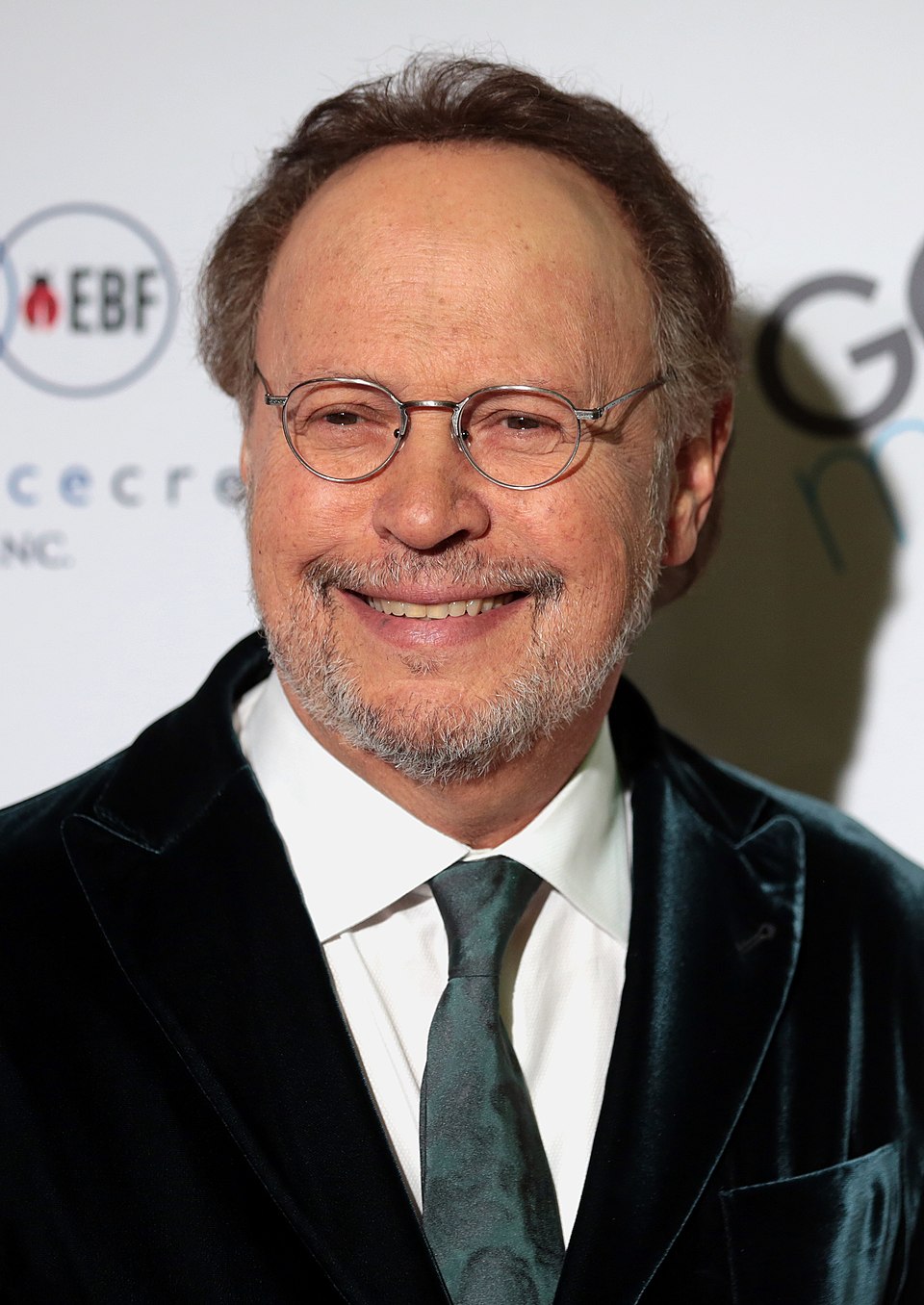
Billy Crystal
William Edward Crystal is an American comedian, actor, and filmmaker. He is known as a standup comedian and for his film and stage roles.
Why Billy Crystal Appears in the Documents
Billy Crystal is mentioned in 3 documents within the Epstein file corpus, consisting of 3 articles, originating from the House Oversight Committee.
These appearances are in: "Evilicious", "Vive L’Oscars: Peggy Siegal's Oscar Diary", "Oscars 2011: A Personal Chronicle of the Oscar Season and Parties". Based on the document summaries, these mentions appear to be incidental — Billy Crystal's name comes up in the context of broader discussions rather than in direct connection to Jeffrey Epstein or his activities.
Disclaimer: Appearing in the Epstein document corpus does not imply wrongdoing, guilt, or any form of association with criminal activity. Many public figures are mentioned incidentally in these documents due to the broad scope of the released materials.
Documents (3)
Evilicious
Marc D. Hauser’s Evilicious provides a science-grounded account of why humans commit extraordinary harms: evil is not a rare defect but an incidental byproduct of a promiscuously connected brain that can fuse desire with denial, reward with punishment, and in-group loyalty with out-group hostility. Drawing on evolution, genetics, neuroscience, and social science, Hauser traces how hormones like testosterone, neurotransmitters such as dopamine and serotonin, and genes like MAOA, DRD4, and COMT shape risk, self-control, and the taste for harm, while social dynamics—dehumanization, moral disengagement, bystander effects, and large-scale cooperation—show how everyday aggression can escalate into violence, genocide, or corruption. He argues that our capacity for both great kindness and great cruelty arises from the same core architecture, and that understanding these core ingredients can illuminate moral responsibility, inform policy and law, and equip us to foster a more humane future. A compact, provocative synthesis, the book reveals evil as a predictable, learnable aspect of human nature—and urges us to confront it with science, education, and compassion.
Source: House Oversight Committee
Vive L’Oscars: Peggy Siegal's Oscar Diary
Peggy Siegal’s exclusive Oscar diary offers a behind-the-scenes, celebrity-packed chronicle of the 2011–2012 Oscar season, tracing how nine Best Picture contenders—led by The Artist, The Tree of Life, The Help, Moneyball, The Descendants, Hugo, War Horse, Extremely Loud & Incredibly Close, and The Ides of March—moved from Cannes into a year of campaigns, glamorous pre‑Oscars parties, fashion moments, and studio strategizing, with sharp, intimate observations from Woody Allen’s abstention to Uggie’s rise and George Clooney’s dual life as actor and humanitarian.
Source: House Oversight Committee
Oscars 2011: A Personal Chronicle of the Oscar Season and Parties
This insider diary chronicles the 2011 Oscar season from Cannes to the ceremony, tracing how nine films—led by The Artist, The Help, and The Descendants—built campaigns, buzz, and cross-country premieres while a glamorous whirl of parties, press rooms, and red carpets shaped the race for Best Picture, Director, Actor, and Actress. It threads through the social machinery of Hollywood, spotlighting the rivalries and alliances among stars, producers, and power brokers at exclusive gatherings, where fashion, sentiment, and whispered predictions mattered as much as films themselves; it features Woody Allen’s Midnight in Paris, Terrence Malick’s The Tree of Life, and the larger-than-life push around Meryl Streep vs. Viola Davis, George Clooney, Brad Pitt, and a canine superstar, Uggie, who became a cultural moment. The narrative crescendos with The Artist’s historic sweep—the first silent Best Picture winner since 1927—with Harvey Weinstein’s orchestration, Michel Hazanavicius’s triumph, and Uggie’s star turn, before closing on the glow and the reminder that the magic of Oscar night is unforgettable, even as life returns to reality.
Source: House Oversight Committee