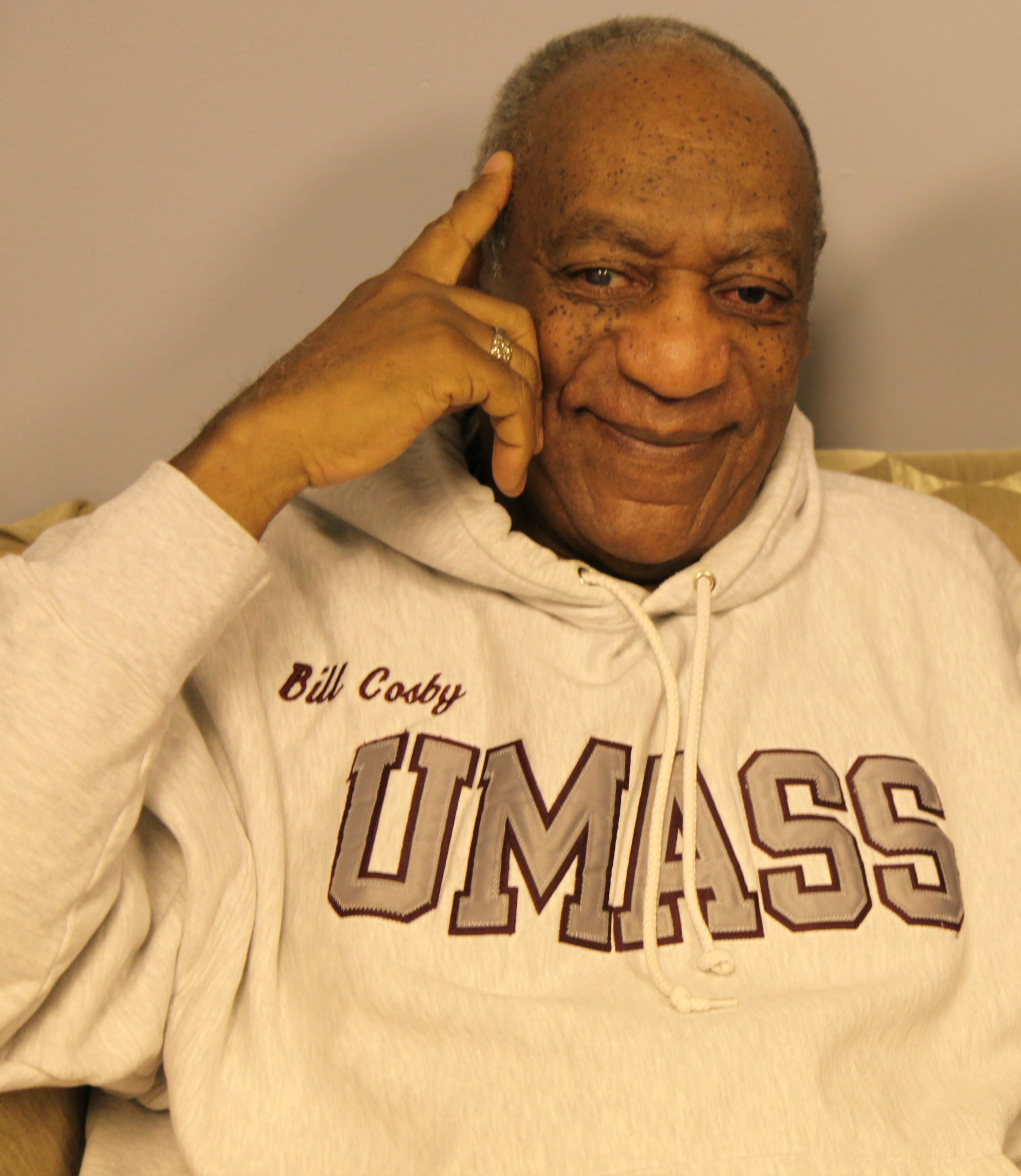
Bill Cosby
William Henry Cosby Jr. is an American former stand-up comedian and actor. He is known for his role in the sitcom The Cosby Show and for Fat Albert and the Cosby Kids.
Why Bill Cosby Appears in the Documents
Bill Cosby is mentioned in 30 documents within the Epstein file corpus, consisting of 18 emails, 11 articles, 1 briefing, originating from the House Oversight Committee.
These documents include address book or contact list entries, media articles, emails. The presence of Bill Cosby's name in these specific document types reflects the scope of the released corpus, which contains a wide range of records from legal proceedings, investigations, and media coverage.
Disclaimer: Appearing in the Epstein document corpus does not imply wrongdoing, guilt, or any form of association with criminal activity. Many public figures are mentioned incidentally in these documents due to the broad scope of the released materials.
Documents (30)
Perversion of Justice
An investigative piece that exposes Jeffrey Epstein’s years-long exploitation of underage girls at his Palm Beach mansion, the sprawling cover-ups surrounding the case, and the controversial 2007 plea deal brokered by then-U.S. Attorney Alexander Acosta that allowed Epstein to plead guilty to two state prostitution charges and receive immunity from federal sex-trafficking charges, enabling him to serve just 13 months in a private wing while alleged co-conspirators were left unprosecuted; the article also details how Epstein’s lawyers and private investigators sought to discredit victims and undermine the police investigation, illustrating how wealth and power can distort justice long before the #MeToo era.
Source: House Oversight Committee
Gloria Allred Says More Women Are Contacting Her About Trump Misconduct
Gloria Allred says more women have contacted her alleging inappropriate contact by Donald Trump, arguing that the 2005 Access Hollywood tape suggests sexual assault and highlighting his history of harassment lawsuits and a hostile workplace for women; she urges Trump to release all non-disclosure agreements so victims can speak publicly, reiterates her support for Hillary Clinton, and notes efforts such as a GoFundMe to fund leaks of Apprentice outtakes.
Source: House Oversight Committee
Filthy Rich
Filthy Rich is an investigative chronicle of Jeffrey Epstein’s multimillionaire network, exposing how a convicted sex offender leveraged immense wealth, access, and fear to prey on underage girls for years. Through a tapestry of interviews, court papers, and the accounts of associates, it reveals Epstein’s entanglements with powerful figures—Prince Andrew, Alan Dershowitz, Ghislaine Maxwell, Scott Rothstein, Leslie Wexner, and others—while victims recount manipulation, coercion, and captivity. It also traces the ensuing legal battles, counterclaims, and high-stakes media coverage that blurred the line between justice and power, culminating in continuing investigations and litigation that cast a long shadow over Epstein’s circle.
Source: House Oversight Committee
Are Rape Jokes Funny?
Are Rape Jokes Funny? is a provocative meditation on the ethics and politics of humor about sexual violence, recounting the author’s past “rape-in” joke aimed at anti-choice legislators and the feminist critique that she eventually reframed as empathetic editing rather than censorship. It canvasses a wave of 2012 controversies—Daniel Tosh, Sarah Silverman, Amy Schumer and others—showing how comedians test the line between dangerous edge and social critique while survivors and critics push back against the normalization of violence. Against this backdrop, the piece argues that free speech can illuminate hypocrisy and injustice when contextualized and self-critical, rather than celebrated without consequence, and it uses political rhetoric from Akin, Mourdock, Romney, and Obama to illustrate how misogyny and reproductive politics shape public discourse. It ends with a wry reflection on the era’s absurdity and the enduring struggle to balance humor, harm, and political meaning.
Source: House Oversight Committee
Are Rape Jokes Funny?
Are Rape Jokes Funny? is a provocative meditation on the ethics and politics of humor about sexual violence, recounting the author’s past “rape-in” joke aimed at anti-choice legislators and the feminist critique that she eventually reframed as empathetic editing rather than censorship. It canvasses a wave of 2012 controversies—Daniel Tosh, Sarah Silverman, Amy Schumer and others—showing how comedians test the line between dangerous edge and social critique while survivors and critics push back against the normalization of violence. Against this backdrop, the piece argues that free speech can illuminate hypocrisy and injustice when contextualized and self-critical, rather than celebrated without consequence, and it uses political rhetoric from Akin, Mourdock, Romney, and Obama to illustrate how misogyny and reproductive politics shape public discourse. It ends with a wry reflection on the era’s absurdity and the enduring struggle to balance humor, harm, and political meaning.
Source: House Oversight Committee
Are Rape Jokes Funny?
Are Rape Jokes Funny? is a provocative meditation on the ethics and politics of humor about sexual violence, recounting the author’s past “rape-in” joke aimed at anti-choice legislators and the feminist critique that she eventually reframed as empathetic editing rather than censorship. It canvasses a wave of 2012 controversies—Daniel Tosh, Sarah Silverman, Amy Schumer and others—showing how comedians test the line between dangerous edge and social critique while survivors and critics push back against the normalization of violence. Against this backdrop, the piece argues that free speech can illuminate hypocrisy and injustice when contextualized and self-critical, rather than celebrated without consequence, and it uses political rhetoric from Akin, Mourdock, Romney, and Obama to illustrate how misogyny and reproductive politics shape public discourse. It ends with a wry reflection on the era’s absurdity and the enduring struggle to balance humor, harm, and political meaning.
Source: House Oversight Committee
Email from Robert Trivers to Jeffrey Epstein about publishing plans and finances
An urgent, candid email from Robert Trivers to Jeffrey Epstein in which he apologizes for insinuating Chapman acted improperly, argues that he is caught in a national backlash against men accused of misbehaving toward women, notes that legal counsel warns him as evidentiary standards shift from beyond a reasonable doubt to more probabilistic judgments, and warns of a potential financial loss of up to a million dollars as he loses a lucrative contract and must work to support his family; he outlines plans to send a revised Wild Life to an agent with five new chapters that strengthen his key scientific contributions—social theory based on natural selection and selfish genetic elements—and mentions forthcoming works such as Honour Killings, while closing with personal updates, political reflections on Trump’s trade policies, and best wishes.
Source: House Oversight Committee
Re: Help!
This 2016 email thread presents a distressed individual begging a confidant for urgent help to relocate and shield him from media intrusion, private investigators, and public scrutiny that has wrecked his life for years—causing debt, ruined opportunities, and personal turmoil—while the recipient grapples with boundaries and the limits of their support, underscored by repeated confidentiality notices.
Source: House Oversight Committee
Young Iranians Push Boundaries
Photographs by Carolyn Cole for the Los Angeles Times capture Tehran’s young generation pushing social boundaries through Western-inspired weddings, fashion, and nightlife, illustrating a broader cultural shift under a theocratic regime as people negotiate between tradition and modern personal expression, even as debates over potential legal reforms and the limits of statutes linger in the background.
Source: House Oversight Committee
Email from Robert Trivers to Jeffrey Epstein about publishing plans and finances
An urgent, candid email from Robert Trivers to Jeffrey Epstein in which he apologizes for insinuating Chapman acted improperly, argues that he is caught in a national backlash against men accused of misbehaving toward women, notes that legal counsel warns him as evidentiary standards shift from beyond a reasonable doubt to more probabilistic judgments, and warns of a potential financial loss of up to a million dollars as he loses a lucrative contract and must work to support his family; he outlines plans to send a revised Wild Life to an agent with five new chapters that strengthen his key scientific contributions—social theory based on natural selection and selfish genetic elements—and mentions forthcoming works such as Honour Killings, while closing with personal updates, political reflections on Trump’s trade policies, and best wishes.
Source: House Oversight Committee
Re: Help!
This 2016 email thread presents a distressed individual begging a confidant for urgent help to relocate and shield him from media intrusion, private investigators, and public scrutiny that has wrecked his life for years—causing debt, ruined opportunities, and personal turmoil—while the recipient grapples with boundaries and the limits of their support, underscored by repeated confidentiality notices.
Source: House Oversight Committee
Your Monday News Briefing: United Nations, China, N.F.L.
This Monday’s New York Times briefing offers a rapid, across-the-globe snapshot of the day’s top stories—from Christine Blasey Ford’s agreement to testify about the Kavanaugh nomination amid new allegations and related political maneuvering, to Deputy Attorney General Rosenstein’s potential departure, to President Trump’s return to the U.N. and a new round of tariffs on China—along with timely business, sports, and culture highlights, including a breakthrough in heart-failure treatment, Cosby’s upcoming sentencing, and engaging interactive graphics and weekend features.
Source: House Oversight Committee
Your Monday News Briefing: United Nations, China, N.F.L.
This Monday’s New York Times briefing offers a rapid, across-the-globe snapshot of the day’s top stories—from Christine Blasey Ford’s agreement to testify about the Kavanaugh nomination amid new allegations and related political maneuvering, to Deputy Attorney General Rosenstein’s potential departure, to President Trump’s return to the U.N. and a new round of tariffs on China—along with timely business, sports, and culture highlights, including a breakthrough in heart-failure treatment, Cosby’s upcoming sentencing, and engaging interactive graphics and weekend features.
Source: House Oversight Committee
Your Monday News Briefing: United Nations, China, N.F.L.
This Monday’s New York Times briefing offers a rapid, across-the-globe snapshot of the day’s top stories—from Christine Blasey Ford’s agreement to testify about the Kavanaugh nomination amid new allegations and related political maneuvering, to Deputy Attorney General Rosenstein’s potential departure, to President Trump’s return to the U.N. and a new round of tariffs on China—along with timely business, sports, and culture highlights, including a breakthrough in heart-failure treatment, Cosby’s upcoming sentencing, and engaging interactive graphics and weekend features.
Source: House Oversight Committee
Email thread about privacy, relocation, and media intrusion
This urgent, multi‑party email thread captures a distressed individual pleading to Jeffrey E. for help to move and remain hidden from public scrutiny, warning that people seeking information about them or those they were connected with could provoke violent retaliation from their landlord and intrusions by press, private investigators, and film companies; the writer recounts sixteen years of support, a life wrecked by media attention surrounding political scandals, debt and job setbacks, and a desperate wish to escape to safety, while Jeffrey acknowledges appreciation and seeks updates on whether anything has happened recently.
Source: House Oversight Committee
Email thread involving Robert Trivers and colleagues
This is a private, somewhat contentious email thread between evolutionary biologist Robert Trivers and Jeffrey E. in which Trivers recounts his Harvard setback in the 1970s, defends the legitimacy of his work on reciprocal altruism, parental investment, sexual selection, and genetics, and previews ambitious forthcoming manuscripts on human intelligence, Africa, parasites, and social theory based on natural selection and selfish genetic elements, including a planned work titled Honour Killings; the exchange also touches on contemporary politics (Trump, trade wars), financial pressures, and conflicts with academic institutions, all wrapped in confidentiality notices and internal document codes.
Source: House Oversight Committee
Email thread involving Robert Trivers and colleagues
This is a private, somewhat contentious email thread between evolutionary biologist Robert Trivers and Jeffrey E. in which Trivers recounts his Harvard setback in the 1970s, defends the legitimacy of his work on reciprocal altruism, parental investment, sexual selection, and genetics, and previews ambitious forthcoming manuscripts on human intelligence, Africa, parasites, and social theory based on natural selection and selfish genetic elements, including a planned work titled Honour Killings; the exchange also touches on contemporary politics (Trump, trade wars), financial pressures, and conflicts with academic institutions, all wrapped in confidentiality notices and internal document codes.
Source: House Oversight Committee
Confidential email thread involving House Oversight and media exposure
This 2016 email thread shows a distressed individual urgently asking Jeffrey E. for help to move and shield them from relentless media attention, private investigators, and others seeking information about a past association; they describe living in fear of a hostile landlord, mounting debt, and personal turmoil after years of supporting the other person, and plead for privacy and relocation to avoid press contact with family and friends, while noting how public events and notoriety surrounding politics and celebrities have worsened their situation.
Source: House Oversight Committee
Confidential email thread involving House Oversight and media exposure
This 2016 email thread shows a distressed individual urgently asking Jeffrey E. for help to move and shield them from relentless media attention, private investigators, and others seeking information about a past association; they describe living in fear of a hostile landlord, mounting debt, and personal turmoil after years of supporting the other person, and plead for privacy and relocation to avoid press contact with family and friends, while noting how public events and notoriety surrounding politics and celebrities have worsened their situation.
Source: House Oversight Committee
Afternoon Digest: The latest on Rosenstein, the best U.S. cities for fall foliage, and more
Afternoon Digest is a visually rich, modular editorial homepage anchored by the latest developments around Rosenstein, paired with a broad lineup of accompanying stories across travel, television, culture, and science. It combines lead articles, image galleries, infographics, and video with prominent call-to-action prompts that direct readers to read more across outlets like The Atlantic, The New York Times, NPR, TODAY, Travel + Leisure, The Verge, and others.
Source: House Oversight Committee
Afternoon Digest: The latest on Rosenstein, the best U.S. cities for fall foliage, and more
Afternoon Digest is a visually rich, modular editorial homepage anchored by the latest developments around Rosenstein, paired with a broad lineup of accompanying stories across travel, television, culture, and science. It combines lead articles, image galleries, infographics, and video with prominent call-to-action prompts that direct readers to read more across outlets like The Atlantic, The New York Times, NPR, TODAY, Travel + Leisure, The Verge, and others.
Source: House Oversight Committee
Confidential email about housing finances and media attention
This is a high-priority 2016 internal email thread addressed to Jeffrey Epstein in which the sender pleads for help to relocate from a highly publicized property and to buy a New Jersey home with zero savings, detailing financial strain (salary, cost of living, a student loan of about $9,810) and the difficulty of getting ahead, while warning against media attention, private investigators, or press and stressing a desire to avoid exposure linked to associations; the message also notes long-standing support and is embedded in confidentiality and attorney-client style notices typical of House Oversight communications.
Source: House Oversight Committee
Confidential email about avoiding media exposure and privacy concerns
This is a high-priority, confidential email in a House Oversight file in which a distressed individual pleads for privacy, explaining they moved to avoid being photographed and do not want press, private investigators, or their family contacted about certain associations. They recount years of hardship, debt, and a life disrupted by public exposure and advice from others, noting they dropped out of college and have been struggling to get ahead while feeling their life has become “hell.” They also reference the broader media environment around figures like Clinton, Trump, and Cosby as affecting them, and they emphasize the need to move unseen and avoid further attention. The message is labeled as confidential and attorney-client privileged, with repeated notices and document identifiers (House Oversight 022771/022772).
Source: House Oversight Committee
Help! Request to Avoid Media Contact
An urgent, confidential plea to Jeffrey Epstein from a longtime supporter who fled the city to escape scrutiny and now fears relentless press, private investigators, and other attention targeting them and their family over a public association they’d rather not be linked to; they describe years of debt, a dropped-out college path, hard work with little relief, and growing distress as media coverage of Clinton, Trump, and Cosby intensifies, asking for help to relocate and safeguard their parents and sisters, while noting the communication is confidential or privileged.
Source: House Oversight Committee
Help!
These emails reveal a distressed individual pleading with Jeffrey Epstein for help relocating and staying out of the public eye after years of reliance on him, insisting they cannot endure press, private investigators, or contact with family at home or on their cell. They recount long-standing hardship—financial strain, debt, a dropped-out college, and a life upended by media coverage surrounding figures like Clinton, Trump, and Cosby—and urge Epstein to assist in escaping the intensified exposure and its consequences.
Source: House Oversight Committee
Confidential email about avoiding media exposure and privacy concerns
This is a high-priority, confidential email in a House Oversight file in which a distressed individual pleads for privacy, explaining they moved to avoid being photographed and do not want press, private investigators, or their family contacted about certain associations. They recount years of hardship, debt, and a life disrupted by public exposure and advice from others, noting they dropped out of college and have been struggling to get ahead while feeling their life has become “hell.” They also reference the broader media environment around figures like Clinton, Trump, and Cosby as affecting them, and they emphasize the need to move unseen and avoid further attention. The message is labeled as confidential and attorney-client privileged, with repeated notices and document identifiers (House Oversight 022771/022772).
Source: House Oversight Committee
Help! Request to Avoid Media Contact
An urgent, confidential plea to Jeffrey Epstein from a longtime supporter who fled the city to escape scrutiny and now fears relentless press, private investigators, and other attention targeting them and their family over a public association they’d rather not be linked to; they describe years of debt, a dropped-out college path, hard work with little relief, and growing distress as media coverage of Clinton, Trump, and Cosby intensifies, asking for help to relocate and safeguard their parents and sisters, while noting the communication is confidential or privileged.
Source: House Oversight Committee
Help!
These emails reveal a distressed individual pleading with Jeffrey Epstein for help relocating and staying out of the public eye after years of reliance on him, insisting they cannot endure press, private investigators, or contact with family at home or on their cell. They recount long-standing hardship—financial strain, debt, a dropped-out college, and a life upended by media coverage surrounding figures like Clinton, Trump, and Cosby—and urge Epstein to assist in escaping the intensified exposure and its consequences.
Source: House Oversight Committee
Confidential email thread about privacy and media exposure
This is a concise, confidential email exchange in which Jeffrey E. asks for support and privacy as he explains how intense media scrutiny surrounding high-profile political coverage (Clinton, Trump and Cosby) has devastated his life—leaving him in debt, having dropped out of college, struggling at work, and losing a relationship—driving him to relocate and insist that he must not be photographed or contacted by press, private investigators, or film crews; he notes he will be back around February 14, and the thread includes repeated confidentiality notices and House Oversight identifiers, indicating it is part of a government-record collection.
Source: House Oversight Committee
Confidential email thread about privacy and media exposure
This is a concise, confidential email exchange in which Jeffrey E. asks for support and privacy as he explains how intense media scrutiny surrounding high-profile political coverage (Clinton, Trump and Cosby) has devastated his life—leaving him in debt, having dropped out of college, struggling at work, and losing a relationship—driving him to relocate and insist that he must not be photographed or contacted by press, private investigators, or film crews; he notes he will be back around February 14, and the thread includes repeated confidentiality notices and House Oversight identifiers, indicating it is part of a government-record collection.
Source: House Oversight Committee