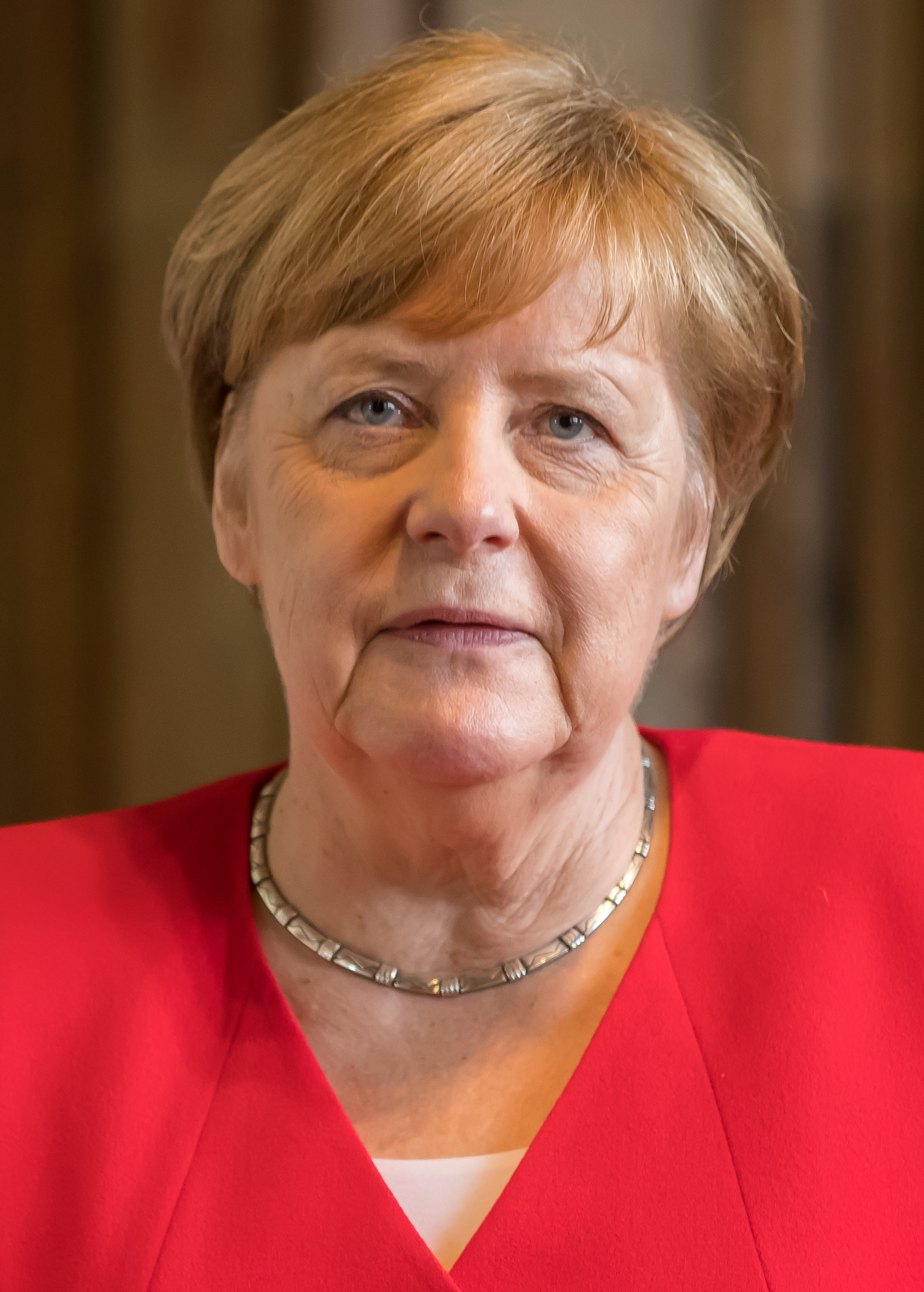
Angela Merkel
Angela Dorothea Merkel is a German former politician and scientist who served as Chancellor of Germany from 2005 to 2021. She was the first woman to hold the office and became one of the world's most powerful and influential leaders.
Why Angela Merkel Appears in the Documents
Angela Merkel is mentioned in 87 documents within the Epstein file corpus, consisting of 36 articles, 24 emails, 8 datas, 4 chats, 3 communications, 3 reports, 1 bibliography, 1 book, 1 chat log, 1 editorial, 1 interview, 1 news, 1 opinion, 1 research report, 1 research_report, originating from the House Oversight Committee.
These documents include titles such as "Microsoft Word - Wall Street Journal.docx", "Epst_9780451494566_2p_all_r1.z.indd", "The Snowden Affair: A Spy Story in Six Parts" among others. Angela Merkel's name appears across these documents in various contexts. The document corpus contains a wide range of materials including media coverage, government records, and legal proceedings where many public figures are mentioned.
Disclaimer: Appearing in the Epstein document corpus does not imply wrongdoing, guilt, or any form of association with criminal activity. Many public figures are mentioned incidentally in these documents due to the broad scope of the released materials.
Documents (50)
Microsoft Word - Wall Street Journal.docx
Edward Jay Epstein argues that Edward Snowden’s “whistleblower” narrative is largely false: Snowden stole about 1.5 million NSA documents—far more than he acknowledged—and used his Hong Kong meetings with Laura Poitras and Glenn Greenwald to leak key materials such as the Verizon order and the Prism presentation, while secretly retaining other sensitive data and aiming at targets abroad. The piece shows that Snowden fled Hawaii for Hong Kong and then Moscow with Russian help, after the U.S. revoked his passport, with Putin’s authorization and the airport facilitation by Aeroflot, and that he has remained in contact with Russian intelligence since his arrival, contrary to his assertions of isolation. WikiLeaks is depicted as providing a smokescreen, and Kremlin insiders confirm that Snowden did bring material to Moscow and did not destroy it all. The article concludes that Snowden became an espionage source for Russia, not merely a conscientious whistleblower, a thesis Epstein expands upon in his forthcoming book.
Source: House Oversight Committee
Microsoft Word - Wall Street Journal.docx
Edward Jay Epstein argues that Edward Snowden’s “whistleblower” narrative is largely false: Snowden stole about 1.5 million NSA documents—far more than he acknowledged—and used his Hong Kong meetings with Laura Poitras and Glenn Greenwald to leak key materials such as the Verizon order and the Prism presentation, while secretly retaining other sensitive data and aiming at targets abroad. The piece shows that Snowden fled Hawaii for Hong Kong and then Moscow with Russian help, after the U.S. revoked his passport, with Putin’s authorization and the airport facilitation by Aeroflot, and that he has remained in contact with Russian intelligence since his arrival, contrary to his assertions of isolation. WikiLeaks is depicted as providing a smokescreen, and Kremlin insiders confirm that Snowden did bring material to Moscow and did not destroy it all. The article concludes that Snowden became an espionage source for Russia, not merely a conscientious whistleblower, a thesis Epstein expands upon in his forthcoming book.
Source: House Oversight Committee
Epst_9780451494566_2p_all_r1.z.indd
Source: House Oversight Committee
Epst_9780451494566_2p_all_r1.z.indd
Source: House Oversight Committee
Epst_9780451494566_2p_all_r1.z.indd
Source: House Oversight Committee
Epst_9780451494566_2p_all_r1.z.indd
Source: House Oversight Committee
Epst_9780451494566_2p_all_r1.z.indd
Source: House Oversight Committee
The Snowden Affair: A Spy Story in Six Parts
Source: House Oversight Committee
The Snowden Affair: A Spy Story in Six Parts
Source: House Oversight Committee
The Snowden Affair: A Spy Story in Six Parts
Source: House Oversight Committee
The Snowden Affair: A Spy Story in Six Parts
Source: House Oversight Committee
The Snowden Affair: A Spy Story in Six Parts
Source: House Oversight Committee
FH_Authoritarians_Report_2017.indd
Breaking Down Democracy surveys how 21st-century authoritarians, led by Russia and China, survive and spread by masking autocratic rule as pluralism: conducting formal elections while skewing the playing field, saturating domestic and international media with propaganda, hollowing out civil society, rewriting history, and embedding illiberal practices within liberal institutions. It shows how these regimes co-opt open economies, exploit global networks, and foster illiberal democracies in places like Hungary and Poland, while exporting tactics through NGOs, lobbyists, and overseas media to influence democracies abroad. The report argues this modern authoritarianism is durable and increasingly adept at seizing power from within and eroding the liberal international order, threatening freedom unless democracies repair their resilience across government, media, academia, business, and civil society, with Ukraine as a frontline case study and a set of concrete recommendations for a coordinated response.
Source: House Oversight Committee
FH_Authoritarians_Report_2017.indd
Breaking Down Democracy surveys how 21st-century authoritarians, led by Russia and China, survive and spread by masking autocratic rule as pluralism: conducting formal elections while skewing the playing field, saturating domestic and international media with propaganda, hollowing out civil society, rewriting history, and embedding illiberal practices within liberal institutions. It shows how these regimes co-opt open economies, exploit global networks, and foster illiberal democracies in places like Hungary and Poland, while exporting tactics through NGOs, lobbyists, and overseas media to influence democracies abroad. The report argues this modern authoritarianism is durable and increasingly adept at seizing power from within and eroding the liberal international order, threatening freedom unless democracies repair their resilience across government, media, academia, business, and civil society, with Ukraine as a frontline case study and a set of concrete recommendations for a coordinated response.
Source: House Oversight Committee
FH_Authoritarians_Report_2017.indd
Breaking Down Democracy surveys how 21st-century authoritarians, led by Russia and China, survive and spread by masking autocratic rule as pluralism: conducting formal elections while skewing the playing field, saturating domestic and international media with propaganda, hollowing out civil society, rewriting history, and embedding illiberal practices within liberal institutions. It shows how these regimes co-opt open economies, exploit global networks, and foster illiberal democracies in places like Hungary and Poland, while exporting tactics through NGOs, lobbyists, and overseas media to influence democracies abroad. The report argues this modern authoritarianism is durable and increasingly adept at seizing power from within and eroding the liberal international order, threatening freedom unless democracies repair their resilience across government, media, academia, business, and civil society, with Ukraine as a frontline case study and a set of concrete recommendations for a coordinated response.
Source: House Oversight Committee
FH_Authoritarians_Report_2017.indd
Breaking Down Democracy surveys how 21st-century authoritarians, led by Russia and China, survive and spread by masking autocratic rule as pluralism: conducting formal elections while skewing the playing field, saturating domestic and international media with propaganda, hollowing out civil society, rewriting history, and embedding illiberal practices within liberal institutions. It shows how these regimes co-opt open economies, exploit global networks, and foster illiberal democracies in places like Hungary and Poland, while exporting tactics through NGOs, lobbyists, and overseas media to influence democracies abroad. The report argues this modern authoritarianism is durable and increasingly adept at seizing power from within and eroding the liberal international order, threatening freedom unless democracies repair their resilience across government, media, academia, business, and civil society, with Ukraine as a frontline case study and a set of concrete recommendations for a coordinated response.
Source: House Oversight Committee
Oil options email chain
An internal March 2014 oil-trading discussion among market participants weighing liquidity and execution of crude options in a volatile geopolitical environment (Russia/Ukraine), debating OTC versus exchange-traded liquidity and outlining concrete WTI option plays for short- and medium-term expiries with specific strike prices, while factoring a potential risk-off scenario driven by sanctions and SPR actions and noting rising cross-asset correlations, all framed by standard confidentiality and privileged-information notices.
Source: House Oversight Committee
Oil options email chain
An internal March 2014 oil-trading discussion among market participants weighing liquidity and execution of crude options in a volatile geopolitical environment (Russia/Ukraine), debating OTC versus exchange-traded liquidity and outlining concrete WTI option plays for short- and medium-term expiries with specific strike prices, while factoring a potential risk-off scenario driven by sanctions and SPR actions and noting rising cross-asset correlations, all framed by standard confidentiality and privileged-information notices.
Source: House Oversight Committee
Policy Principles for Constructive Vigilance: Report on Chinese Influence Activities in the United States
Source: House Oversight Committee
Policy Principles for Constructive Vigilance: Report on Chinese Influence Activities in the United States
Source: House Oversight Committee
House Oversight Chat Log – December 2018
Between December 5 and 10, 2018, a private “HOUSE OVERSIGHT” chat logs a high-stakes effort to manage a political-firestorm around prostitution penalties and potential investigations, including ideas to hire experienced investigators, assemble a PR and communications team, pursue op-eds, and explore an independent inquiry, all aimed at shaping public perception. The group also plots a documentary-style narrative that intertwines global markets, geopolitics, science, and elite behavior, with plans to interview figures, film testimony, and potentially shoot on location to produce a persuasive storyline. Throughout the exchange, they reference current events (Barr, Cohen, Kavanaugh) and international developments (Brexit, Macron, europarliament dynamics), signaling a concerted strategy to influence media coverage and political outcomes.
Source: House Oversight Committee
House Oversight Chat Log – December 2018
Between December 5 and 10, 2018, a private “HOUSE OVERSIGHT” chat logs a high-stakes effort to manage a political-firestorm around prostitution penalties and potential investigations, including ideas to hire experienced investigators, assemble a PR and communications team, pursue op-eds, and explore an independent inquiry, all aimed at shaping public perception. The group also plots a documentary-style narrative that intertwines global markets, geopolitics, science, and elite behavior, with plans to interview figures, film testimony, and potentially shoot on location to produce a persuasive storyline. Throughout the exchange, they reference current events (Barr, Cohen, Kavanaugh) and international developments (Brexit, Macron, europarliament dynamics), signaling a concerted strategy to influence media coverage and political outcomes.
Source: House Oversight Committee
UN Marmara report and Middle East policy (Sept 2011)
This 2011 cross-section captures a period of rapid realignment in Middle East politics, pairing sharp critiques of the UN’s Mavi Marmara report and Turkey’s cooling of ties with Israel with coverage of Palestinian moves toward UN statehood and Arab League diplomacy, alongside reflections on how 9/11 and the Arab Spring have reshaped Arab perceptions of and relations with the United States. Together, the pieces suggest a region moving away from rigid blocs toward more fluid leadership and grassroots change, with Turkey and Sunni currents poised to challenge established actors, while Washington’s influence remains contested and dependent on credible, strategically aligned engagement with local realities.
Source: House Oversight Committee
UN Marmara report and Middle East policy (Sept 2011)
This 2011 cross-section captures a period of rapid realignment in Middle East politics, pairing sharp critiques of the UN’s Mavi Marmara report and Turkey’s cooling of ties with Israel with coverage of Palestinian moves toward UN statehood and Arab League diplomacy, alongside reflections on how 9/11 and the Arab Spring have reshaped Arab perceptions of and relations with the United States. Together, the pieces suggest a region moving away from rigid blocs toward more fluid leadership and grassroots change, with Turkey and Sunni currents poised to challenge established actors, while Washington’s influence remains contested and dependent on credible, strategically aligned engagement with local realities.
Source: House Oversight Committee
Arab Spring and Middle East Analysis (2011 compilation of six articles)
Taken together, these six mid-2011 articles survey a world undergoing rapid transformation: the Arab Spring has unsettled regimes from Tunisia to Bahrain and forced a reassessment of Western credibility and engagement in the region; Israel and the Palestinian question remain a volatile hinge in regional politics, while Islamist movements like Ennahda and the Muslim Brotherhood face new multi‑party realities; Al Qaeda’s leadership succession under Zawahiri signals a renewed but precarious Islamist threat; the United States wrestles with how much foreign policy still matters to an economy-focused electorate; Europe confronts a faltering eurozone, rising social unrest, and the limits of its leadership in a shifting global order; and a lengthy analysis of potential conflict with Iran underscores the extensive military, diplomatic, economic and social spillovers of a war, the uncertainties of escalation, and the daunting task of planning for a protracted, multi-domain confrontation.
Source: House Oversight Committee
Arab Spring and Middle East Analysis (2011 compilation of six articles)
Taken together, these six mid-2011 articles survey a world undergoing rapid transformation: the Arab Spring has unsettled regimes from Tunisia to Bahrain and forced a reassessment of Western credibility and engagement in the region; Israel and the Palestinian question remain a volatile hinge in regional politics, while Islamist movements like Ennahda and the Muslim Brotherhood face new multi‑party realities; Al Qaeda’s leadership succession under Zawahiri signals a renewed but precarious Islamist threat; the United States wrestles with how much foreign policy still matters to an economy-focused electorate; Europe confronts a faltering eurozone, rising social unrest, and the limits of its leadership in a shifting global order; and a lengthy analysis of potential conflict with Iran underscores the extensive military, diplomatic, economic and social spillovers of a war, the uncertainties of escalation, and the daunting task of planning for a protracted, multi-domain confrontation.
Source: House Oversight Committee
Revealed: the world's most admired people
The Times-YouGov global survey reveals Bill Gates as the world’s most admired person, with Pope Francis, Barack Obama, Billy Graham and George W. Bush ahead of him in the U.S. and Gates topping the list in China; the Queen is the most admired woman overall, trailed by Jolie and Oprah, and the results show strong political, business and sports figures across nations while highlighting gender imbalances in some countries. The study also maps national leaders (Putin in Russia, Merkel in Germany, Sarkozy in France, Goodluck Jonathan in Nigeria) and notes that few local politicians reach the top ten in Australia and the UK, illustrates the media’s influence on who people admire (Pope Francis rising after Time’s Person of the Year) and even mentions Mandela’s near-top status had he been considered earlier; a concise Who’s Who section lists figures like Modi, Bachchan, Abdul Kalam, Anna Hazare, Arvind Kejriwal, Peng Liyuan, Abdul Sattar Edhi and Jokowi Widodo. Based on surveys of 13,895 people in 13 countries, the document also asks who is the most famous person in the world, with Obama leading that question.
Source: House Oversight Committee
On today's financial market developments
An internal JP Morgan note from August 4, 2011, analyzes today’s market turmoil driven by Europe’s sovereign‑debt crisis and a reluctant ECB, warning that EMU fragility could jeopardize the global recovery and that a central‑bank rescue is not a cure; it projects US growth around 2% in 2012 rather than a new recession, emphasizes that fundamentals, not politics, drive valuations, and advises staying underweight Europe while overweighting investment‑grade/high‑yield credit and hedges, keeping ample cash for optionality, and recognizing gold as a potential hedge, while identifying opportunities in oversold, well‑financed multinationals with strong dividends trading at low multiples.
Source: House Oversight Committee
Revealed: the world's most admired people
The Times-YouGov global survey reveals Bill Gates as the world’s most admired person, with Pope Francis, Barack Obama, Billy Graham and George W. Bush ahead of him in the U.S. and Gates topping the list in China; the Queen is the most admired woman overall, trailed by Jolie and Oprah, and the results show strong political, business and sports figures across nations while highlighting gender imbalances in some countries. The study also maps national leaders (Putin in Russia, Merkel in Germany, Sarkozy in France, Goodluck Jonathan in Nigeria) and notes that few local politicians reach the top ten in Australia and the UK, illustrates the media’s influence on who people admire (Pope Francis rising after Time’s Person of the Year) and even mentions Mandela’s near-top status had he been considered earlier; a concise Who’s Who section lists figures like Modi, Bachchan, Abdul Kalam, Anna Hazare, Arvind Kejriwal, Peng Liyuan, Abdul Sattar Edhi and Jokowi Widodo. Based on surveys of 13,895 people in 13 countries, the document also asks who is the most famous person in the world, with Obama leading that question.
Source: House Oversight Committee
On today's financial market developments
An internal JP Morgan note from August 4, 2011, analyzes today’s market turmoil driven by Europe’s sovereign‑debt crisis and a reluctant ECB, warning that EMU fragility could jeopardize the global recovery and that a central‑bank rescue is not a cure; it projects US growth around 2% in 2012 rather than a new recession, emphasizes that fundamentals, not politics, drive valuations, and advises staying underweight Europe while overweighting investment‑grade/high‑yield credit and hedges, keeping ample cash for optionality, and recognizing gold as a potential hedge, while identifying opportunities in oversold, well‑financed multinationals with strong dividends trading at low multiples.
Source: House Oversight Committee
International News Compilation, November 16–17, 2011
Six leading foreign‑policy pieces from NYT, New York Post, Guardian, Foreign Policy, and Project Syndicate survey a world in flux: Washington pressuring Egypt’s military to cede power and balancing interests in the Arab Spring, Europe facing a eurozone contagion that demands bold central-bank action, Syria’s uprising edging toward civil conflict with Turkey playing a pivotal regional role, an assessment of Barack Obama’s evolving foreign policy, and a call for the United States to reorient toward Asia to restore resilience and leadership.
Source: House Oversight Committee
International News Compilation, November 16–17, 2011
Six leading foreign‑policy pieces from NYT, New York Post, Guardian, Foreign Policy, and Project Syndicate survey a world in flux: Washington pressuring Egypt’s military to cede power and balancing interests in the Arab Spring, Europe facing a eurozone contagion that demands bold central-bank action, Syria’s uprising edging toward civil conflict with Turkey playing a pivotal regional role, an assessment of Barack Obama’s evolving foreign policy, and a call for the United States to reorient toward Asia to restore resilience and leadership.
Source: House Oversight Committee
International News Compilation, November 16–17, 2011
Six leading foreign‑policy pieces from NYT, New York Post, Guardian, Foreign Policy, and Project Syndicate survey a world in flux: Washington pressuring Egypt’s military to cede power and balancing interests in the Arab Spring, Europe facing a eurozone contagion that demands bold central-bank action, Syria’s uprising edging toward civil conflict with Turkey playing a pivotal regional role, an assessment of Barack Obama’s evolving foreign policy, and a call for the United States to reorient toward Asia to restore resilience and leadership.
Source: House Oversight Committee
Your Monday News Briefing: Kavanaugh, Brexit, Sky
Europe Edition’s Your Monday News Briefing offers a tight, global snapshot for readers in Europe: the Kavanaugh confirmation saga intensifies as Ford agrees to testify; Brexit dominates UK politics with pressure for a second referendum; Comcast outbids Disney to take Sky, reshaping the European media landscape; Macron’s presidency faces scrutiny as France grapples with reforms and public sentiment; and across business, foreign policy, culture, and practical tips the briefing weaves context, graphics, and concise takes to illuminate the week’s key developments.
Source: House Oversight Committee
Your Monday News Briefing: Kavanaugh, Brexit, Sky
Europe Edition’s Your Monday News Briefing offers a tight, global snapshot for readers in Europe: the Kavanaugh confirmation saga intensifies as Ford agrees to testify; Brexit dominates UK politics with pressure for a second referendum; Comcast outbids Disney to take Sky, reshaping the European media landscape; Macron’s presidency faces scrutiny as France grapples with reforms and public sentiment; and across business, foreign policy, culture, and practical tips the briefing weaves context, graphics, and concise takes to illuminate the week’s key developments.
Source: House Oversight Committee
iMessage chat log - House Oversight (July 2018)
This document is a detailed transcript of a July 2018 iMessage exchange among a private group labeled “HOUSE OVERSIGHT,” featuring jee and others as they debate political strategy, media relationships, and coordination of meetings and travel across Europe and the U.S. over a ten-day period. The conversation reveals ongoing efforts to mobilize allies, orchestrate media appearances, discuss high-profile figures and events, and plot political maneuvers, with planning for conferences and international travel, and public statements, all conveyed in a candid, sometimes confrontational and vulgar tone.
Source: House Oversight Committee
iMessage chat log - House Oversight (July 2018)
This document is a detailed transcript of a July 2018 iMessage exchange among a private group labeled “HOUSE OVERSIGHT,” featuring jee and others as they debate political strategy, media relationships, and coordination of meetings and travel across Europe and the U.S. over a ten-day period. The conversation reveals ongoing efforts to mobilize allies, orchestrate media appearances, discuss high-profile figures and events, and plot political maneuvers, with planning for conferences and international travel, and public statements, all conveyed in a candid, sometimes confrontational and vulgar tone.
Source: House Oversight Committee
iMessage chat log - House Oversight (July 2018)
This document is a detailed transcript of a July 2018 iMessage exchange among a private group labeled “HOUSE OVERSIGHT,” featuring jee and others as they debate political strategy, media relationships, and coordination of meetings and travel across Europe and the U.S. over a ten-day period. The conversation reveals ongoing efforts to mobilize allies, orchestrate media appearances, discuss high-profile figures and events, and plot political maneuvers, with planning for conferences and international travel, and public statements, all conveyed in a candid, sometimes confrontational and vulgar tone.
Source: House Oversight Committee
Collection of six international affairs articles (April 2011)
These six opinion pieces—from the Financial Times, World Affairs, The Daily Star, the New York Times, and the Wall Street Journal—collectively probe how to secure a dangerous 2011 world: Tom Donilon urges renewed, verifiable arms reductions and stronger nonproliferation measures; Richard Perle warns against the utopian “global zero” dream and advocates targeted sanctions and deterrence to slow proliferation; Soner Cagaptay cautions that Turkey’s AKP could drift toward religiously inflected politics and destabilize its secular order and Western ties; Juan Zarate urges the United States to back reform movements in the Arab world to undercut Al Qaeda, not through imperial-style rule but by empowering civil society; Max Boot argues for a measured U.S. troop presence in Iraq to deter Iran and stabilize the region; and Roger Cohen praises Sarkozy’s proactive European leadership in Libya while critiquing Germany’s hesitance, signaling a shift in Europe’s security role. Together, the collection frames a spectrum from hard-nosed realism to democratic engagement and alliance-building as essential tools to navigate nuclear risk, regional upheaval, and evolving international partnerships.
Source: House Oversight Committee
Collection of six international affairs articles (April 2011)
These six opinion pieces—from the Financial Times, World Affairs, The Daily Star, the New York Times, and the Wall Street Journal—collectively probe how to secure a dangerous 2011 world: Tom Donilon urges renewed, verifiable arms reductions and stronger nonproliferation measures; Richard Perle warns against the utopian “global zero” dream and advocates targeted sanctions and deterrence to slow proliferation; Soner Cagaptay cautions that Turkey’s AKP could drift toward religiously inflected politics and destabilize its secular order and Western ties; Juan Zarate urges the United States to back reform movements in the Arab world to undercut Al Qaeda, not through imperial-style rule but by empowering civil society; Max Boot argues for a measured U.S. troop presence in Iraq to deter Iran and stabilize the region; and Roger Cohen praises Sarkozy’s proactive European leadership in Libya while critiquing Germany’s hesitance, signaling a shift in Europe’s security role. Together, the collection frames a spectrum from hard-nosed realism to democratic engagement and alliance-building as essential tools to navigate nuclear risk, regional upheaval, and evolving international partnerships.
Source: House Oversight Committee
Paul Keating explains as never before
An extended interview with Paul Keating portrays him as arguing that leadership must be guided by a higher calling and a synthesis of beauty and reason, lamenting that Labor lacks an overarching narrative and calling for an Australia‑in‑Transition framework focused on productivity, savings, education and hi‑tech, cultural transformation, and closer East Asian ties—including a movement toward becoming a republic—to navigate a world increasingly shaped by China, with the US and Europe making strategic missteps that threaten global stability.
Source: House Oversight Committee
Paul Keating: After Words interview and related commentary
The document is a set of emails and newspaper excerpts centered on Paul Keating’s book After Words, a speeches collection in which Keating argues that creativity and reason—guided by an inner sense of purpose—should steer leadership and national strategy. It includes Katherine Keating forwarding a forward to her father’s book, and two Australian articles and an interview that sketch Keating’s philosophy of “Australia in Transition,” critique post–Cold War U.S. and European policy, assess China’s rise, and advocate cultural transformation and stronger East Asian ties as Australia’s path to future prosperity.
Source: House Oversight Committee
Paul Keating explains as never before
An extended interview with Paul Keating portrays him as arguing that leadership must be guided by a higher calling and a synthesis of beauty and reason, lamenting that Labor lacks an overarching narrative and calling for an Australia‑in‑Transition framework focused on productivity, savings, education and hi‑tech, cultural transformation, and closer East Asian ties—including a movement toward becoming a republic—to navigate a world increasingly shaped by China, with the US and Europe making strategic missteps that threaten global stability.
Source: House Oversight Committee
Paul Keating: After Words interview and related commentary
The document is a set of emails and newspaper excerpts centered on Paul Keating’s book After Words, a speeches collection in which Keating argues that creativity and reason—guided by an inner sense of purpose—should steer leadership and national strategy. It includes Katherine Keating forwarding a forward to her father’s book, and two Australian articles and an interview that sketch Keating’s philosophy of “Australia in Transition,” critique post–Cold War U.S. and European policy, assess China’s rise, and advocate cultural transformation and stronger East Asian ties as Australia’s path to future prosperity.
Source: House Oversight Committee
Paul Keating: After Words interview and related commentary
The document is a set of emails and newspaper excerpts centered on Paul Keating’s book After Words, a speeches collection in which Keating argues that creativity and reason—guided by an inner sense of purpose—should steer leadership and national strategy. It includes Katherine Keating forwarding a forward to her father’s book, and two Australian articles and an interview that sketch Keating’s philosophy of “Australia in Transition,” critique post–Cold War U.S. and European policy, assess China’s rise, and advocate cultural transformation and stronger East Asian ties as Australia’s path to future prosperity.
Source: House Oversight Committee
Paul Keating explains as never before
An extended interview with Paul Keating portrays him as arguing that leadership must be guided by a higher calling and a synthesis of beauty and reason, lamenting that Labor lacks an overarching narrative and calling for an Australia‑in‑Transition framework focused on productivity, savings, education and hi‑tech, cultural transformation, and closer East Asian ties—including a movement toward becoming a republic—to navigate a world increasingly shaped by China, with the US and Europe making strategic missteps that threaten global stability.
Source: House Oversight Committee
iMessage Source Entry: Political commentary and book discussions
This 2019 iMessage archive captures a long, real-time exchange between two correspondents, jee and jeeitunes@gmail.com, full of political commentary and publishing logistics as they discuss geopolitics ( Modi and India, China, Merkel and Europe) alongside strategic planning around Michael Wolff’s forthcoming book Siege and Trump-related coverage, including meeting and filming arrangements, travel between New York, Paris, and Cannes, royalties and publishing details, and reactions to the book’s portrayal of political figures.
Source: House Oversight Committee
iMessage Source Entry: Political commentary and book discussions
This 2019 iMessage archive captures a long, real-time exchange between two correspondents, jee and jeeitunes@gmail.com, full of political commentary and publishing logistics as they discuss geopolitics ( Modi and India, China, Merkel and Europe) alongside strategic planning around Michael Wolff’s forthcoming book Siege and Trump-related coverage, including meeting and filming arrangements, travel between New York, Paris, and Cannes, royalties and publishing details, and reactions to the book’s portrayal of political figures.
Source: House Oversight Committee
iMessage Source Entry: Political commentary and book discussions
This 2019 iMessage archive captures a long, real-time exchange between two correspondents, jee and jeeitunes@gmail.com, full of political commentary and publishing logistics as they discuss geopolitics ( Modi and India, China, Merkel and Europe) alongside strategic planning around Michael Wolff’s forthcoming book Siege and Trump-related coverage, including meeting and filming arrangements, travel between New York, Paris, and Cannes, royalties and publishing details, and reactions to the book’s portrayal of political figures.
Source: House Oversight Committee
Creativity is central to our endeavours
Paul Keating's After Words collects his speeches to argue that creativity and the "inner command"—a Kantian sense of higher purpose—must guide leadership as much as policy briefings. In interviews, he lays out a cohesive vision for Australia’s future, urging a national story of "Australia in Transition," cultural transformation, and closer ties to East Asia, including republican reform to stay competitive in a China-led world. He critiques US and European missteps, champions liberal internationalism, and insists that progress comes from blending imagination—music, art, architecture—with reason, education, and productivity.
Source: House Oversight Committee