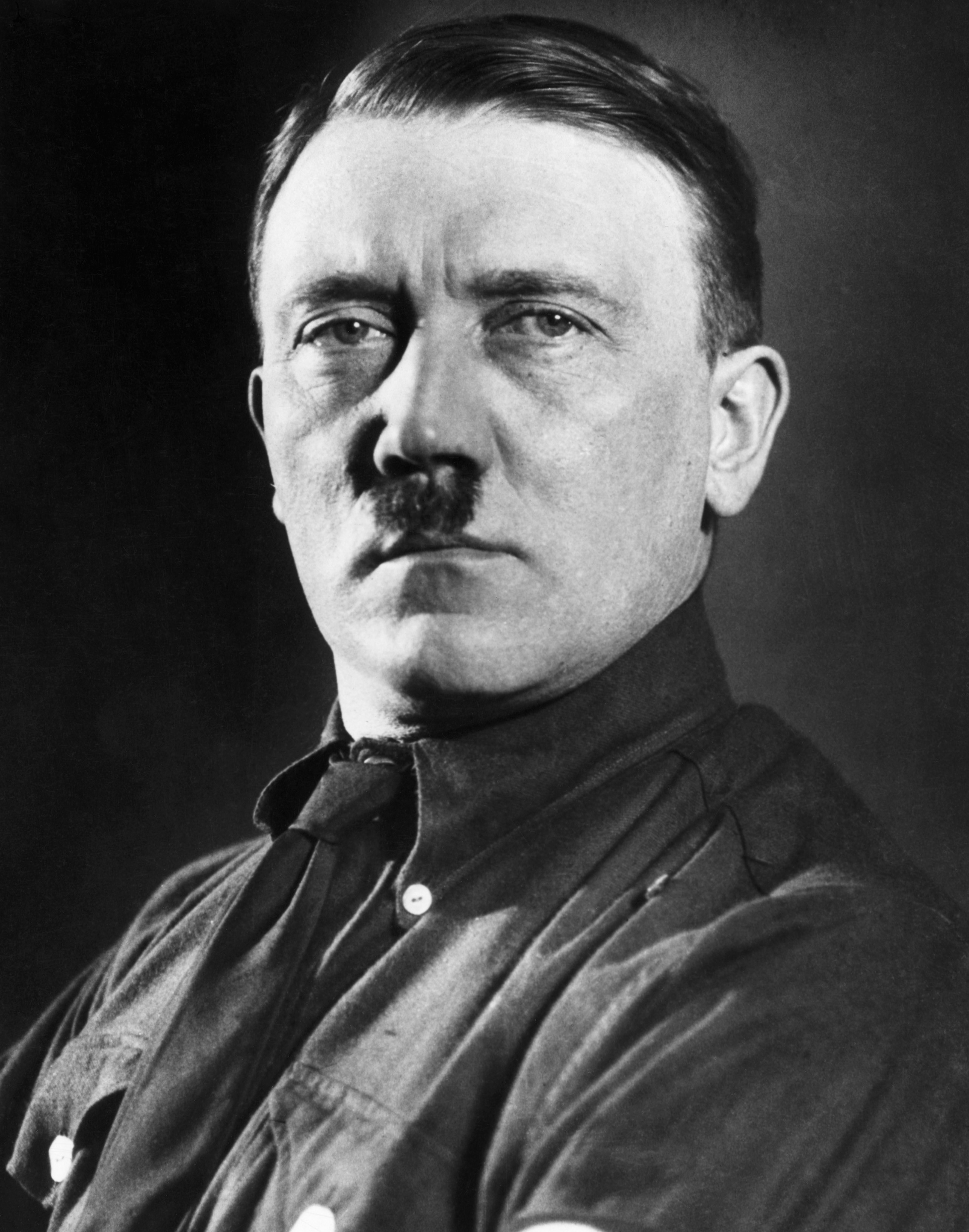
Adolf Hitler
Adolf Hitler was an Austrian-born German politician who was the dictator of Nazi Germany from 1933 until his death in 1945. He rose to power as the leader of the Nazi Party and initiated World War II in Europe.
Why Adolf Hitler Appears in the Documents
Adolf Hitler is mentioned in 41 documents within the Epstein file corpus, consisting of 22 articles, 11 emails, 3 books, 2 interviews, 1 data, 1 essay, 1 memoir, originating from the House Oversight Committee.
These documents include titles such as "FH_Authoritarians_Report_2017.indd", "The Control Factor: Our Struggle to See the True Threat", "Interview: The Control Factor — Our Struggle to See the True Threat (FrontPage Magazine)" among others. Adolf Hitler's name appears across these documents in various contexts. The document corpus contains a wide range of materials including media coverage, government records, and legal proceedings where many public figures are mentioned.
Disclaimer: Appearing in the Epstein document corpus does not imply wrongdoing, guilt, or any form of association with criminal activity. Many public figures are mentioned incidentally in these documents due to the broad scope of the released materials.
Documents (41)
FH_Authoritarians_Report_2017.indd
Breaking Down Democracy surveys how 21st-century authoritarians, led by Russia and China, survive and spread by masking autocratic rule as pluralism: conducting formal elections while skewing the playing field, saturating domestic and international media with propaganda, hollowing out civil society, rewriting history, and embedding illiberal practices within liberal institutions. It shows how these regimes co-opt open economies, exploit global networks, and foster illiberal democracies in places like Hungary and Poland, while exporting tactics through NGOs, lobbyists, and overseas media to influence democracies abroad. The report argues this modern authoritarianism is durable and increasingly adept at seizing power from within and eroding the liberal international order, threatening freedom unless democracies repair their resilience across government, media, academia, business, and civil society, with Ukraine as a frontline case study and a set of concrete recommendations for a coordinated response.
Source: House Oversight Committee
FH_Authoritarians_Report_2017.indd
Breaking Down Democracy surveys how 21st-century authoritarians, led by Russia and China, survive and spread by masking autocratic rule as pluralism: conducting formal elections while skewing the playing field, saturating domestic and international media with propaganda, hollowing out civil society, rewriting history, and embedding illiberal practices within liberal institutions. It shows how these regimes co-opt open economies, exploit global networks, and foster illiberal democracies in places like Hungary and Poland, while exporting tactics through NGOs, lobbyists, and overseas media to influence democracies abroad. The report argues this modern authoritarianism is durable and increasingly adept at seizing power from within and eroding the liberal international order, threatening freedom unless democracies repair their resilience across government, media, academia, business, and civil society, with Ukraine as a frontline case study and a set of concrete recommendations for a coordinated response.
Source: House Oversight Committee
FH_Authoritarians_Report_2017.indd
Breaking Down Democracy surveys how 21st-century authoritarians, led by Russia and China, survive and spread by masking autocratic rule as pluralism: conducting formal elections while skewing the playing field, saturating domestic and international media with propaganda, hollowing out civil society, rewriting history, and embedding illiberal practices within liberal institutions. It shows how these regimes co-opt open economies, exploit global networks, and foster illiberal democracies in places like Hungary and Poland, while exporting tactics through NGOs, lobbyists, and overseas media to influence democracies abroad. The report argues this modern authoritarianism is durable and increasingly adept at seizing power from within and eroding the liberal international order, threatening freedom unless democracies repair their resilience across government, media, academia, business, and civil society, with Ukraine as a frontline case study and a set of concrete recommendations for a coordinated response.
Source: House Oversight Committee
The Control Factor: Our Struggle to See the True Threat
This FrontPage interview with Bill Siegel argues that Western denial of a growing Islamic threat stems from The Control Factor, a deliberate, lifelong mental process that distorts perception to preserve a false sense of control; Siegel outlines three interlocking levels of jihad—violent jihad, Civilization Jihad (infiltration and lawfare to erode freedoms), and International Institutional Jihad (global pressure from bodies like the UN and OIC)—and contends that only through an Inner Jihad, a Turnaround Moment, and tactics like mirroring the enemy can the West wake up and defend its civilization. He links these ideas to documented plans associated with the Muslim Brotherhood (The Project and Explanatory Memorandum) and urges readers to confront uncomfortable truths, reject guilt-driven paralysis, and take decisive action to counter what he portrays as a deliberate, multi-level strategy to subjugate Western societies.
Source: House Oversight Committee
Interview: The Control Factor — Our Struggle to See the True Threat (FrontPage Magazine)
This FrontPage Magazine interview with Bill Siegel promotes his book The Control Factor: Our Struggle to See the True Threat, arguing that a psychological mechanism he calls the Control Factor blinds Western publics to a real threat posed by Islamic movements; he treats the threat as threefold—Violent Jihad (terrorism and violence), Civilization Jihad (infiltration of culture, law, and institutions to undermine Western society and suppress dissent), and International Institutional Jihad (control exerted through global bodies like the UN and OIC); he urges an Inner Jihad to overcome denial, advocates tactics such as mirroring the enemy’s behavior, and introduces the idea of a Turnaround Moment to mobilize a more principled response, while drawing on documents like the Muslim Brotherhood’s Explanatory Memorandum to underscore his claims about strategy and infiltration.
Source: House Oversight Committee
Filthy Rich: Jeffrey Epstein (Chapters 20-38)
Filthy Rich traces Jeffrey Epstein’s ascent from a Brooklyn-born prodigy to a billionaire whose influence stretched across finance, fashion, and high society, aided by mentors and collaborators like Ace Greenberg, Leslie Wexner, Ghislaine Maxwell, and others who opened doors to wealth, power, and glamorous access. It chronicles his improbable career moves—from Bear Stearns to independent ventures and tax-weaving schemes—while revealing a pattern of cultivating a circle of beautiful women and underage girls, with Maxwell helping recruit and facilitate abuse, and victims’ accounts that span Palm Beach, New York, and beyond. The book also details how Epstein and his allies navigated investigations, media scrutiny, and lawsuits—illustrating how money, secrecy, and social connections enabled seemingly untouchable influence, even as explosive allegations and investigations mounted against him.
Source: House Oversight Committee
The Control Factor: Our Struggle to See the True Threat
This FrontPage Magazine interview with Bill Siegel promotes his book The Control Factor: Our Struggle to See the True Threat, arguing that Western mindsets are ruled by a persistent “Control Factor” that blinds us to a real threat posed by Islam, and outlining three levels of jihad—violent jihad, Civilization Jihad (infiltration and subversion of culture and law), and International Institutional Jihad (external pressure through bodies like the UN). It advocates an “Inner Jihad” to reclaim rational control, a “Turnaround Moment” to abandon denial, and the tactic of mirroring to impose symmetric responses, while warning that Western guilt, evasive language, and misapprehensions about “moderate” Muslims enable the enemy. The piece urges readers to study related documents from the Muslim Brotherhood and to confront what Siegel describes as a long-term, global strategy to undermine Western civilization.
Source: House Oversight Committee
Re: Essays
These emails present a prospective NYU Art History applicant’s two essays: Essay 1 argues that NYU’s global campus network—especially the Florence program and its NYC art-world setting—offers the ideal environment to study the Italian Renaissance, its scientific and economic contexts, and the opportunity to gain practical experience through related internships, all aligned with the student’s international background and goals; Essay 2 traces how art engages with political ideologies from fascism and communism to liberal democracy and today’s “age of bewilderment,” analyzing propaganda, memory, and critique with references from Nazi and Soviet posters to Shepard Fairey’s Obama HOPE and Jeremy Deller’s responses to contemporary conflict, and expresses a desire to deepen these inquiries at the undergraduate level.
Source: House Oversight Committee
NYU Art History Application Essays
The applicant, raised across Oslo, Tel Aviv, New York and London, seeks admission to NYU’s Art History program— including its Florence campus—and plans to pursue Early Decision to leverage New York’s vibrant art scene while engaging a Renaissance-focused curriculum and hands-on gallery experience; the essays articulate a dual focus on Italian Renaissance art and its scientific and economic contexts, and on how art reflects ideological shifts—from fascism and communism to liberal democracy and today’s “age of bewilderment”—as a lens for understanding history and contemporary politics.
Source: House Oversight Committee
Email exchange referencing Hitler, Epstein, and Trump
This document is a provocative email thread in which an individual named J writes to Steve Bannon with sensational, unverified accusations about a billionaire associated with Trump, Hitler, and connections to Epstein, interspersed with biographical reminiscences about Hitler’s poverty years and a shelter for the destitute; the message body is interlaced with repeated confidentiality and copyright boilerplate and is labeled “HOUSE OVERSIGHT 030801.”
Source: House Oversight Committee
Microsoft Word - Michel.express
Michel et al. introduce culturomics, a data-driven study that analyzes about 5.2 million digitized books—roughly 4% of all published—to track linguistic and cultural trends from 1800 to 2000. By compiling and analyzing year-by-year n-gram counts across English and several other languages, with carefully filtered metadata, they quantify the growth of the English lexicon, shifts in grammar and usage, patterns of collective memory and fame, the rapid turnover of cultural adoption, and detectable footprints of censorship and epidemics. The work showcases how culture can be examined with rigorous quantitative methods, reveals striking findings such as accelerating forgetting and faster but shorter-lived fame, and provides extensive datasets and tools for researchers to explore the vast landscape of human culture.
Source: House Oversight Committee
Microsoft Word - Michel.express
Michel et al. introduce culturomics, a data-driven study that analyzes about 5.2 million digitized books—roughly 4% of all published—to track linguistic and cultural trends from 1800 to 2000. By compiling and analyzing year-by-year n-gram counts across English and several other languages, with carefully filtered metadata, they quantify the growth of the English lexicon, shifts in grammar and usage, patterns of collective memory and fame, the rapid turnover of cultural adoption, and detectable footprints of censorship and epidemics. The work showcases how culture can be examined with rigorous quantitative methods, reveals striking findings such as accelerating forgetting and faster but shorter-lived fame, and provides extensive datasets and tools for researchers to explore the vast landscape of human culture.
Source: House Oversight Committee
NYU Art History Application Essays
The applicant, raised across Oslo, Tel Aviv, New York and London, seeks admission to NYU’s Art History program— including its Florence campus—and plans to pursue Early Decision to leverage New York’s vibrant art scene while engaging a Renaissance-focused curriculum and hands-on gallery experience; the essays articulate a dual focus on Italian Renaissance art and its scientific and economic contexts, and on how art reflects ideological shifts—from fascism and communism to liberal democracy and today’s “age of bewilderment”—as a lens for understanding history and contemporary politics.
Source: House Oversight Committee
The Control Factor FrontPage Interview with Bill Siegel
These pages present emails and a FrontPage interview with Bill Siegel about his book The Control Factor, in which he argues that Western minds are distorted by a pervasive “Control Factor” that blinds us to the threat of Islam, outlining a three-level jihad (violent, civilization, and international institutional) and advocating an “Inner Jihad” to overcome denial, a “turnaround moment,” and even “mirroring” as strategic responses, while urging readers to consult works like the Explanatory Memorandum and the Lawfare Project to understand what he portrays as a long-range effort by the Muslim Brotherhood to reshape Western civilization.
Source: House Oversight Committee
Remembering Lenny Bruce
Remembering Lenny Bruce is a memoir‑like tribute by Paul Krassner that traces Bruce’s fearless stand‑up and escalating battles with censorship, from his breakthrough in fringe clubs to his obsession with law and courtroom strategy, including the Café Au Go Go obscenity case and his eventual death, all told through Krassner’s intimate recollections of their friendship and collaboration. The piece blends vivid anecdotes of how Bruce transformed taboo subjects into a social critique, reshaping satire while paying a heavy personal and professional price. Interwoven are portraits of a working writer/editor navigating the era’s culture wars, the danger and dignity of free expression, and Bruce’s relentless pursuit of a truth he could perform as freely as he spoke. It culminates in a sharp political postscript, “The Last Word: Yikes!,” linking Bruce’s fight for artistic liberty to modern power struggles in American politics, including the Electoral College and the 2016 election.
Source: House Oversight Committee
Alan Dershowitz: Takes The Stand—An Autobiography
Source: House Oversight Committee
Alan Dershowitz: Takes The Stand—An Autobiography
Source: House Oversight Committee
Warning: The Smart Money Is Fleeing U.S. Stocks
Bill Bonner's Diary argues that the smart money is fleeing overvalued U.S. stocks as buybacks slow and valuations remain stretched, with Carl Icahn warning of a potential big drop, while George Soros shifts into gold and Barrick Gold as a hedge against stock-market risk; the piece then broadens into a critique of the “Deep State” and Pareto’s “foxes,” claiming ultra-low rates have siphoned trillions from savers to borrowers, stalled growth and wages, and widened inequality, and it positions gold and other contrarian bets as profitable responses along with teaser forecasts to come.
Source: House Oversight Committee
EB Draft Ch1-25
Source: House Oversight Committee
EB Draft Ch1-25
Source: House Oversight Committee
Warning: The Smart Money Is Fleeing U.S. Stocks
This May 2016 issue argues that the U.S. stock rally is near its end as valuations are stretched and corporate buybacks slow, signaling that smart money is fleeing equities, while notable investors like George Soros shift toward gold (Barrick Gold being a new major holding); it blames the Fed and a powerful “Deep State” for wealth extraction and stagnation, contends that inequality is widening, and teases forthcoming forecasts and opportunities for readers to profit from these shifts.
Source: House Oversight Committee
Evilicious
Marc D. Hauser’s Evilicious provides a science-grounded account of why humans commit extraordinary harms: evil is not a rare defect but an incidental byproduct of a promiscuously connected brain that can fuse desire with denial, reward with punishment, and in-group loyalty with out-group hostility. Drawing on evolution, genetics, neuroscience, and social science, Hauser traces how hormones like testosterone, neurotransmitters such as dopamine and serotonin, and genes like MAOA, DRD4, and COMT shape risk, self-control, and the taste for harm, while social dynamics—dehumanization, moral disengagement, bystander effects, and large-scale cooperation—show how everyday aggression can escalate into violence, genocide, or corruption. He argues that our capacity for both great kindness and great cruelty arises from the same core architecture, and that understanding these core ingredients can illuminate moral responsibility, inform policy and law, and equip us to foster a more humane future. A compact, provocative synthesis, the book reveals evil as a predictable, learnable aspect of human nature—and urges us to confront it with science, education, and compassion.
Source: House Oversight Committee
Evilicious
Marc D. Hauser’s Evilicious provides a science-grounded account of why humans commit extraordinary harms: evil is not a rare defect but an incidental byproduct of a promiscuously connected brain that can fuse desire with denial, reward with punishment, and in-group loyalty with out-group hostility. Drawing on evolution, genetics, neuroscience, and social science, Hauser traces how hormones like testosterone, neurotransmitters such as dopamine and serotonin, and genes like MAOA, DRD4, and COMT shape risk, self-control, and the taste for harm, while social dynamics—dehumanization, moral disengagement, bystander effects, and large-scale cooperation—show how everyday aggression can escalate into violence, genocide, or corruption. He argues that our capacity for both great kindness and great cruelty arises from the same core architecture, and that understanding these core ingredients can illuminate moral responsibility, inform policy and law, and equip us to foster a more humane future. A compact, provocative synthesis, the book reveals evil as a predictable, learnable aspect of human nature—and urges us to confront it with science, education, and compassion.
Source: House Oversight Committee
Evilicious
Marc D. Hauser’s Evilicious provides a science-grounded account of why humans commit extraordinary harms: evil is not a rare defect but an incidental byproduct of a promiscuously connected brain that can fuse desire with denial, reward with punishment, and in-group loyalty with out-group hostility. Drawing on evolution, genetics, neuroscience, and social science, Hauser traces how hormones like testosterone, neurotransmitters such as dopamine and serotonin, and genes like MAOA, DRD4, and COMT shape risk, self-control, and the taste for harm, while social dynamics—dehumanization, moral disengagement, bystander effects, and large-scale cooperation—show how everyday aggression can escalate into violence, genocide, or corruption. He argues that our capacity for both great kindness and great cruelty arises from the same core architecture, and that understanding these core ingredients can illuminate moral responsibility, inform policy and law, and equip us to foster a more humane future. A compact, provocative synthesis, the book reveals evil as a predictable, learnable aspect of human nature—and urges us to confront it with science, education, and compassion.
Source: House Oversight Committee
Evilicious
Marc D. Hauser’s Evilicious provides a science-grounded account of why humans commit extraordinary harms: evil is not a rare defect but an incidental byproduct of a promiscuously connected brain that can fuse desire with denial, reward with punishment, and in-group loyalty with out-group hostility. Drawing on evolution, genetics, neuroscience, and social science, Hauser traces how hormones like testosterone, neurotransmitters such as dopamine and serotonin, and genes like MAOA, DRD4, and COMT shape risk, self-control, and the taste for harm, while social dynamics—dehumanization, moral disengagement, bystander effects, and large-scale cooperation—show how everyday aggression can escalate into violence, genocide, or corruption. He argues that our capacity for both great kindness and great cruelty arises from the same core architecture, and that understanding these core ingredients can illuminate moral responsibility, inform policy and law, and equip us to foster a more humane future. A compact, provocative synthesis, the book reveals evil as a predictable, learnable aspect of human nature—and urges us to confront it with science, education, and compassion.
Source: House Oversight Committee
Fire and Fury
Source: House Oversight Committee
Fire and Fury
Source: House Oversight Committee
TSS1211
Source: House Oversight Committee
TSS1211
Source: House Oversight Committee
TSS1211
Source: House Oversight Committee
Collection of six international affairs articles (April 2011)
These six opinion pieces—from the Financial Times, World Affairs, The Daily Star, the New York Times, and the Wall Street Journal—collectively probe how to secure a dangerous 2011 world: Tom Donilon urges renewed, verifiable arms reductions and stronger nonproliferation measures; Richard Perle warns against the utopian “global zero” dream and advocates targeted sanctions and deterrence to slow proliferation; Soner Cagaptay cautions that Turkey’s AKP could drift toward religiously inflected politics and destabilize its secular order and Western ties; Juan Zarate urges the United States to back reform movements in the Arab world to undercut Al Qaeda, not through imperial-style rule but by empowering civil society; Max Boot argues for a measured U.S. troop presence in Iraq to deter Iran and stabilize the region; and Roger Cohen praises Sarkozy’s proactive European leadership in Libya while critiquing Germany’s hesitance, signaling a shift in Europe’s security role. Together, the collection frames a spectrum from hard-nosed realism to democratic engagement and alliance-building as essential tools to navigate nuclear risk, regional upheaval, and evolving international partnerships.
Source: House Oversight Committee
Email about JFK and U.S. Steel with confidentiality notice
An email from Jeffrey Epstein to Jes Staley and Peter Mandelson uses JFK’s bold, named rebuke of U.S. Steel as a historical example of decisive leadership that produced a swift concession and broad popular support, contrasting it with modern rhetoric about fighting bankers, and it ends with a confidentiality notice identifying the message as privileged information under House Oversight 030486.
Source: House Oversight Committee
Schank 1st.indd
Roger Schank argues that schools fail because they privilege subjects and memorized facts over the cognitive processes by which people think and learn; learning should be goal-directed and rooted in a core set of 12 cognitive processes (divided into conceptual, analytic, and social) learned through practice, failure, storytelling, and mentorship rather than lectures and tests. He proposes a radical redesign—story-centered, online curricula that immerse students in real-world projects guided by mentors, focusing on practicing processes such as prediction, diagnosis, planning, causation, judgment, influence, teamwork, negotiation, and describing—to cultivate genuine thinking ability and real-world skills. He critiques universities’ subject-based structures and test-driven systems, arguing for restructuring education from K‑12 to college around thinking skills, including a two-year cognitive-process foundation followed by optional specialization, or scalable online programs that deliver applicable knowledge through scenarios and simulations. The book also details how to teach each process and contends that true intelligence is the ability to diagnose, plan, and reason about causation, not simply to recall facts, urging a shift toward learning that is experiential, personalized, and aimed at helping people live thoughtfully and productively.
Source: House Oversight Committee
Schank 1st.indd
Roger Schank argues that schools fail because they privilege subjects and memorized facts over the cognitive processes by which people think and learn; learning should be goal-directed and rooted in a core set of 12 cognitive processes (divided into conceptual, analytic, and social) learned through practice, failure, storytelling, and mentorship rather than lectures and tests. He proposes a radical redesign—story-centered, online curricula that immerse students in real-world projects guided by mentors, focusing on practicing processes such as prediction, diagnosis, planning, causation, judgment, influence, teamwork, negotiation, and describing—to cultivate genuine thinking ability and real-world skills. He critiques universities’ subject-based structures and test-driven systems, arguing for restructuring education from K‑12 to college around thinking skills, including a two-year cognitive-process foundation followed by optional specialization, or scalable online programs that deliver applicable knowledge through scenarios and simulations. The book also details how to teach each process and contends that true intelligence is the ability to diagnose, plan, and reason about causation, not simply to recall facts, urging a shift toward learning that is experiential, personalized, and aimed at helping people live thoughtfully and productively.
Source: House Oversight Committee
Re: Since you are super well connected...
Jeffrey and Gianni discuss the rise of anti‑establishment sentiment in Europe and the US, arguing that inequality and pervasive images of wealth fuel populism, and they suggest Hillary Clinton could use the final debates to acknowledge a desire for change while reframing the race to emphasize winning a strong Senate majority as a governance check; the thread also touches on perceptions of Trump, includes personal political reflections, and ends with standard confidentiality and ownership notices indicating the message is confidential and the property of HOUSE OVERSIGHT and JEE.
Source: House Oversight Committee
Email on political strategy and public sentiment
An internal email argues that rising anti-establishment sentiment in Europe and the United States—fueled by visible inequality and constant media feeds—could influence elections and suggests Hillary Clinton leverage the final debates to frame change around building a strong Senate majority rather than seeking a presidential landslide, arguing that such a focus could demonstrate what a president can accomplish while offering a path to accountability if performance falters; the note warns that masses can be irrational and easily swayed, cites Hitler as a cautionary example, and even includes a personal anecdote about a Wharton encounter with Donald Trump Jr., all within a confidential, for-the-addressee-only communication.
Source: House Oversight Committee
Re: Since you are super well connected...
Jeffrey and Gianni discuss the rise of anti‑establishment sentiment in Europe and the US, arguing that inequality and pervasive images of wealth fuel populism, and they suggest Hillary Clinton could use the final debates to acknowledge a desire for change while reframing the race to emphasize winning a strong Senate majority as a governance check; the thread also touches on perceptions of Trump, includes personal political reflections, and ends with standard confidentiality and ownership notices indicating the message is confidential and the property of HOUSE OVERSIGHT and JEE.
Source: House Oversight Committee
Email on political strategy and public sentiment
An internal email argues that rising anti-establishment sentiment in Europe and the United States—fueled by visible inequality and constant media feeds—could influence elections and suggests Hillary Clinton leverage the final debates to frame change around building a strong Senate majority rather than seeking a presidential landslide, arguing that such a focus could demonstrate what a president can accomplish while offering a path to accountability if performance falters; the note warns that masses can be irrational and easily swayed, cites Hitler as a cautionary example, and even includes a personal anecdote about a Wharton encounter with Donald Trump Jr., all within a confidential, for-the-addressee-only communication.
Source: House Oversight Committee
Email about populism in Europe and U.S. elections
An internal, high-priority note arguing that European resentment over inequality is fueling populist movements as people see wealth on their smartphones, warning that anti-establishment feelings could shape the US election and urging Hillary Clinton to use the debates to frame a change agenda and emphasize winning a Senate majority as the real test of governance, while cautioning about irrational mass voting and noting the historical risk of such trends with a reference to Hitler.
Source: House Oversight Committee
Game Theory and Morality
By viewing morality through the lens of evolution and learning in strategic interactions, Hoffman, Yoeli, and Navarrete argue that many moral intuitions—such as rights and ownership, the omission–commission distinction, authentic altruism, and the prominence of categorical norms—are Nash-equilibrium outcomes shaped by coordination, signaling, and higher-order beliefs. Through the Hawk–Dove, Envelope, and Repeated Prisoner’s Dilemma frameworks, they show how possession, investment, and the anticipation of others’ beliefs generate why we value what we have, why we cooperate often without reciprocation, and why some moral rules unravel under noisy information, ultimately offering a parsimonious alternative to group selection for explaining morality.
Source: House Oversight Committee
Email about populism in Europe and U.S. elections
An internal, high-priority note arguing that European resentment over inequality is fueling populist movements as people see wealth on their smartphones, warning that anti-establishment feelings could shape the US election and urging Hillary Clinton to use the debates to frame a change agenda and emphasize winning a Senate majority as the real test of governance, while cautioning about irrational mass voting and noting the historical risk of such trends with a reference to Hitler.
Source: House Oversight Committee